In this article, we cover the dobsonfly and its larval form, hellgrammites, in detail
Dobsonflies are one of the scariest-looking insects on earth. These flies have large mandibles that can grow up to almost an inch and bodies that grow upto half a foot!
If you are scared of insects, the sight of a dobsonfly will send chills down your spine.
But are they as dangerous as they look? What do they eat, where do they stay and how likely are you to meet them? Let’s find out.





What Is A Dobsonfly?
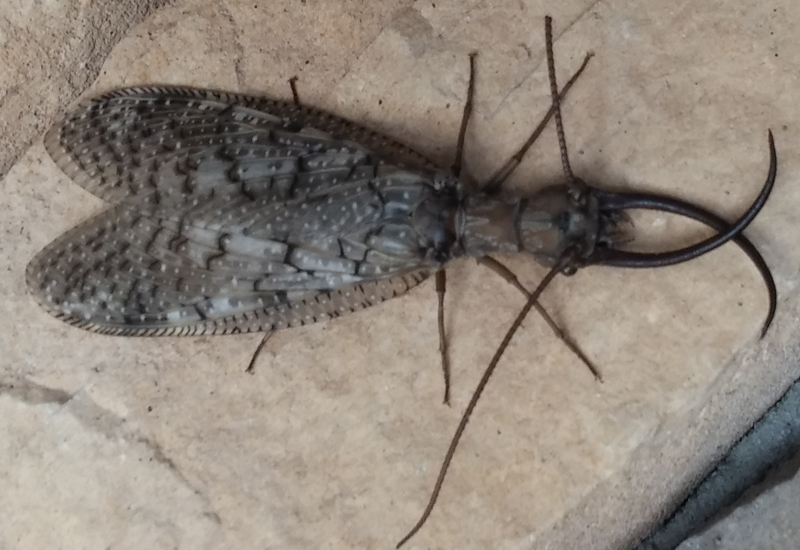
Dobsonflies are a species of aquatic insects that are huge in size and look fearsome. Both males and females have mandibles that look like pincers.
The male adult dobsonflies have bigger mandibles compared to the females. Due to the difference in the size of their jaws, the males look much scarier than the females.
These aquatic insect species are nocturnal and are highly active from late spring to summer.The male jaws, despite their size are largely for show.
Due to their enormous size, they don’t have the bite force in their chewing muscles to deliver bites than can break past the human skin.
How Big Are Dobsonflies?
Many different species of dobsonflies are found in the US. In fact, these insects are one of the largest aquatic insects in North America.
An adult dobsonfly will show an average growth of 2-4 inches in length (excluding the size of the mandibles).
The males appear bigger due to the presence of long pincer-like jaws that we mentioned earlier.
The females, on the other hand, have shorter jaws and appear smaller and a little less frightening.
The wings of a dobsonfly are grayish-brown and have several vein-like patterns on them.
Although the accurate average weight of dobsonflies is unknown, they have thin bodies and won’t weigh more than a few ounces.
They can grow to be equally big during their larval stage as well.
Since they spend most of their lives in that stage, you might likely meet them as hellgrammites rather than as their final fly form.
What Do Dobsonfly Eat?
Dobsonfly adults live for a very short time and usually do not feed at all. They live off whatever fat they have built up during their earlier life stages.
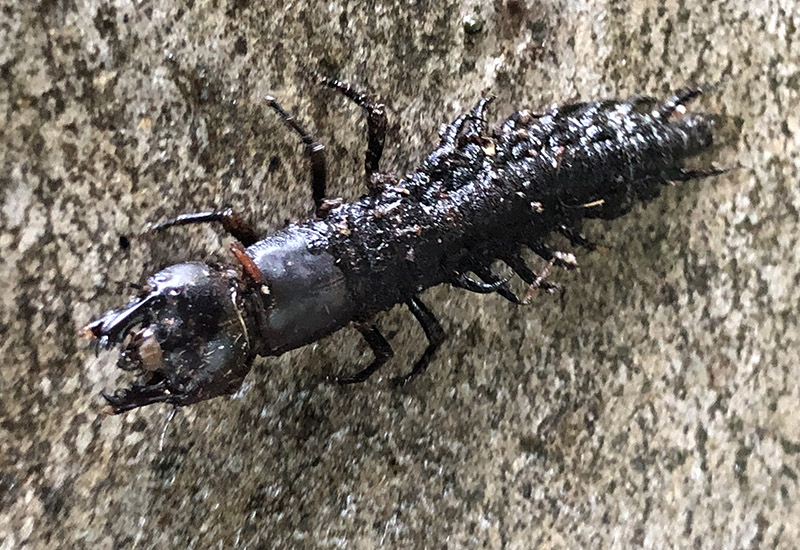
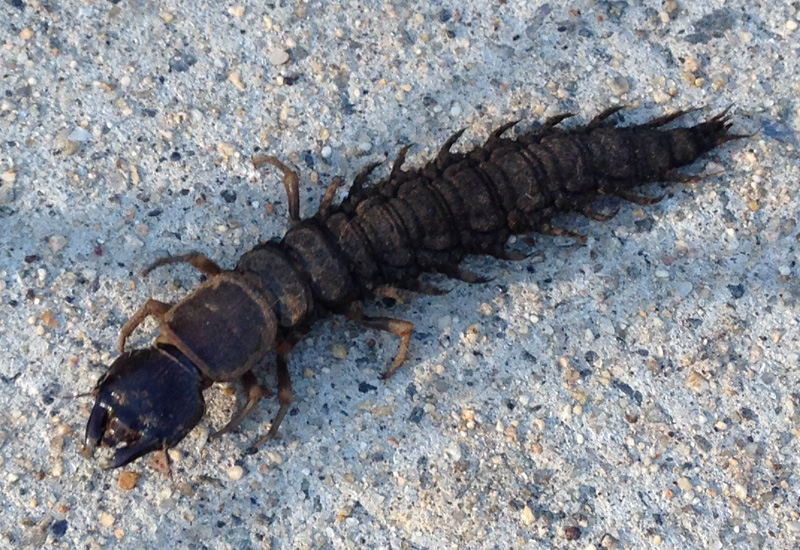
But the larva is a great aquatic hunter. The aquatic larvae are known as hellgrammites. They live in well-oxygenated and clean waters.
They are experts in hunting down small insects and fish. Caddisflies, immatures of mayflies, chironomid midges, and stoneflies are some organisms they consume.
Where Do They Live?
Eastern dobsonfly is common in the eastern regions of North America and in some parts of Mexico and Canada.
You will find them near flowing streams.
The survival of the larvae highly depends on the water quality. The stream needs to be clean and well-oxygenated.
You will find them at the base of rocks in aquatic bodies with fast water currents.
Also, you will be surprised to know that the larvae have gills and easily survive in water without coming out to the surface for air.

Life Cycle of A Dobsonfly
The life cycle of these bugs starts when the males start looking for females to start mating.
In many cases, these insects are seen jousting with other males to grab the attention of the females during mating and earn mating rights.
After mating, the female searches for a suitable spot to lay the eggs.
These females often select spots on structures flowing above the water surface. Sometimes they go for rocks near the edge of the stream as well.
The eggs are covered with a white film that protects them from being destroyed in the heat.
These eggs hatch during nighttime. As soon as the larvae come out crawl directly into the water. Each mating cycle produces around 10-12 larval instars.
They feed on these waters for around 1-3 years before entering the pupation stage.
Before starting pupation, they come to the surface, where they enter the moist soil to become a pupa.
It takes around 7-14 days for the adults to emerge from the ground. These adults don’t live for long and spend most of their time mating and continuing the cycle.

Do Dobsonfly Bite?
Dobsonfies can bite, but surprisingly, the bites from the males are not harmful.
This is because they don’t have strong chewing muscles that are good enough to transfer biting force to their enormous jaws.
The females have shorter jaws and are capable of delivering painful bites. The bites are strong enough to break past the human skin and cause bleeding.
Do Hellgrammite Bite?
Unlike male dobsonflies, hellgrammites have short but sharp jaws.
These jaws are capable enough to deliver excruciating pain through bites. Therefore you must be careful around these aquatic larvae.
Are They Poisonous/Venomous?
No dobsonflies and hellgrammites are not poisonous or dangerous in nature. Yes, the bites from females and larvae can be painful, but they won’t cause fatal injury or illness.
Are They Harmful to Humans?
Male dobsonflies may look intimidating and scary, but they are entirely harmless to humans.
The large mandibles are not equipped with chewing muscles strong enough to generate a solid biting force.
The females have shorter jaws that can break past human skin and cause bleeding. But thankfully, they are not poisonous at all.
The bites will cause temporary problems like bleeding, irritation, redness, and swelling but won’t have any long-term fatal effects.
Can They Come Inside Homes?
Since they mostly live around clean streams with high currents, there are fewer chances of them entering your home.
However, if your house is near a clean water body, adults might come near your house as they are highly attracted to light in dark.
What Are Dobsonfly Attracted To?
As mentioned in the sections above, these insects are nocturnal creatures and are highly attracted to light sources during the night. They have a tendency to fly toward a light source.
Dobsonfly Defense Mechanisms &Structural Adaptations
Dosbsonflies have developed an interesting set of defense mechanisms and structural adaptations to help them survive as adults and larvae.
Here are a few of the notable defense mechanisms and adaptations:
Defense mechanisms:
These insects have huge mandibles that are almost an inch in length.
While the males can’t generate enough bite power to deliver painful bites, they use them to fight other males and defend themselves against predators.
Also, they give them a fearsome appearance to insects, which works to keep predatory dangers away.
Like many other insects, they also release a foul smell when they sense danger. This happens because they have Malpighian tubules in their excretory system.
These tubes emit a foul-smelling odor which helps to keep predators away.

Their enormous size is a great way to look more dangerous. This keeps humans and other dangers away from approaching these insects.
Birds are one of the biggest predators of hellgramites. Therefore, the females lay eggs in clusters. They are arranged in three layers and are protected by a white fluid.
This fluid protects them from the heat and makes the cluster look like bird droppings. As a result, birds ignore it and fly past it.
Structural adaptations:
As mentioned above, hellgrammites are excellent predators. These insects have an advanced touch and chemical sensing that they use to hunt more efficiently.
This touch and chemical sensing, paired with their visual ability, goes great for hunting down small aquatic insects.
Hellgrammites have terminal hooks at the end of their body. This helps them to clasp onto rocks to stay still in running water bodies.
This adaptation helps them a lot to hunt insects without getting swept by the current.
Dosbsonflies use scent to find mating partners. They have glands near the abdomen which secrete these odors.
The larvae have the ability to breathe in water and on land as well. They have eight pairs of appendages.
These look like pairs of legs and have gills attached to them.

How To Get Rid of Dobsonfly?
There is ver little chance of dobsonflies entering your homes because they live for very little time as adults. But if they do, here are some tips to get of them:
Since these insects barely cause any problems and are harmless, if you don’t threaten them, you can leave them be.
The adult doesn’t live for long, so they’ll probably die voluntarily and walk out of your home.
If you can’t bear the sight of these fearsome-looking insects near your house, you can use pesticides to drive them off.
The most effective way is to use a dry insecticide. Make a dilute solution by mixing an ounce of insecticide in one gallon of water.
Store the solution in a spray bottle and sprinkle it on areas where you see these insects.
Since they are highly attracted to lights, you can place traps near a light source to catch these flies and get rid of them instantly.

Fascinating Facts About Dobsonfly
Here are a few things you would love to learn about these insects:
- Adult dobsonflies barely consume any solid food substance. The females, on rare occasions, might feed on nectar, but the males barely need any food to survive.
- Dobsonflies have a short life span as adults. They spend the majority of their adult lives searching for mating, fighting for mating rights, and mating.
- The dobsonfly larvae are one of the rare insects that can survive on land and underwater.
- Dobsonflies have a strange way of flying but can cover great distances using their wings.
- At the end of the mating process, some species of male dobsonflies give nutrient-rich spermatophores to females as gifts.

Frequently Asked Questions
What happens if a dobsonfly bites you?
If a male dobsonfly bites you, there will hardly be any pain. But if a female bites you, it will be highly painful.
Female bites can easily break past the human skin and cause problems like bleeding, pain, and irritation. These bites are not poisonous and won’t cause any fatal injuries.
What does a Dobson fly eat?
Adult dobsonflies do not eat; they spend their short adult life mating. The larvae are great hunters.
They are carnivorous in nature and are experts in hunting down aquatic insects found in clean water streams with high currents. They can also hunt small fish.
Can you hold a dobsonfly?
You can hold a male dobsonfly but do not try to hold or pick up a female dobsonfly. The females have the ability to deliver painful bites.
These bites can cause bleeding. You should also not hold a dobsonfly larva; they can also bite with good force. Wear safety gloves if you want to touch these insects.
How long do Dobson flies live?
Dobsonfly larvae live from 1-3 years underwater. Here they actively hunt and consume insects to stay healthy.
The adults, however, do not survive for a long time, the males die within a few days, and the females can live up to 10 days.
Wrap Up
Dobsonflies might look fearsome, but they are nowhere near dangerous to humans.
Especially the males might look too scary with those huge mandibles but are not capable of causing any harm to humans and pets.
If you ever encounter these insects, there is no need to be scared, as long as you don’t threaten them, they won’t do a thing. Thank you for reading the article. We hope it was informative.


