If you have ever seen a tiny little bug jumping in your bed and mistaken it for a flea, think again. It might have been a springtail. So do springtails bite like fleas, you might ask? Let’s check it out.
Springtails are tiny insects that you might often find in your bed, on your window sill, in your bathroom, kitchen, or near or even inside your swimming pool. But you will most often meet this creature in the winter.
Its unique ability to jump distances more than ten times its length, combined with its propensity to be more visible in the winter, has earned this bug the moniker snow flea.
And therein lie a lot of misconceptions about springtails. We will talk about some of these misunderstandings about springtails, especially the one about biting, in this article.
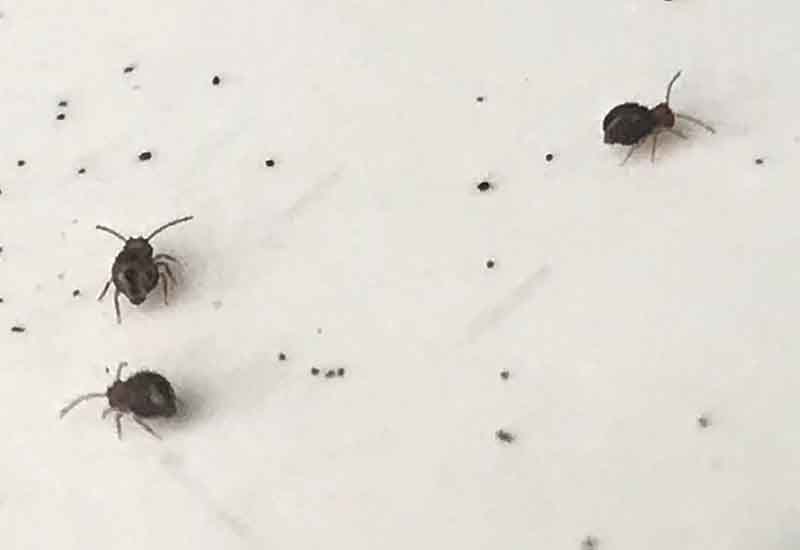
Do Springtail Bugs Bite?
Many people think snow fleas are like fleas, so they must bite like them too. That’s actually far from the truth.
They are just called fleas because they jump like them, not because they have any parasitic tendencies or else the ability to suck blood.
Springtails are actually mostly harmless to humans. They don’t bite you, and nor do they infest human tissue. In fact, they don’t even have wings to fly around, unlike fleas.
They are black or grey-colored insects, so they are more easily visible in the winter on the ice. But most springtails breed throughout the year and can live in all types of temperatures.
Do Springtails Bite Humans?
While they don’t bite you per se, they do have small pincer-like mouthparts called chelicerae. They use these pincers to break dead organic matter inside trees and eat them.
Snow fleas tend to eat a lot of things. They can eat bacteria, fungi, algae, leaf litter or plant litter, any organic matter, and even molds. Yes, you read that right – they eat molds like they were ice cream sundaes.
Sometimes, they can enter human skin through cuts or scrapes on your toes, your elbows, and other places underneath your foot.
While this is not particularly dangerous, they might start to enjoy it there, especially if they find a home in between your toes, where it can be quite moist.
They might not carry any viruses themselves, but they do eat a lot of feces, dead insects and mites, etc. So it is possible that they might carry disease. Therefore, it is best to keep these bugs at bay.

Is Their Bite Harmful?
They can get inside your cracks and cuts, but it is not particularly harmful. However, having them around is not a good idea either.
In some cases, you might end up drawing springtails into your lungs, especially when you are lying down. This is especially possible if you have an infestation in your bed.
To avoid this, you should regularly clean up your sheets, the underside of your bed, and your mattress, and make sure there are no moist areas in or around your bedroom.
If you have a leaky pipe in your bathroom, make sure that you fix it. If there are potted plants in your room, don’t let water stagnate in the soil in the pots.
Can They Cause Dermatitis?
Springtail dermatitis is a hotly contested topic in the scientific community. While many studies contend that it is not possible for springtails to give humans dermatitis, there are patient reports that demand further investigation.
Patients have shown symptoms like itching or burning around the area where the bug came in contact with their skin. You might get the constant urge to scratch the area, or you may also see a pink-colored bump on the skin.
In some cases, you might even experience a bit of bleeding if you scratch the area too much. Often, these symptoms are similar to an allergic reaction to grass or pollen.
Applying a bit of topical antifungal cream or ointment relieves the scratching and inflammation and will help to heal any small wound that might have occurred as well.

What Other Harm Can They Do?
Apart from everything that we mentioned above, springtails are nuisance pests that can cause a lot of trouble if they start infesting your house.
Springtails breed quickly and in large numbers. Springtail populations can grow without the need for much food, and all they need is a bit of excess moisture or dampness.
Fortunately, there are many ways to ward off a springtail infestation. Let us give you a short summary of how to do this.
Natural Solutions
There are many natural solutions and household items that can get you rid of springtails. You can use diatomaceous earth, a solution of neem oil, or any other essential oils, borax, vinegar, soap solution, or even bleach to kill these pests.
Cleaning and Vacuuming
Perhaps one of the quickest ways to suck up these small insects is just to vacuum your house thoroughly. Make sure you get into every nook and cranny of your home and especially look into areas that might have a little water, such as under the kitchen sink.
Clean and dry your laundry and sheets with a good soap solution and add a bit of bleach if possible to get rid of springtails in your clothes.
Insecticides
There are several insecticides available in the market that can help with a springtail infestation. The most popular ones are Onslaught Fastcap, Onslaught Microencapsulated, Temprid SC, Transport Micron, Cyonara 9.7, Bifen, or Mavrik.
Removing Moisture
All these measures will only give you temporary respite, and you need to solve the problem at its root, which is dampness.
Fix all leaking pipes in your home; they are a den of springtail nest. Be especially vigilant in your bathrooms and kitchens, under the sinks.
Make sure that there is no place where there is stagnant water in your home. If you tend to leave out some water for birds on your window sill, ensure that you clean out the water every day.
If you have a pool or a large garden outside, regular cleaning is important. Skim the water at least once a week, and rake the leaves and dead organic material every fortnight or so to make sure that springtails don’t find enough food sources to stay in your home.

Frequently Asked Questions
What can springtails do to humans?
There is some evidence to show that springtails might cause dermatitis in some humans. However, scientists have been contesting this claim, and several studies show otherwise.
Otherwise, springtails are known to be largely harmless to humans. Neither do they bite us, nor do they lay their eggs under our skin.
Do springtails irritate skin?
Yes, springtails can cause skin irritations. They have small pincer-like mouthparts that can help them get inside the cracks of your heel and other areas in your arms and legs that have small cuts or bruises from shoes etc.
Do springtails get in your bed?
Yes, springtails can also get inside your bed. If you sweat a lot while sleeping or lying down, your bed can be a comfortably moist environment for springtails to infest.
They can also jump onto your bed from other moist areas in your bedroom, such as nearby bathrooms, window sill, or any other source of dampness.
How do I know if I have springtails?
Springtails are long, cylindrical in shape, and typically black or brown colored. You can easily spot them on ice because of their color – which is why they are sometimes known as snow fleas as well. They don’t have wings to fly, but they can jump like fleas by using an appendage under their abdomen known as the furcula.
Wrap Up
Springtails don’t bite. Whether they do cause some amount of harm to humans is still under investigation. But it’s likely that they are harmless to us.
However, these insects can breed in huge numbers and can infest large parts of your home, so make sure you keep away dead organic matter and damp areas from your home. Thank you for reading, we hope we cleared some doubts for you!