Carpet beetles are common household pests that can cause damage to fabrics, fur, and other items made of animal fibers.
However, many people wonder if these tiny insects can actually bite humans. The answer to this question might surprise you.
Adult carpet beetles, which usually measure around 1/16 to 1/8-inch in length, do not bite nor feed on fabrics.

Instead, they feed on flower pollen and nectar outdoors. Although they might be an unwelcome sight in homes, adult carpet beetles are harmless to humans.
On the other hand, carpet beetle larvae are the culprits behind any damage to fabrics and other materials.
While they don’t bite humans, their tiny hairs can cause skin irritation in some people, often being mistaken for bites.
Do Carpet Beetles Bite?
Is It a Bite or an Allergic Reaction
Carpet beetles do not bite humans. Instead, some people might experience an allergic reaction due to contact with carpet beetle larvae.
The larvae have tiny hairs that can cause:
- Irritation
- Rash
- Redness
This reaction might resemble an insect bite, leading to confusion. For example, it could be mistaken for bites from other pests like:
- Bed bugs
- Fleas
- Clothes moths
Comparing insect bites and reactions:
| Insect | Symptoms | Harmful |
|---|---|---|
| Carpet Beetle | Rash, irritation, redness | No |
| Bed Bug | Red welts, itchy, swelling | No |
| Flea | Small red bumps, itchy | No |
| Clothes Moth | None (larvae damage fabric) | No |
It’s essential to correctly identify the cause of your skin reaction. People with sensitive skin may experience more severe symptoms.
To prevent carpet beetle infestations, consider:
- Regular vacuuming
- Laundering clothes and fabrics frequently
- Sealing cracks and crevices in your home
Keep your home clean and free of potential food sources to minimize the risk of an infestation.

Curious what unconventional products the entomology nerds here at What’s That Bug LOVE? See our favorites.
While we do enjoy and use the products recommended above, they are affiliate links where ‘What’s That Bug’ may receive a small commission at no additional cost to you. This helps to financial support this website from hosting to expert entomologists and writers who identify your bug requests and create the content you love.
Identification and Life Cycle
Types of Carpet Beetles
There are three main types of carpet beetles:
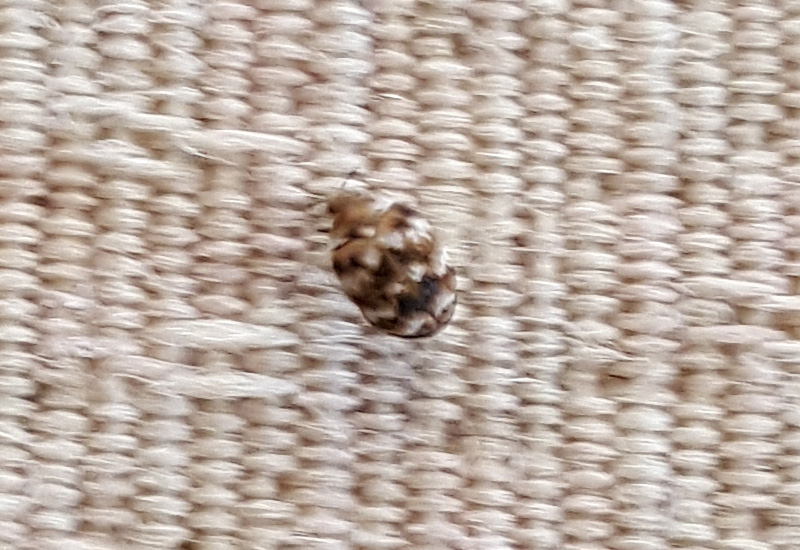
- Varied carpet beetle: Small, rounded beetles with dark or patterned wing covers.
- Furniture carpet beetle: Similar to varied carpet beetles, but with more distinct white, yellow, and black scales.
- Black carpet beetle: Solid black and larger than the other two types.
Recognizing Signs of Infestation
Signs of carpet beetle infestation include:
- Damaged fabrics, fur, and feathers.
- Tiny molted skins from larvae.
- Adult beetles around windows and on windowsills.
Life Cycle
Carpet beetles have a four-stage life cycle: egg, larvae, pupa, and adult. Here are its features:
- Adult carpet beetles feed on flower pollen and nectar outdoors.
- Adults do not cause damage to fabrics.
- Larvae are responsible for damaging indoor materials made from animal fibers.
To understand the carpet beetles’ life cycle better, here’s a comparison of the different stages:
| Stage | Duration | Characteristics |
|---|---|---|
| Egg | 8 to 15 days | Female lays 40 to 90 white eggs on suitable larval food sources. |
| Larva | Varies by species | Larvae are tiny and have a tapered body, feed on fabrics and animal fibers. |
| Pupa | Varies by species | Transition period before adult emerges, found in protected locations. |
| Adult | Several weeks | Small beetles, feed on pollen and nectar outdoors, may enter homes through windows, do not damage fabric. |
It is essential to identify the species and life cycle stage to effectively deal with a carpet beetle infestation.
Damage and Habitat
Fabrics and Materials Affected
Carpet beetles are known for causing damage to various fabrics and materials. They mainly target:
- Wool: They are attracted to woolen items such as carpets, rugs, and clothes.
- Silk: They can damage silk items including clothing and upholstery.
- Natural fibers: Carpet beetles feed on natural fibers such as cotton and linen.
- Leather: They may damage leather products like shoes, belts, and furniture.
- Feathers: They are known to eat feathers found in items like pillows and stuffed animals.
- Animal skins: Carpet beetles can cause damage to fur garments and accessories.
Common Hiding Places
Carpet beetles prefer quiet and undisturbed areas, these pests can be found in:
- Carpets: Carpet beetles can infest carpets, especially those made of wool or natural fibers.
- Furniture: Upholstered furniture, cushions, and fabrics can serve as hiding places for these pests.
- Clothing: Infestations may occur in woolen, silk, or linen clothing.
- Pet bedding: The pests can target pet beds, especially if they are made using natural fibers.
| Carpet Beetles | Bedbugs |
|---|---|
| Mainly target fabrics | Target humans and pets |
| Prefer quiet, undisturbed areas | Found near human sleeping areas |
| Do not bite humans | Bite humans, causing red, itchy welts |
Prevention and Treatment
Cleaning Methods and Tools
One effective way to prevent and treat carpet beetle infestations is through meticulous cleaning. Here are some recommended steps:
- Vacuum: Regularly vacuum floors and upholstered furniture to get rid of dust and food sources.
- Steam cleaning: Use a steam cleaner to treat fabrics, carpets, and curtains, as it can kill carpet beetle larvae.
- Dust: Wipe down surfaces, baseboards, and air vents to remove potential nesting areas.
A thorough cleaning routine can significantly reduce the chances of an infestation. Remember to pay special attention to:
- Closets and storage areas
- Wool carpets and rugs
- Hard-to-reach corners and crevices
Pest Control Options
If you are dealing with a more severe infestation, you might need to resort to pest control treatments. Here are some common options:
- Insecticides: Apply a targeted insecticide to affected areas. Always follow the manufacturer’s instructions for safe and efficient use.
- Diatomaceous earth: This natural powder can be sprinkled around infested areas to dehydrate and kill carpet beetles.
- Boric acid or vinegar: Mixing these substances with water can create a solution that can be applied to fabrics to deter carpet beetles.
- Pest control company: Contact a professional, such as Terminix or Orkin, for expert advice and treatment options.
By combining a regular cleaning routine with targeted pest control treatments, you can successfully prevent and get rid of carpet beetles from your home.
Remember to monitor for signs of infestation to avoid allergic reactions or damage to your belongings.
[sc name=”bugquiz” ][/sc]
Additional Tips and Information
Distinguishing Carpet Beetles from Other Pests
Carpet beetles can be easily mistaken for other pests, so it’s important to learn how to distinguish them:
- Size: Adult carpet beetles are small, around 3-5 millimeters long1.
- Wing covers: Their wing covers can have dark color or patterned designs, depending on the species1.
- Larvae: They have a tapered body with alternating light and dark stripes and tiny hairs1.
Commonly mistaken bugs include:
- Moth larvae, which are usually longer and have a caterpillar-like appearance2.
- Bed bugs, which are reddish-brown, oval-shaped, and flat-bodied3.

Conclusion
In conclusion, carpet beetles, while not harmful through bites, can cause damage and allergic reactions through their larvae.
We have explained above about the identification, life cycle, and types of carpet beetles, emphasizing the importance of recognizing signs of infestation and implementing preventive measures.
We have also shared various treatment options, both natural and chemical to manage these common pests.
By staying informed and proactive, individuals can effectively safeguard their homes against carpet beetle infestations.
Frequently Asked Questions
Do carpet beetles bite?
Carpet beetles do not bite humans but can cause a rash or discomfort due to their shed hairs4. If you suspect carpet beetles, look for the following signs:
- Damaged fabrics, such as clothing, drapes, and felt 5.
- Presence of adult carpet beetles around windows or windowsills6.
How can I prevent carpet beetles?
To avoid carpet beetle infestations, take these precautionary measures:
- Store clothes in sealed bags or containers.
- Regularly vacuum and clean drawers and dressers7.
- Seal cracks around your home’s exterior foundation8.
What are some treatment options for carpet beetles?
If you have a carpet beetle infestation, consider the following methods:
- Use a flying insect fogger, but make sure to cover food and follow instructions carefully9.
- Vacuuming infested areas thoroughly and disposing of the vacuum bag outside10.
- Laundering infested fabrics at high temperatures, ideally above 120°F11.
Footnotes
- Finding and removing variegated carpet beetles ↩ ↩2 ↩3
- Clothes Moths and Carpet Beetles: Identifying and Controlling Fabric Pests ↩
- Bed Bugs | University of Kentucky Entomology ↩
- Carpet beetles: symptoms, bites, infestations, and treatment ↩
- Carpet Beetles: How to Prevent Infestations ↩
- Clothes Moths and Carpet Beetles: Identifying and Controlling Fabric Pests ↩
- Carpet Beetles: How to Prevent Infestations ↩
- Carpet Beetles – School IPM – USU Extension | USU ↩
- How to get rid of carpet beetles ↩
- Finding and removing variegated carpet beetles ↩
- A Guide to Identifying and Controlling Carpet Beetles ↩