Do you have springtails in your house? Where do springtails come from every year? Let’s understand a little about where these pests come from.
Where are springtails in my house coming from? If you are looking to find out how springtails have come to infest your house, look for their nests in your yard or garden, where the soil is moist and the weather is hotter.
During the summer months, if it is humid, you are likely to find springtails both outdoors and indoors. They thrive in temperatures between 65 to 85F and with more than 30% humidity. If you have leaky pipes or damp and humid areas in your home, springtails won’t be far behind.

Where Do Springtails Live?
There are three facets to this question. Firstly, where do springtails live in the wild? Secondly, where do they reside in your garden or yard? And lastly, where do they end up in your house? Let’s look at ideal springtail habitats in all scenarios.
In the Wild
Springtails grow on wet soil, and under moist tree bark. Sometimes you can even find them under stones, especially if water is trapped underneath. You can often find springtails in the wild, especially in areas with high moisture content.
If you look through leaf litter falling on the ground during autumn, you will likely see springtails. This is because leaf litter is decaying organic matter and often traps rainwater. In the woods, there is usually a lot of organic matter. This makes a good habitat for springtails.
In the wild, springtails can be bioindicators. Scientists use them to understand soil conditions as well as look for environmental changes. By studying springtail infestations, you can determine moist conditions and landscape stress, especially in agricultural regions.
Another place where you might find springtails is termite nests. Springtails are essential for termite nests, as they help to control the growth of fungi.
Springtails feed on fungi, pollen, and algae. Therefore, you can also find them on plants. You will also find springtails in ant nests. Springtails also thrive in sand and among tree canopies.

In Your Yard or Garden
Springtails live in soil that has compost or any organic, decaying matter. If you walk through your garden or in the woods and spot a decaying bark, there is a high chance of finding springtails underneath it.
Springtails can live in wet and decaying wood, rotting leaf litter, and mulch. Like mosquitoes, springtails can also grow in stagnant water. If you have a pool in your backyard or puddles of water in your garden, these might become ideal habitats for springtails.
Inside Your House
Springtail infestations can also occur inside your home. If the weather is dry, springtails are likely to seek moist conditions indoors.
As mentioned earlier, springtails thrive in places that have excess moisture. Therefore, bathrooms, kitchens, and damp basements are common areas where you can spot springtail infestation.
This is why you need to keep an eye on the pipes. If your plumbing is damaged and there is leakage leading to condensation and damp conditions, springtails will start to appear on the moist surfaces.
Springtails can also be found indoors if you have potted plants inside the house. You might overwater these plants at times, and the moist soil will attract springtails. Springtail infestations are likely if you use soil mix for your plants with a high peat concentration.
You can also find them under floorboards, within the walls, in drain pipes, on basins, and even in your bathtubs! While springtails come in from outside if the home is damp, you can also carry these pests indoors on packing materials, timber, and vegetables from the market.
Springtails in Winter
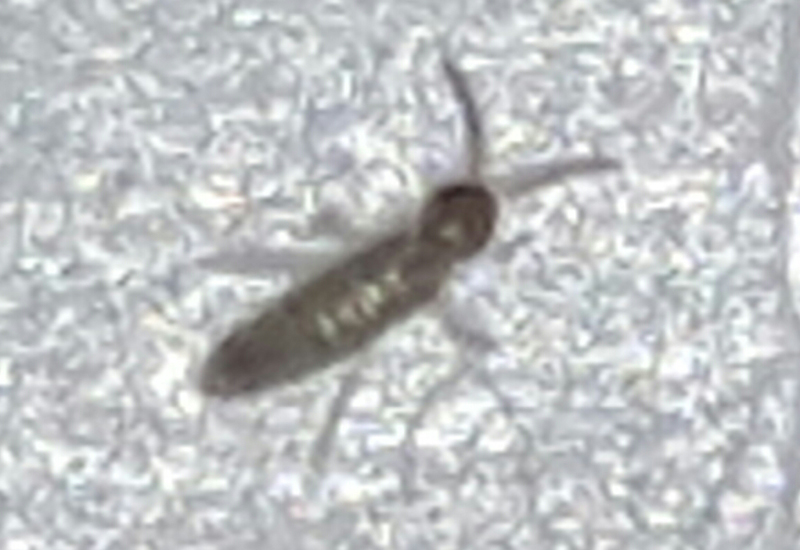
A particular species of springtails known as snow fleas are active during winter. You will be able to see snow fleas in late winter.
This is when the snow begins to thaw, and these springtails come out on the surface. Since they are black, you can easily see them against the snow. You might see snow fleas even in early spring.
Springtails are usually active during the summer, but snow fleas are able to survive even during very cold weather. This is because they have a glycine-rich antifreeze protein.
The protein helps keep the water content in their bodies from freezing over. The glycine content stops the formation of ice crystals, which is why snow fleas can live in sub-zero temperatures. Snow fleas often jump around in the snow and feed on organic matter.
Should I Be Worried About Them?
The simple reason why you have springtails in your house is that it is moist. They are not harmful to you. Springtails can, however, be a nuisance.
They do not harm any part of the house and are also not carriers of any diseases. Neither do springtails bite or sting, so there is no need to be worried.
However, if any area of your home has a big springtail infestation, you won’t like it. And there is a remote chance that they might trigger allergies or dermatitis, especially if there are adults with sensitive skin or children in the house. This is why they are still considered pests.
A few springtails here and there can actually be beneficial for your home. If you have houseplants, springtails in the soil will help prevent fungal growth on the plant material.
If you do want to get rid of springtails, it is best to clean the house and dry out the damp spaces thoroughly. You can also use some natural pesticides like vinegar or bleach to get rid of them.
Frequently Asked Questions
How did I get springtails?
You are likely to get springtails if the interior of your house is damp, there are moisture leaks, or if you have moist soil for your houseplants.
If you find springtails inside, check for high moisture content within the home. Springtails come indoors if the outdoor conditions are dry and cold.
How do springtails get in the house?
Springtails can enter the house through drain pipes, timber pieces, and organic material. They may be on vegetables, plants, or even soil mixes for the garden. Springtails can also get in the house when you bring in packages from outside.
Do springtails ever go away?
Springtails usually do not go away with chemical treatments. But if you can get rid of the source that is providing their habitats, you can get rid of them.
For example, fix the leaky pipes that result in damp interiors. Take out the plants with moist soil, and ensure that the indoors are dry and not humid. Alternatively, you can catch springtails for your terrarium or increase soil health for your kitchen garden!
Wrap Up
Springtails hardly cause any harm and are, in fact, creatures that are crucial to maintaining the ecological balance in nature. People have often called them the cleanup crew of nature because they can clean up bacteria, fungi, and even molds!
But springtail infestation is never pleasant, and you can always call on a pest control professional for assistance. We hope this article helped you understand where springtails are coming from in your home, and thank you for reading!


