The Black Witch Moth, a nocturnal marvel, has long captured the imagination of observers with its bat-like appearance and expansive wingspan.
As the largest moth in North America, its intricate wing patterns and unique behaviors make it a standout in the vast world of moths.
Delve into the captivating realm of the Black Witch Moth, from its cultural significance to its vital role in our ecosystem.
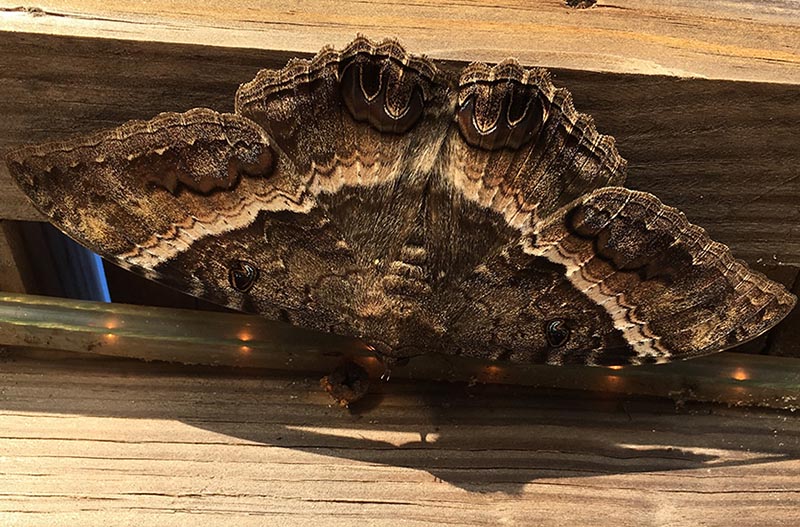
Moth That Looks Like a Bat
Black Witch Moth
The Black Witch Moth (Ascalapha odorata) is a large, nocturnal moth that bears a striking resemblance to a bat due to its size and wing shape.
Their wingspan can reach up to 7 inches, much larger than typical moths. The black and brown patterns of their wings add to their bat-like appearance.
Key Features:
- Large wingspan up to 7 inches
- Nocturnal behavior
- Black and brown wing patterns
Other Bat-Like Moths
There are other interesting species of moths displaying bat-like features. Some of these include the:
- Death’s-head Hawkmoth: Known for the skull-like pattern on its thorax, this moth mimics bats with its rapid and agile flight.
- Hawk Moths: Also known as Sphinx Moths, these insects have distinct wing shapes like bats and can hover, allowing them to mimic the movements of certain bat species.
Comparison between Bat-Like Moths:
| Feature | Black Witch Moth | Death’s-head Hawkmoth | Hawk Moths |
|---|---|---|---|
| Size | Large (up to 7 inches) | Medium to Large | Medium to Large |
| Nocturnal | Yes | Yes | Yes |
| Mimic Bat Appearance | Shape and size | Flight agility | Shape and movement |
| Unique Characteristics | Brown wing patterns | Skull-like thorax | Ability to hover |
In conclusion, moth species such as the Black Witch Moth and the Death’s-head Hawkmoth exhibit bat-like features and behaviors, making them fascinating subjects for further study.
Despite variations in size and wing patterns, their nocturnal habits and unique characteristics serve to link them with their bat counterparts.

Physical Characteristics
Size and Wingspan
Ascalapha odorata, also known as the Black Witch moth, is the largest moth in North America with a wingspan ranging from 13-18 cm. Here’s a comparison of its size to another common moth:
| Moth Species | Wingspan Range (cm) |
|---|---|
| Ascalapha odorata | 13 – 18 |
| Manduca sp.(Hawk Moth) | 7 – 14 |
Coloring
While these moths resemble bats in appearance, they have unique coloring. Key features include:
- Mottled dark brown and gray colors
- Zigzag patterns on wings
- Pale bands along forewing edges
Eyes
Black Witch Moths rely on their eyes for navigation and finding food. As nocturnal creatures, they have:
- Large, well-developed eyes
- Exceptional night vision
- Ability to see in low-light environments
Forewing
The forewings of the Ascalapha odorata have distinct characteristics:
- Pale bands along the edges
- Elongated shape, similar to a bat’s wings
This moth’s unique appearance, combined with its large size, makes it easily recognizable and differentiates it from other moth species.

Distribution and Habitat
North and Central America
In North and Central America, the Black Witch moth species can commonly be found in regions such as South Texas and throughout Mexico.
They often inhabit areas with abundant mesquite trees, as these provide suitable roosting locations.
Due to climate change, their distribution patterns might be affected, leading to alterations in their established habitats.
South America and Caribbean
Moth-like bats are also present in parts of South America and the Caribbean. Their habitats vary according to environmental conditions and the availability of prey.
Behavior
Black Witch moths are nocturnal and are often mistaken for bats due to their size and flight patterns.
For example, moths like these are found to fly at night and visit pale or white flowers that emit a strong fragrance, which attracts them for nectar consumption.

Cultural Significance
Folklore and Mythology
In Mexico, the Black Witch Moth is also known as the Mariposa de la Muerte or butterfly of death.
It is believed to be a harbinger of death, especially when seen in the proximity of a sick person. In the Mayan culture, this moth was associated with the female deity, Ixchel.
In Jamaica, there is a moth called the Duppy Bat, believed to be a lost soul or bad luck symbol.
Brazilian and Bahamian folklore also have similar stories about moths as carriers of lost souls or bad luck.
Features of these moths in folklore and mythology:
- Harbingers of death
- Represent lost souls
- Associated with bad luck and ill omens

Conclusion
Moths, with their diverse appearances and behaviors, play a crucial role in our ecosystem. The Black Witch Moth, in particular, stands out due to its bat-like appearance and significant wingspan.
Its nocturnal habits, cultural significance, and contribution to pollination highlight its importance.
Whether it’s their role in pollination or their deep-rooted cultural symbolism, moths like the Black Witch Moth continue to captivate and intrigue observers.
Footnotes


