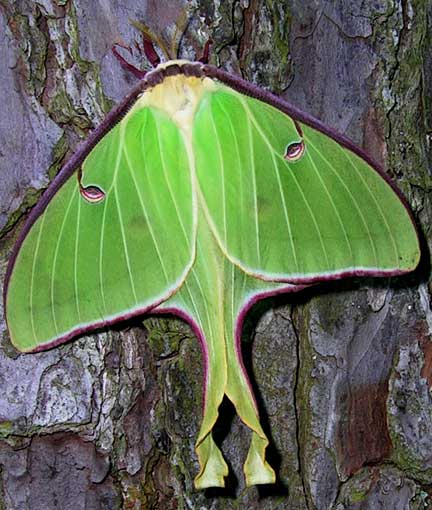
The Luna Moth, a fascinating and ethereal creature, has captivated observers with its vibrant colors and unique physical features. Boasting an impressive wingspan of 3-4.5 inches, these moths flaunt a magnificent sea-foam green to yellow hue, making them a sight to behold in North America. Derived from the name of the Roman moon goddess, Luna, these moths are also known as the American Moon Moth and can be commonly found throughout regions such as South Carolina source.
Not only are Luna Moths striking in appearance, but they also exhibit intriguing behaviors that contribute to their symbolism and meaning. For example, the tails on their hindwings serve a unique purpose – they help disrupt the sonar of hunting bats, increasing their chances of survival source. As we delve deeper into the world of Luna Moths, you’ll uncover a wealth of fascinating facts that will shed light on the meaning and significance of these remarkable creatures.
Luna Moth Overview
Appearance and Physical Features
- Wingspan: Luna moths have an impressive wingspan of 3-4.5 inches1.
- Color: Their sea-foam green to yellow color makes them easily recognizable1.
- Antennae: Luna moths possess feathery antennae, particularly in males2.
- Tail: A unique feature of these moths is their long tails on the hindwings2.
Habitat and Range
Luna moths, or Actias luna, are nocturnal insects found mainly in the eastern region of North America3. Their geographic range spans from Canada to eastern Texas and Florida, and as far north as Nova Scotia and Maine3. They commonly inhabit forested areas, thriving in both deciduous and mixed forests4.
Life Cycle of a Luna Moth
Eggs and Larvae
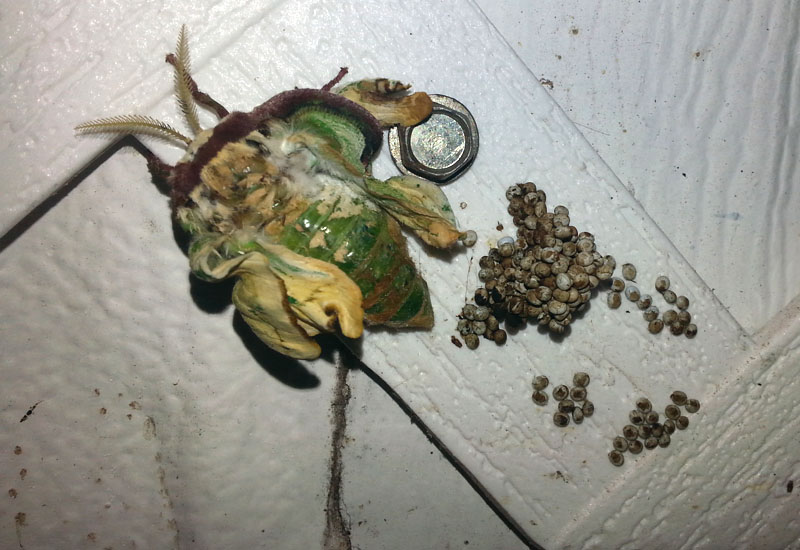
Luna moths begin their life cycle as eggs, which are laid on the leaves of host trees. Female luna moths typically lay around 100-300 eggs in small batches on the underside of leaves. These eggs hatch into tiny larvae, which start to feed on the leaves they were laid on.
Caterpillar Stage
As the larvae grow, they turn into bright green caterpillars. Luna moth caterpillars have:
- Convex segments with narrow yellow bands
- Ability to make clicking noises and vomit to deter predators
During this stage, the caterpillars eat a lot to support their rapid growth. They eventually become large, plump caterpillars before moving on to the next stage of their life cycle.
Cocoon and Pupa
When the caterpillar is ready for metamorphosis, it spins a silk cocoon around itself. This cocoon is where the pupa will form and the transformation into an adult luna moth will take place. This pupal stage lasts for about 2-3 weeks in spring and summer.
Adult Luna Moth
Once the metamorphosis is complete, an adult luna moth emerges from the cocoon. Some key features of an adult luna moth include:
- Pale or lime green color
- 3-4.5-inch wingspan
- Long tails and eyespots on all wings
- Feathery antennae, especially on males
At this stage, adult luna moths have a very short lifespan, usually only surviving for about a week. Their main purpose is to mate and lay eggs to continue the species.
| Caterpillar Stage | Adult Luna Moth | |
|---|---|---|
| Purpose | Growth and preparing for metamorphosis | Mating and laying eggs to continue the species |
| Features | Bright green, clicking noises, and vomiting | Pale green, large wingspan, long tails, eyespots |
The life cycle of a luna moth represents new beginnings as it goes through these fascinating transformations from egg to adult.
Survival Strategies and Predators
Eyespots and Tails
Luna moths have fascinating strategies to protect themselves from predators. One method involves the presence of eyespots on all four wings, which confuses predators and misdirects an attack to a less vulnerable part of their body1. Their long tails also serve an essential function – as predators often target them instead of the moth’s head, increasing their chances of survival1.
Echolocation Avoidance
Another ingenious survival strategy is avoiding predation by bats. Luna moths have tails on their hindwings that disrupt the echolocation signals bats rely on for hunting3. This allows luna moths to remain under the radar and increase their longevity.
Natural Predators
Luna moth caterpillars also employ unique defense mechanisms, such as producing a clicking noise and ejecting a distasteful fluid3. These techniques deter predators and significantly contribute to their survival in the wild.
Comparison Table: Luna Moth Defense Strategies
| Strategy | Description | Effectiveness |
|---|---|---|
| Eyespots | Confuse predators by appearing like a more significant threat1 | Redirects attacks to less vulnerable areas |
| Tails | Distract predators from the moth’s head1 | Often targeted, increasing survival chances |
| Echolocation Avoidance | Disrupt sonars of hunting bats, making moths less detectable3 | Elude bat predation |
| Caterpillar defense mechanisms | Produce clicking noises and distasteful fluid3 | Deter predators |
Symbolism and Spiritual Meanings
Transformation and Renewal
The luna moth symbolizes transformation and renewal due to its life cycle consisting of drastic changes. As a caterpillar, it represents the beginning of a journey and then emerges as a beautiful moth, signifying personal transformation and growth.
- Caterpillar stage represents beginnings
- Moth stage represents transformation
The luna moth acts as a reminder to embrace change and trust the process of personal growth.
Intuition and Lunar Energy
Luna moths are associated with intuition and lunar energy due to their nocturnal nature and connection to the moon. They symbolize trusting your gut and following your own path.
- Nocturnal, connected to the moon
- Represents intuition and trust
Luna moths also symbolize good luck and embracing the unknown, as they are creatures of the night, often appearing during times of change.
Divine Feminine and Duality
The luna moth represents the divine feminine and duality, embodying both the grace and power of the feminine spirit. Their lunar connection ties them to the nurturing and intuitive energies of the moon.
- Associated with grace and power
- Connected to nurturing and intuitive energies
As a totem animal, the luna moth encourages embracing the dual aspects of one’s nature, such as strength and vulnerability, and seeking balance in life.
| Transformation and Renewal | Intuition and Lunar Energy | Divine Feminine and Duality |
|---|---|---|
| – Personal growth | – Trusting intuition | – Balance in life |
| – Embracing change | – Lunar energy | – Strength and vulnerability |
| – Beginning of a journey | – Good luck | – Grace and power |
Threats and Conservation Status
Endangered Species and Pollution
- Luna moths (Actias luna) are not currently considered an endangered species.
- Pollution can threaten their habitats and food sources.
Pesticides and Other Threats
- Pesticides can harm luna moth caterpillars, which graze on tree vegetation.
- Caterpillars deter predators with clicking noises and vomiting.
Comparison Table: Endangered Species vs. Pesticides
| Threat | Luna Moth Status | Examples | Impacts |
|---|---|---|---|
| Endangered | Not endangered | N/A | N/A |
| Pollution | Threat | Water pollution, air pollution | Habitat loss, decreased food |
| Pesticides | Threat | Chemicals used in agriculture | Caterpillar mortality |
[sc name=”bugquiz” ][/sc]
Fun Facts and Additional Information
Photographing Luna Moths
Luna moths, also known as moon moths or American moon moths, are a stunning subject for photography due to their vibrant green color and distinct eye-like markings on their wings. Here are some quick tips for capturing their beauty in a photo:
- Take photos at night, as they are nocturnal insects
- Use a gentle flash to illuminate their unique green hue
- Choose an angle that showcases the intricate details, like their long tails and eye-like markings
- Be patient, as they only live as adults for about a week, making these encounters rare and special
Luna Moths and the Butterfly Connection
Luna moths are part of the silk moth family, separate from butterflies. However, they share some intriguing connections:
Luna Moths vs. Butterflies:
| Aspect | Luna Moth | Butterfly |
|---|---|---|
| Wings | Large, broad, green, & eye-like markings | Mostly smaller, more colorful patterns |
| Life Cycle | Complete metamorphosis (egg, larva, pupa, adult) | Complete metamorphosis (egg, larva, pupa, adult) |
| Antennae | Feather-like | Club-like |
Shared Features:
- Both undergo complete metamorphosis
- Adults have wings covered in tiny scales
- Both are pollinators
- Bright colors and patterns serve as a defense mechanism against predators
While luna moths and butterflies evolve alongside each other, sharing features and ecological roles, they remain distinct in many ways. No matter if you’re photographing them or observing them in nature, these enchanting creatures have much to offer.
Footnotes