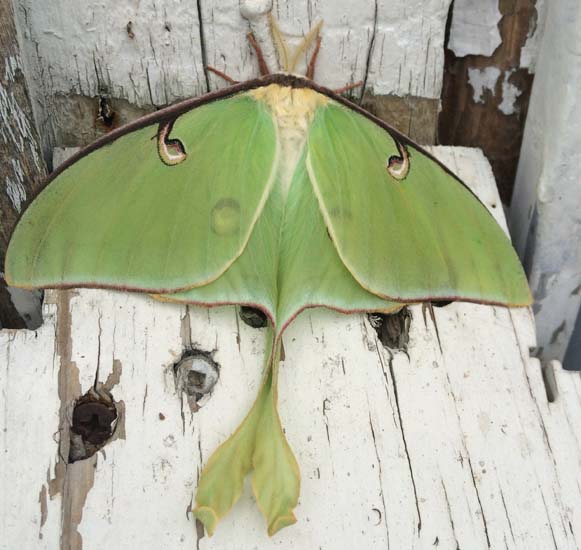
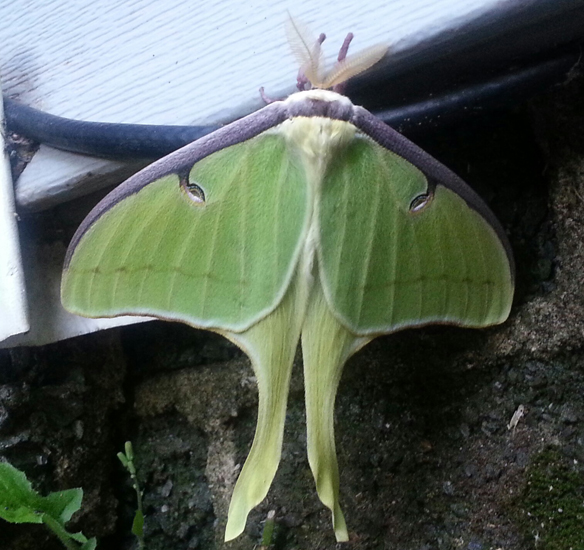
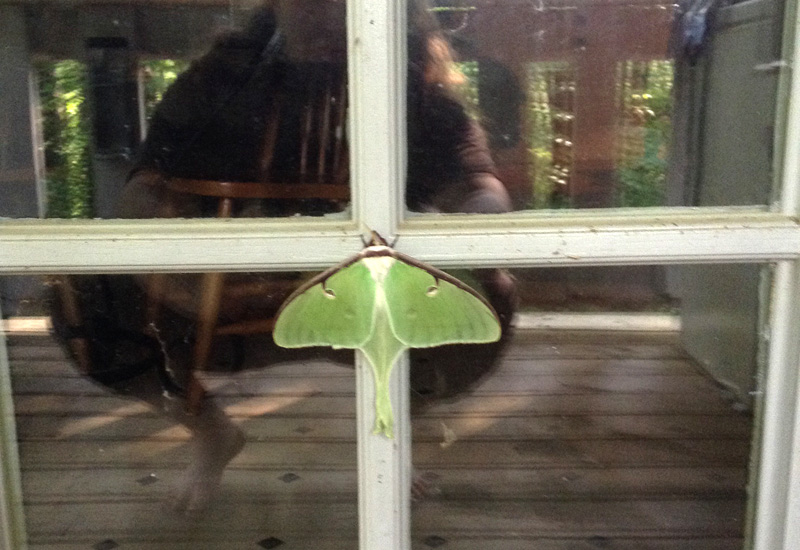
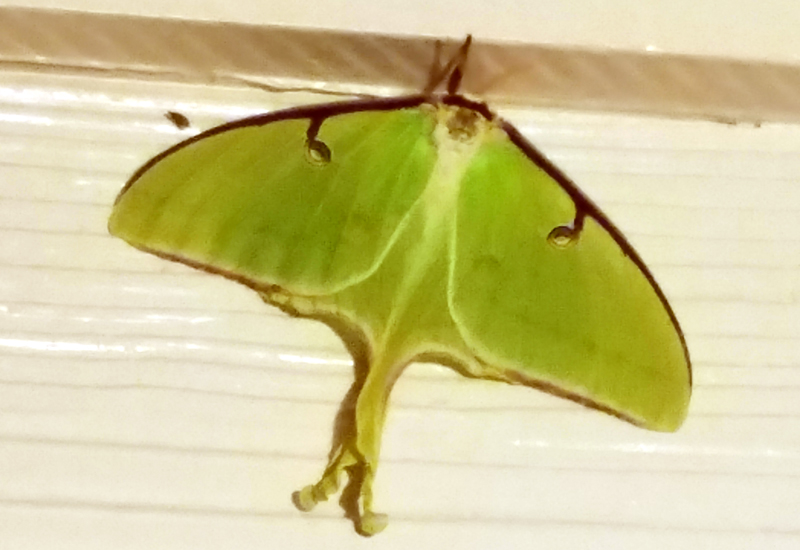
Luna moths are known for their striking appearance, sporting a pale green hue, long tails, and large wingspan. With their unmistakable charm, it is only natural to wonder if these captivating insects pose any danger to humans. The primary concern for most people revolves around whether or not these moths can bite.
Fortunately, luna moths do not have biting mouthparts. They belong to a group of moths called Saturniidae, which also includes other large-sized moths. These creatures pose no threat to humans, as their adult stage consists of a short life span solely dedicated to breeding.
Luna Moth Overview
Appearance and Wingspan
The Luna Moth (Actias luna) is a stunning insect known for its large size and unique features. Key characteristics include:
- Lime-green wings
- Long tails on hind wings
- Eyespots on all four wings
- Wide wingspan measuring 3 to 4.5 inches
In comparison to other North American moths, the Luna Moth is significantly larger and more visually striking.
Habitat and Range
Luna Moths can be found across North America, including the United States and Canada. They prefer deciduous woodlands as their primary habitat.
Life Cycle
The life cycle of Luna Moths consists of several stages:
- Eggs laid on host plant leaves
- Larvae emerging as bright green caterpillars
- Pupation in a silk cocoon
- Fully-formed adult moth stage
The number of generations per year varies by region:
- Univoltine: one generation, found in areas like Michigan
- Bivoltine: two generations, common in the Ohio Valley
- Trivoltine: three generations, occurring in the southern United States
While Luna Moths are not considered endangered, they do face some natural challenges and changes in their habitat can impact their population. Overall, these fascinating insects are a striking addition to the insect world.
Biting and Stinging
Do Luna Moths Bite?
Luna moths, large green moths with a long tail on each hind wing and discal eyespots on both the fore and hind wings, do not bite. Adult moths and butterflies, in general, are not capable of biting or stinging humans.
Do Luna Moth Caterpillars Sting?
Luna moth caterpillars do not have a stinger nor a venomous bite. However, some caterpillars possess spiny hairs that can cause skin irritation. The irritation is not due to a venom or poison, but to a mechanical action of the hairs lodging into the skin.
Allergic Reactions
It is possible for some people to have allergic reactions to caterpillars or moth’s hairs, but these cases are rare. Symptoms of an allergic reaction can include:
- Skin redness
- Mild itching
- Small, raised bumps on the skin
Comparison of Luna Moth Caterpillars and Poisonous Caterpillars:
| Feature | Luna Moth Caterpillars | Poisonous Caterpillars |
|---|---|---|
| Sting or Venom | No | Yes |
| Spiny Hairs | No, hairy but not irritating | Yes |
| Skin Irritation | Minimal to none | Often significant |
| Painful Sting or Bite | No | Yes |
| Harmful to humans | No | Yes |
In conclusion, Luna moths and their caterpillars are not harmful to humans as they do not have a stinger or venomous bite. Any skin irritation that may occur is likely due to the mechanical action of the hairs, and any allergic reactions are rare.
Defense Mechanisms
Camouflage
Luna moths have an impressive natural defense mechanism that helps them blend into their surroundings. Their wing pattern allows the insect to easily camouflage itself when resting against tree bark or in fallen leaf litter1.
Some key features of their camouflage include:
- Pale or lime green color
- Dark leading edge on the forewings
- Eyespots on all four wings2
Tails and Scales
Another defense mechanism of Luna moths involves their tails. These long, visually elaborate tails serve a crucial purpose in helping them evade predators, particularly bats3. The tails create an acoustic illusion, confusing echolocation and allowing them to avoid capture.
Scales, on the other hand, line the moth’s wings and can detach when plucked by a predator, clearing an escape path.
Toxic Properties
While Luna moths’ bodies do not possess any known toxic properties, their caterpillars do have a toxic feature to fend off potential predators. Luna moth caterpillars secrete a foul-tasting substance that deters would-be attackers from consuming them.
Predators
Despite their impressive defenses, Luna moths are not immune to predation. They face threats from various predators, including:
- Owls
- Bats
- Bald-face hornets
- Parasitic wasps
- Fiery searcher ground beetles1
| Predator | Defense |
|---|---|
| Owls & Bats | Tails, scales, and camouflage |
| Hornets & Wasps | Camouflage |
| Ground Beetles | Camouflage and possibly toxic properties |
Luna Moths and Human Interaction
Luna Moth in Pop Culture
Luna Moths, with their vibrant green coloring and striking appearance, have captured the human imagination. As a result, they are often seen as symbols of beauty and transformation in various forms of art, such as paintings, tattoos, and even fabric patterns.
These fascinating insects have also made their way into popular literature and movies, often representing magical elements due to their short lifespan and ethereal appearance.
Luna Moths in Gardens
Luna Moths are generally considered harmless to humans. The adult moths do not have a mouth and therefore do not bite or feed on anything. They strictly focus on reproduction during their brief, week-long existence as winged creatures. Below are some key characteristics of Luna Moths in gardens:
- Caterpillars: As larvae, Luna Moths feed on tree leaves such as walnut and sweet gum, which provide their host plants with a crucial role in the ecosystem.
- Cocoons: The caterpillars spin silk to form protective cocoons where they undergo metamorphosis during winter months.
Gardeners and nature lovers often appreciate having Luna Moths around for their beauty and unique coloring. Here are some tips for a harmonious coexistence with these lovely creatures:
- Host Plants: Include host plants for Luna Moth larvae in your garden, such as walnut, sweet gum, or hickory trees.
- Bright Lights: Minimize artificial bright lights at night, as they can attract and disorient adult moths.
- Respectful Distance: Avoid handling the insects to minimize stress and damage to their delicate wings.
In conclusion, Luna Moths pose no threat to humans, and interactions with them can be enjoyable and educational when approached respectfully. Cultivating a garden that supports their lifecycle can contribute to their populations and allow us to better appreciate these stunning creatures.
Related Species of Luna Moth
Chinese Luna
The Chinese Luna moth, scientifically known as Actias dubernardi, is another stunning member of the Luna moth family. Some key features of the Chinese Luna moth are:
- Smaller wingspan compared to the American Luna moth
- Long tails like the American Luna moth
- A vibrant yellow-green color with eyespots on its wings
These moths have adapted to their surroundings, displaying an aerodynamic build that makes them efficient flyers. They tend to have a small population as they face various threats, including habitat loss and predators.
Vampire Moths
Unlike the Chinese Luna moth, Vampire moths are quite unique and different from typical Luna moths. They are also called poisonous moths because of their unusual feeding habits. Here are some notable characteristics:
- Referred to as ‘Vampire moths’ as some species feed on mammal blood
- Unique feeding behavior among the moth family
The Luna moth cocoon, which houses both the Luna moth and its related species, plays a significant role in the moth’s life cycle. In general, Luna moth cocoons offer protection, allowing them to undergo metamorphosis in a secure environment.
In summary, the Chinese Luna and Vampire moths are two examples of interesting species related to the main topic. While they share certain similarities in appearance with the Luna moth, their behaviors and habitats distinguish them from one another.
Comparison Table
| Characteristic | Chinese Luna | Vampire Moths |
|---|---|---|
| Family | Saturniidae (same as Luna moths) | Calyptra family, varies |
| Size | Small | Varies depending on the species |
| Color | Vibrant yellow-green with eyespots | Varies, not limited to green |
| Feeding Habits | Herbivorous, feeding on leaves | Varies, some species feed on mammal blood and fruit |
| Habitat | Forests in mainland China | Found worldwide, most species in tropical regions |
Safety Precautions and Considerations
For Humans
Luna moths, known for their vibrant green color and long tails, are generally harmless to humans. They lack the mouthparts required for biting, as they do not need to consume food during their short adult life cycle (*source). Despite their harmless nature, there are a few points to consider:
- Handle with care: Though Luna moth larvae and adult forms are not harmful, handling them should be done carefully to prevent damaging their delicate wings.
- Allergic reactions: While incidents are rare, some individuals might experience allergic reactions when handling moths or coming into contact with their eggs. It’s essential to wash hands thoroughly after handling them.
For Pets
The safety of pets, particularly dogs, in relation to Luna moths is essential to consider as well:
- Eating larvae: Pets may be tempted to snack on Luna moth larvae. However, the fat-rich content of the larvae could cause indigestion or other gastrointestinal issues.
- Regurgitation: In some cases, dogs may regurgitate the larvae due to the larvae’s defense mechanism of regurgitating its stomach contents. This can cause nausea or vomiting in dogs.
- Bacteria: Both Luna moth eggs and larvae may carry bacteria that, if ingested, could lead to health problems for pets. It’s best to keep pets away from these insects, and ensure proper hygiene when handling them.
In summary, Luna moths don’t pose a significant threat to humans or pets, but it’s essential to take simple precautions to ensure the safety and well-being of all involved.
Footnotes