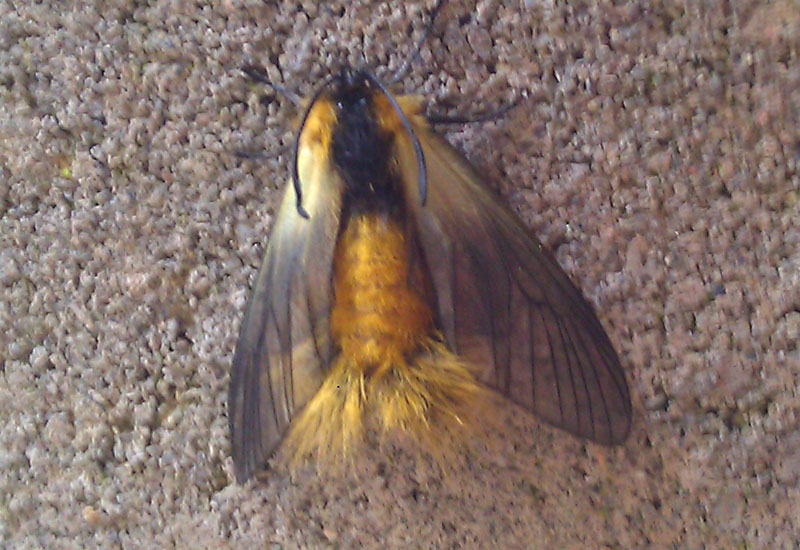
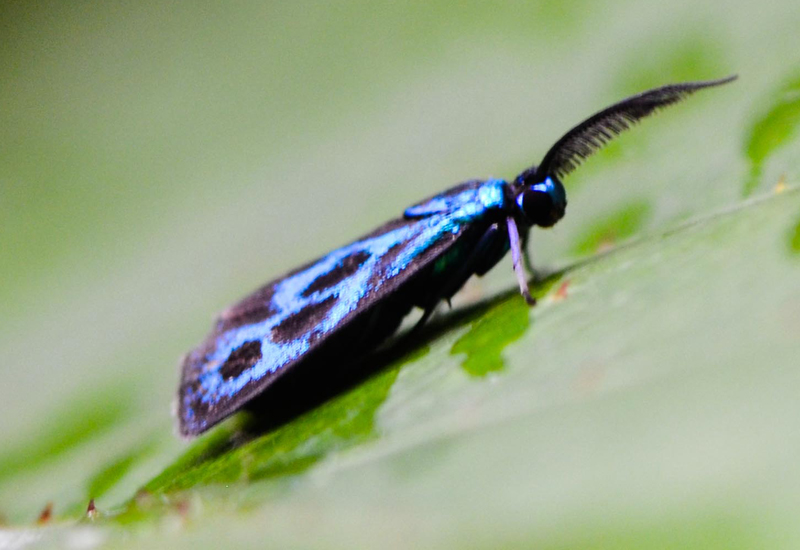
The Grape Leaf Skeletonizer is a type of moth whose larval stage is notorious for wreaking havoc on grapevines. Its scientific name is Harrisina americana, and it can be found in various regions across the United States. These insects are considered a pest due to their destructive feeding habits, which can lead to damaged fruit and even encourage bunch rot in grape bunches.
Adult grape leaf skeletonizer moths are easily recognizable by their black wings and red or orange collar behind their heads. On the other hand, their larvae are known for feeding on the underside of grape leaves, leaving just the veins behind. This skeletal appearance gives the insect its name and makes it easily identifiable.
Considering the potential damage that grape leaf skeletonizers can cause to grapevines, it’s essential for growers and gardeners alike to be aware of their presence and effective methods to control them. Regular treatments for grape pests can help keep these pesky insects in check, ensuring healthy and bountiful grape harvests.
Grape Leaf Skeletonizer Overview
Identification
The grapeleaf skeletonizer (Harrisina americana) is a moth that belongs to the Zygaenidae family within the Lepidoptera order. These moths are characterized by their metallic blue body and black wings1. Adults have an unbroken collar of red or orange behind their black head2. Males and females can be distinguished by their antennae, with males having feathery, comb-like antennae3.
Classification
The family Zygaenidae includes other moth species like:
- Yellow-collared scape moth (Cisseps fulvicollis)
- Virginia ctenucha (Ctenucha virginica)
These species share similarities, but the grapeleaf skeletonizer is unique due to its feeding habits and impact on grapes. A comparison table of these species:
| Species | Body Color | Wing Color | Unique Features |
|---|---|---|---|
| Grapeleaf Skeletonizer | Metallic Blue | Black | Feeds on grape leaves4 |
| Yellow-collared Scape Moth | Black | Black | Yellow collar around its neck5 |
| Virginia Ctenucha | Metallic Blue | Black | Virginia native, daytime flier6 |
Some characteristics of the grapeleaf skeletonizer include7:
- Larvae feed on the underside of grape leaves
- Can cause defoliation and sun-damaged fruit in grapevines
- Larval spines can cause skin welts
Problems caused by grapeleaf skeletonizer in grape cultivation:
Pros:
- None
Cons:
- Defoliation
- Sun-damaged fruit
- Potential for bunch rot
- Skin irritation from larval spines
Life Cycle and Biology
Eggs and Larvae
The life cycle of the Western Grapeleaf Skeletonizer begins with the females laying clusters of lemon-yellow, capsule-shaped eggs on the lower leaf surfaces of grapevines. The hatched larvae feed on grape leaves in groups, leaving the upper surface intact. The defoliation they cause can lead to sun-damaged fruit and eventually to bunch rot.
- Larvae stage examples:
- Young larvae feed on the leaf underside.
- Late-stage larvae skeletonize leaf tissue, leaving large veins.
Pupae and Moths
As the larvae mature, they turn into pupae, which hibernate during the cooler season. The adult Western Grapeleaf Skeletonizer moths emerge from these pupae in early spring to June. These metallic bluish or greenish-black moths have a wingspan of 1 to 1.3 inches and are part of the tiger moth family, different from the butterflies.
- Moth characteristics:
- Body length: about 0.6 inch.
- Males and females have comblike (bipectinate) antennae.
- Unbroken collar of red or orange is behind the black head.
- Tip of the abdomen is expanded and curls upward.
During their life cycle, Western Grapeleaf Skeletonizer moths can infest grapes, grapevines, and even Virginia creeper, posing a threat to grape crops. To manage infestations, Bacillus thuringiensis (a naturally occurring bacterium) can be used against caterpillars of this moth species.
Comparison Table:
| Aspect | Larvae | Moths |
|---|---|---|
| Feeding | On the underside of leaves | Adults do not feed |
| Damage to grapevines | Skeletonize leaf tissue | Lay eggs that produce larvae |
| Appearance | Greenish-yellow | Black wings, red collar |
| Active season | Warmer months | Spring to June |
Signs of Infestation and Damage
Foliage and Skeletonized Leaves
Grape leaf skeletonizers are pests that feed on grape leaves, causing significant damage in vineyards. The early stage larvae of these pests feed in groups on the underside of leaves, leaving the upper surface intact1. The late stage larvae skeletonize leaf tissues, consuming tissues between the veins, leaving large veins intact1. Some notable characteristics of infested leaves include:
- Holes or transparent patches on leaves
- Skeletonized appearance with only the veins remaining
False skeletonizers, such as Phanes aoloithus haydenella and Acoloithus spp., may cause similar damage but can be distinguished from true grape leaf skeletonizers based on their feeding habits and morphology2. Handpicking is one way to control both types of pests3.
Grape Crop Impact
The damage caused by grape leaf skeletonizers can have significant impacts on grape crops. Defoliation can lead to sun-damaged fruit and reduced photosynthesis1. Additionally, feeding on grapes can result in bunch rot1. To summarize the effects on grape crops:
- Sun-damaged fruit due to defoliation
- Bunch rot from the larvae feeding on grapes
Control and Management
Cultural and Mechanical Control
Cultural and mechanical control methods involve altering the environment to reduce the likelihood of grapeleaf skeletonizer infestation. For example:
- Regularly inspect grapevines for signs of damage and remove larvae.
- Handpick larvae in smaller areas for efficient treatment 1.
Biological Control
Biological control refers to the use of living organisms for controlling pests. In the case of grapeleaf skeletonizers, some options include:
- Applying Bacillus thuringiensis (Bt), a bacterium that specifically targets caterpillars 2.
- Encouraging natural predators such as parasitic wasps and birds in the habitat.
Chemical Control
Chemical control methods involve applying pesticides to manage populations of grapeleaf skeletonizers. Integrated pest management practices can help suppress populations while targeting other pests 3. Some options for chemical control are:
- Using Vivando, Prolivo, Sovran, Quintec, and Gatten, which provide excellent control against specific grape diseases 4.
- Applying pre-bloom applications of stylet oil, although caution should be taken as it can cause leaf injury on certain varieties 5.
Pros:
- Effective in reducing grapeleaf skeletonizer populations.
- Integrated pest management practices target other pests as well.
Cons:
- Chemicals may have negative impacts on the environment.
- Pesticides can cause phytotoxicity in some grapevine varieties.
Here’s a comparison table of the different control methods:
| Method | Pros | Cons |
|---|---|---|
| Cultural/Mechanical | Non-toxic and safer for the environment | May not be sufficient for large infestations |
| Biological | Targets specific pests with minimal environmental impact | Limited availability of natural predators |
| Chemical | Highly effective in controlling pests | Potential for negative environmental consequences |
Prevention and Monitoring
Prevention of grapeleaf skeletonizer infestation starts with regular inspection. Handpicking larvae can be effective in small infestations. When dealing with these insects, be cautious of their bristly hairs, which can cause skin rashes.
Monitoring methods help detect grapeleaf skeletonizer populations early on. Adult grapeleaf skeletonizers have a distinct appearance, sporting a two-parted tuft that resembles cat whiskers. Identifying and tracking their presence can aid in timely management efforts.
Some monitoring and prevention methods:
- Handpicking larvae
- Regular inspections
- Monitoring for presence of adult insects
Grapeleaf skeletonizers are part of the grape family. It’s essential to implement prevention and monitoring strategies for the overall health of your grapevines. In some cases, biological control methods can be introduced to target the pest population.
| Prevention Methods | Pros | Cons |
|---|---|---|
| Handpicking | Non-toxic | Labor-intensive |
| Regular Inspection | Early detection | Time-consuming |
| Biological control | Reduces pest population | May affect non-target species |
By integrating these prevention and monitoring strategies, grape growers can effectively manage grapeleaf skeletonizer infestations and maintain the health of their vines.
[sc name=”bugquiz” ][/sc]Footnotes
- https://education.mdc.mo.gov/discover-nature/field-guide/grapeleaf-skeletonizer ↩ ↩2 ↩3 ↩4 ↩5
- https://mdc.mo.gov/discover-nature/field-guide/grapeleaf-skeletonizer ↩ ↩2
- https://mdc.mo.gov/discover-nature/field-guide/grapeleaf-skeletonizer ↩ ↩2
- https://entnemdept.ufl.edu/creatures/fruit/grapeleaf_skeletonizer.htm ↩
- https://bugguide.net/node/view/4121 ↩
- https://www.butterfliesandmoths.org/species/Ctenucha-virginica ↩
- https://extension.usu.edu/pests/ipm/ornamental-pest-guide/arthopods/moths/western-grapeleaf-skeletonizer ↩