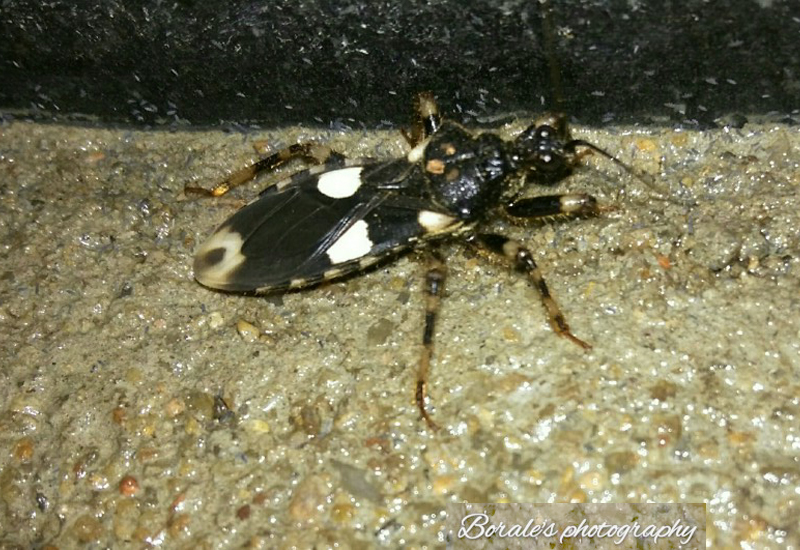
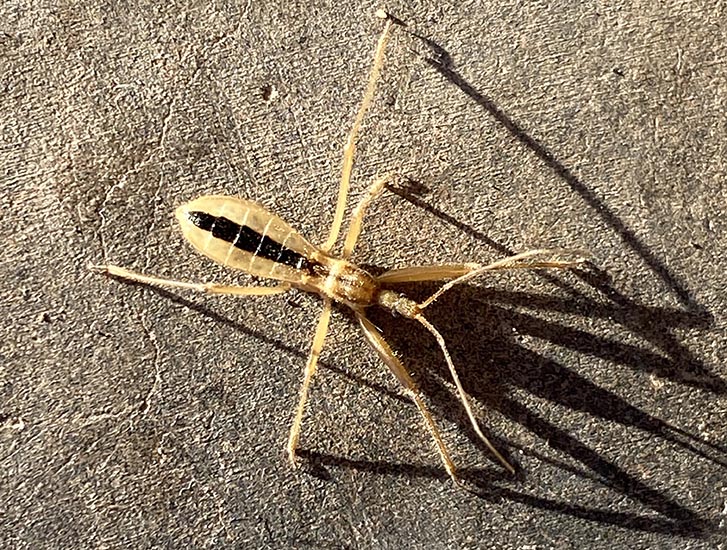
Assassin bugs have been creating a furor recently, with reports of these bugs increasing across America. But do assassin bugs fly too? Can they harm humans in any way? Let’s find out.
Assassin bugs have an ominous name, but the name does not come from these bugs hurting humans! These bugs are named assassins because they are particularly good at killing their prey, which is small insects and spiders.
In this article, we look at whether these bugs can fly and explore some of the common bugs of these species to understand their flying abilities.

Do Assassin Bugs Have Wings?
Yes, they do. Assassin bugs are from a class of insects known as Reduviidae, part of the order Hemiptera. Hemiptera is also known as “true bugs.”
True bugs have dual wings, one being leathery and the other being membranous. Assassin bugs also have the same characteristic wings as other true bugs.
These wings fold back on the body of the bug, creating a pattern that looks similar to an X on its back when the insect is at rest.
True bugs also have specialized mouthparts for sucking and piercing things – among plant eaters; this is useful for piercing the flesh of the plant, whereas, for carnivores, there is a more deadly use.
Can Assassin Bugs Fly?
Despite that rather long explanation of their beautiful X-shaped wings, these bugs aren’t the best fliers of the insect kingdom.
In fact, various entomologists have described their flying capabilities to be clumsy at best. Perhaps it is for the best that they don’t need to fly much to get their food.
They have a tubular-shaped head in the front with a protruding rostrum that helps them suck out the juices from their prey. These bugs also have small eyes and longish, spindly legs.
Among the few species that can fly well, these assassin bugs have a tendency to chase after light. If you have bright lights indoors and a crack in the wall or ceiling, these bugs will fly right in, seeking warmth.

Some Common Species of Assassin Bugs and Whether They Can Fly
There are nearly 7,000 species of assassin bugs. Many of them are hard to distinguish from other insects, and you might end up squishing one for no reason. Here are a few assassin bugs you should know about.
The Wheel Bug
Wheel bugs are about 1.25 inches long and one of the most easily recognized and prevalent type of assassin bugs.
Wheel bugs are slow movers, and they can fly.
These bugs are grey and carry a half-moon crest on their backs. Wheel bugs are on top of the food chain as far as insects are concerned, with very few natural predators.
If they are present in your garden, it signifies that there is a healthy ecosystem with food to go around for everyone.
Ambush Bugs
Ambush bugs are more brightly colored and available in red, orange, and yellowish varieties.
Jagged ambush bugs have wings and can fly, but they don’t do it often.
These bugs are versatile in their hunting capabilities; they can do it just about anywhere.
But their favorite spot is to sit on flowers and wait for their prey, which comes automatically drawn to the nectar of the flower.
Their long legs help them grab onto their prey and hold it down.

Pale Green Assassin Bug
As the name suggests, these bugs are pale green in color, which acts somewhat like camouflage for them when they are hunting.
These bugs don’t have wings in their youth but can fly as adults. But their hunting style makes up for that drawback.
The first method they use is to make maximum use of their camouflage and wait for insects in tree leaves hidden in plain sight.
But when other bugs become wise to their hunting game plan, they will crawl down and force their prey into a confrontation.
Pale green assassins can lay as many as 50 eggs in one go. Their eggs are brown in color.
Milkweed Assassins
Milkweed Assassins (Zelus longipes) are quite common in the southern parts of America. They are rather short in their species, ending up at about three-quarters of an inch when fully grown.
These bugs are either orange-black or brown-black in color. They love to hunt among most types of crops, but milkweeds are their favorites.
Milkweed assassins cannot fly. You can find them in corn fields, hunting for fall armyworms on foot. They are excellent for protecting your crops against other bugs.
Their hunting technique sets them apart from their brethren in the assassin bug category. These bugs lay out a sticky substance on leaves, which traps their potential prey, making them an easy target.
Kissing Bugs
Kissing bugs are the most infamous type of assassin bugs. They are named so because they love biting human faces near the mouth and eyes, trying to suck the blood out of them.
Adult kissing bugs can fly, but the younger ones cannot.
Despite the rather ominous reputation they carry, kissing bug bites are mostly harmless. Kissing bugs will bite you in the same place as many as 15 times.
While you will not care much for the redness or swelling, it is hard to tell the difference from other bug bites.
These bugs are largely present in the southern parts of America. They love to hide under porches and in logs of wood. If you have a farm with a chicken coop or dog house, you might find kissing bugs there as well.
There are two complications, though rare, that need special mention in regard to Kissing bugs:

Allergies
If you are allergic to bug saliva, a kissing bug’s bit can become a big problem. It may cause itching, swelling, and redness in the area.
But in some serious cases, the patient might end up with an anaphylactic shock, unable to breathe, and facing a severe drop in blood pressure, which can be fatal.
Chagas Disease:
Kissing bugs are sometimes carriers of Chagas disease. In most cases, Chagas disease is not a big deal. But in some cases, the symptoms can lead to heart disease or intestinal problems.
Unfortunately, there is no cure or vaccine for Chagas disease, and you have to carry it with you for the rest of your life.
Frequently Asked Questions
How can you tell an assassin bug?
Assassin bugs have a curved beak at the front of the mouth, which falls in a groove between the front legs.
This beak-like mouthpart helps to pry open the prey insect and suck in the liquids from its body. Most species are either black or brown, but some can be green, yellow, or other colors also.
Where are assassin bugs most commonly found?
Different species of assassin bugs have different habitats, but the most common ones, like the kissing bug and the wheel bug, are found all over America.
You might often see kissing bugs in California, Arizona, New Mexico, and Texas. They used to be limited to southern regions, but global warming has caused them to move to North America as well.
Why is it called an assassin bug?
They are called assassins because they can kill their prey almost instantly – just like an assassin can shoot down his victim with a single shot.
Their specialized mouthparts let them pierce the outer skin of their victim and suck out the body fluids, leaving the poor victim dead in the first bite itself.
What happens if an assassin bug bites you?
Most assassin bug bites don’t have any long-term effects. The kissing bug is the exception since it can sometimes be the carrier of Chagas disease.
Apart from this, bites from assassin bugs can often be treated in the same way as other bug bites. Apply ice packs to the area where the bite has occurred,. If it was a painful bite, take an antihistamine for the pain and swelling.
Wrap Up
So now you know that assassin bugs can fly. Well, there’s really no need to worry, even though they do fly. Firstly, they are pretty clumsy at doing it, and secondly, they can’t really harm humans much.
These bugs are sometimes attracted to lights, so if you have some of them in your garden, they might come inside looking for warmth.
Don’t squish them, just suck them up with a vacuum and return them back to your garden, where they belong.
Thank you for reading!