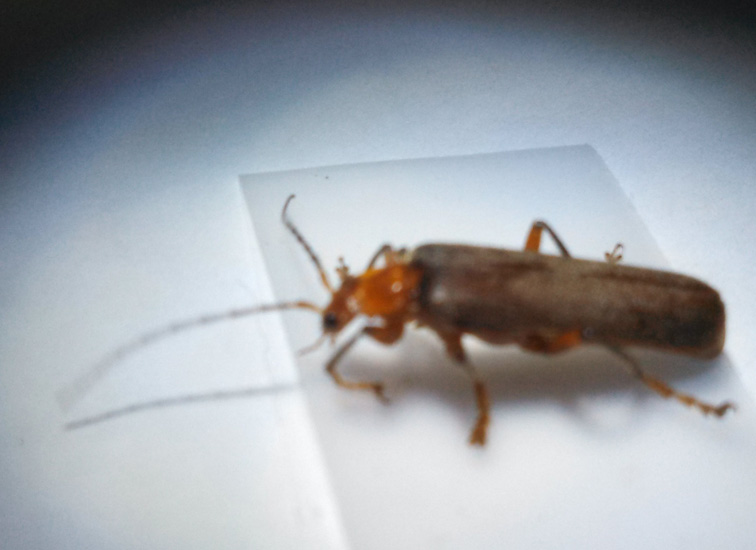
Soldier beetles have a four-stage lifecycle.
Egg Stage
During the egg stage, female soldier beetles lay their small, oval-shaped eggs in concealed places like soil, leaf litter, or under bark. These eggs usually hatch within a week or two, depending on environmental conditions.
Larvae Stage
Upon hatching, the larvae emerge and begin their quest for food. They are carnivorous and actively hunt for prey like small insects and insect eggs, keeping your garden pest-free. During this stage, the larva undergoes a series of molts as it grows bigger, shedding its old exoskeleton to make room for its expanding body.
Pupa Stage
As the soldier beetle larva reaches its maximum size, it enters the pupa stage of metamorphosis. Encased in a protective cocoon, the larva transforms into an adult soldier beetle. This pupation process typically takes a couple of weeks.
Adult Stage
Once the metamorphosis is complete, the adult soldier beetle emerges from its pupal case. In this stage, both males and females actively search for mates to continue the life cycle. Adult soldier beetles feed on nectar, pollen, and small insects, and they play a vital role in controlling garden pests. After mating, the adult beetles will live for a few more weeks before dying.
To summarize:
- Egg Stage: Female lays small, oval-shaped eggs
- Larvae Stage: Carnivorous larva grows and molts
- Pupa Stage: Transformation in a protective cocoon
- Adult Stage: Mating and pest control
.