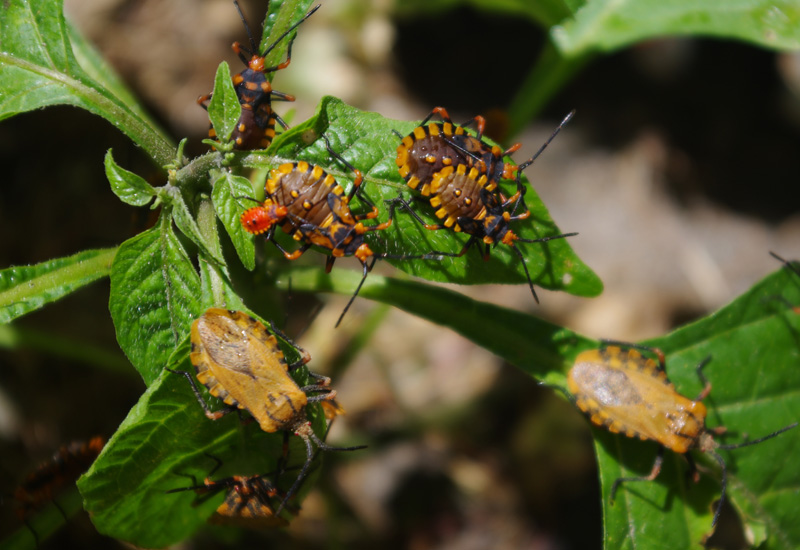
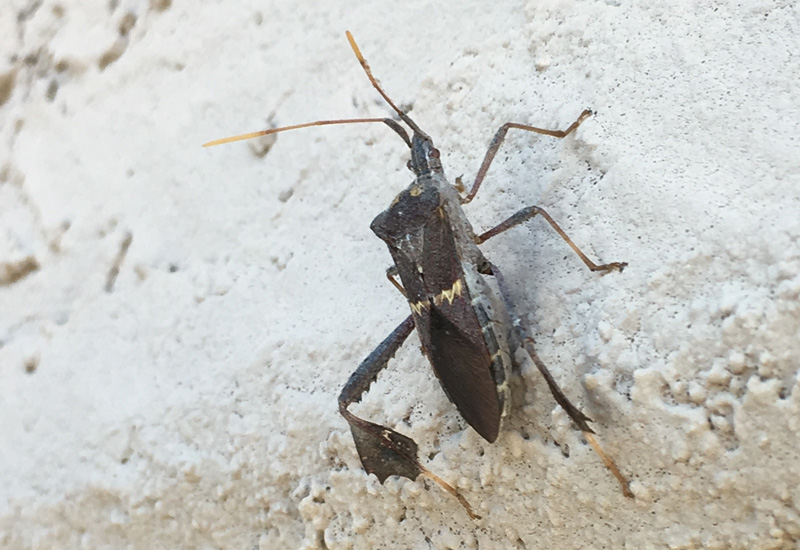
Gardening enthusiasts and homeowners often face the challenge of dealing with leaf-footed bugs. These medium to large-sized insects are known for their leaf-like hind legs and their ability to cause damage to a variety of plants, such as tomatoes, peaches, blueberries, beans, okra, and pecans. They use their piercing-sucking mouthparts to feed on plant parts, particularly seeds, resulting in weakened or destroyed crops.
It’s essential to recognize and manage these pests to maintain a healthy garden. Luckily, there are several strategies one can employ to control their presence, making it easier to protect your plants from potential damage. In this article, we’ll explore different methods of getting rid of leaf-footed bugs and preventing their return.
From natural predators to barrier techniques, the following sections will provide thorough guidance on combating these garden nuisances. You’ll learn about various approaches you can use to create a more sustainable, bug-free garden, ensuring your plants continue to thrive and produce an abundance of beautiful fruits and vegetables.
Understanding Leaf-Footed Bugs
Life Cycle
Leaf-footed bugs pass through five nymphal stages before becoming adults. Their life cycle includes:
- Eggs: Golden brown, laid in a single row or chain on stems or leaf undersides.
- Nymphs: Develop through five stages, becoming more like adults in each stage.
- Adults: Brown with flattened, leaf-shaped hind leg expansions.
Identification
Distinguishing features of leaf-footed bugs are:
- Medium to large-sized insects
- Belong to the family Coreidae
- Leaf-like enlargements on hind legs
- Piercing-sucking mouthparts for feeding on plants
To better identify leaf-footed bugs, consider comparing these features:
| Feature | Leaf-Footed Bug | Assassin Bug |
|---|---|---|
| Size and shape | Medium to large insects | Smaller and more slender |
| Mouthparts | Piercing-sucking | Curved, beak-like |
| Legs | Leaf-like enlargements on hind legs | Thin, with no leaf-like expansions |
| Behavior | Pest – feeds on plants | Beneficial – feeds on other insect pests |
To distinguish between different leaf-footed bug species, look for unique characteristics. For example, the eastern leaf-footed bug (Leptoglossus phyllopus) has a white line across its wing backs.
By understanding the life cycle and identification of leaf-footed bugs, you can better manage them in your garden.
Damage Caused by Leaf-Footed Bugs
Leaf-footed bugs are garden pests that can cause significant damage to a variety of plants, fruits, and vegetables. These insects have piercing-sucking mouthparts which allow them to feed on plant seeds and other parts, particularly in fruiting vegetables, nuts, berries, and ornamentals (source).
Nymphs and adult leaf-footed bugs often target popular garden crops such as tomatoes, pomegranates, eggplants, and nuts (source). They are also known to damage other plants like peaches, blueberries, beans, okra, and pecans (source).
Infestations of leaf-footed bugs could lead to fruit drop, irregular fruit growth, and reduced crop yields (source).
In addition to the direct damage caused by feeding, these pests can also transmit diseases to plants, further exacerbating the harm done to crops and gardens (source).
Comparison Table: Damage caused by leaf-footed bugs
| Plants Affected | Type of Damage |
|---|---|
| Tomatoes | Sucking plant fluids, causing fruit drop and reduced yields |
| Pomegranates | Piercing seeds, causing fruit to split and deform |
| Eggplants | Feeding on seeds, leading to irregular fruit growth |
| Nuts | Damaging nut kernels, reducing crop quality |
Characteristics of leaf-footed bug damage:
- Irregular fruit growth
- Fruit drop
- Reduced crop yields
- Possible transmission of plant diseases
It is crucial for gardeners and farmers to identify and manage leaf-footed bug infestations as these pests can easily wreak havoc on both ornamental and fruit-bearing plants.
Strategies for Controlling Leaf-Footed Bugs
Organic and Chemical Treatments
- Neem oil: A natural pesticide that can be applied on the pests and their eggs.
- Insecticidal soap: Kills nymphs and adults on contact by targeting their soft bodies.
- Pyrethrin: A chemical pesticide that can be used sparingly on infested areas.
Pros:
- Effective against a range of garden pests.
- Less harmful to beneficial insects when used carefully.
Cons:
- Can harm beneficial insects and natural predators if overused.
- Some can leave harmful residues on fruits and vegetables.
Natural Predators and Beneficial Insects
- Assassin bugs: Feed on other insect pests, including leaf-footed bug nymphs.
- Spiders: Catch and consume a variety of garden pests.
- Birds: Attracted by seeds, feed on adult leaf-footed bugs and other pests.
Physical Removal Techniques
- Handpicking: Physically removing the bugs from plants and submerging them in soapy water.
- Row covers: Placing covers over plants, especially during spring when bugs lay cylindrical eggs.
Cultural Practices
- Weed control: Removing weeds to remove shelter and alternative host plants.
- Woodpile management: Eliminating woodpiles where bugs can overwinter, hiding in crevices.
Companion Planting
- Planting sunflowers, peppers, or watermelons to deter leaf-footed bugs from the main crops.
- Adding plants that attract beneficial insects to the garden.
Integrated Pest Management
- Combine multiple methods from physical removal, cultural practices, and companion planting.
- Limit the use of chemicals and pesticides to reduce harm to natural predators and beneficial insects.
| Method | Ease of use | Effectiveness | Impact on Environment |
|---|---|---|---|
| Organic treatments | Medium | High | Low-Medium |
| Natural predators | Easy | Medium | Low |
| Physical removal | Medium-Hard | Medium | Low |
| Cultural practices | Medium | Medium | Low |
| Companion planting | Easy | Medium | Low |
| Integrated pest management | Medium | High | Low |
When dealing with leaf-footed bugs, it’s essential to use a combination of methods to control their populations and minimize their impact on your garden. Adjust your strategy based on the severity of the infestation, your location, and the type of plants you grow for the best results.
[sc name=”bugquiz” ][/sc]