We know you’re dealing with beetles invading your space, potentially putting health and property at risk. If you need help identifying and eliminating the infestation at the source, connect with our recommended local professional near you.
Blister beetles can cause irritation on your skin and be deadly to your pets and other animals in your home. In this article, we discuss some ways to get rid of them.
Blister beetles are a common pest found in gardens and fields.
They are toxic pests because they release a blistering agent when injured or crushed, which can cause blisters if it comes in direct contact with the skin.
These pests are harmful to humans as well as to your plants and crops.
There are several ways to get rid of them, manually and using insecticides. I will discuss these in detail in the following article.

What Are Blister Beetles?
Blister beetles are part of the Meloidae family of insects.
They are called blister beetles because of a chemical called cantharidin that comes out of them and causes irritation and blisters on the skin when you touch them.
What Do They Look Like?
Blister beetles are usually between 3/4th to 1-1/4 inch in length.
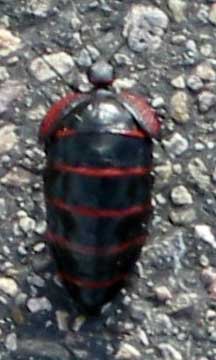
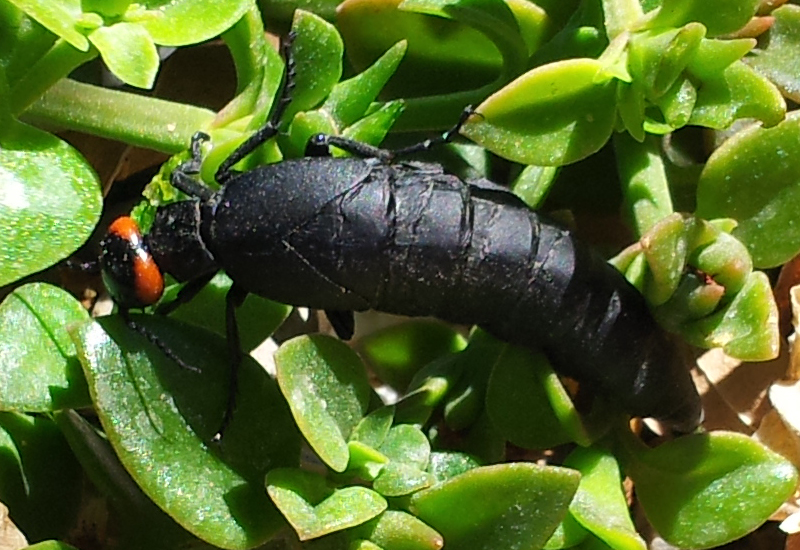
There are many species of blister beetles, of which only a few are found in the US. Most have an elongated cylindrical body, a short thorax, and a wide head.
They are soft-bodied insects.
Blister beetles may also come in several colors, such as ash gray, brown, black, and green. You might also spot striped blister beetles or those with spots.
Where Are They Found?
Blister beetles are commonly found all across the US, South and Central America, and the West Indies.
Moreover, grasshoppers are the main prey for blister beetles. Hence you will find them wherever you find grasshoppers, which is gardens, parks, and other open areas.

What Damage Do They Cause?
Blister beetles can feed on crops and flowers and cause a lot of destruction. When they feed on flowers, it stunts the plant’s growth as it is unable to produce fruit.
Eating blister beetles can be fatal for animals because of the toxins they secrete.
They especially endanger horses and other livestock that often feed on alfalfa hay.
Blister beetles are very common in alfalfa fields, so horse owners should be particularly careful to inspect the hay first.
A large amount of cantharidin and blister beetles consumed even accidentally can cause inflammation, blister beetle poisoning, and even death in animals.
Are They Dangerous To Humans?
As we discussed above, when crushed or injured, blister beetles produce a toxin known as cantharidin.
When it comes in direct contact with the human skin, it can cause irritation and blisters.
If humans ingest them accidentally, it can cause gastrointestinal issues and harm the urinary tract.
How To Get Rid of Blister Beetles Through Natural Ways?
If you find a blister beetle infestation, it is best to use natural and organic ways instead of chemical treatments to remove them.
Diatomaceous Earth
One of the most common and well-known products used is diatomaceous earth (DT). It’s a powder version of a soft, siliceous sedimentary rock that occurs naturally in the environment.
Sprinkling DT near your plants will kill the beetles and prevent new ones from infesting the plants.

Oyster lime shell
You can also use oyster lime shells to repel the blister beetles. While not as effective as DT, you can definitely use it as a preventative measure before planting.
Remove Manually
You can also manually clear the beetles by picking them out of your garden.
However, do not forget to wear gloves if you choose to do this. If you injure or crush them by mistake, the toxins they secrete can irritate and cause blistering on the human skin.
Once you pick the bugs, collect them in a bucket and spray soapy water to kill them.
Neem Oil
You can also try a homemade mix of neem oil in about a gallon of water and some liquid soap.
Spray on the bugs directly and ensure you cover them completely because blister beetles tend to trick you by pretending to be dead.
The neem mixture interferes with the beetles’ need to feed and makes them sterile, stopping reproduction.
Cover Your Plants
Another effective way is to use row covers for your plants. You can either use framed screens or plastic sheeting.
The ideal time to put down these row covers would be after you plant your saplings and before it’s time for pollination.
Birds
Birds are major predators of insects, and it’s no different for blister beetles.
Attracting birds to your gardens with bird feed and water will ensure they pick blister beetles from your plants.

Keep Out Grasshoppers
Blister beetles (more specifically, their larvae) love feeding on grasshopper eggs and weeds such as pigweed, ironweed, and ragweed.
The adult beetles feed on fully-grown grasshoppers.
Keeping these weeds and grasshoppers out of your garden automatically keeps blister beetles out.
Using Chemical Methods For Blister Beetle Control
Please try to use natural and organic ways and products to eliminate garden pests.
However, if the infestation is very strong, only a chemical treatment will help you deal with it.
Spinosad sprays are the most commonly used chemical treatment to eliminate blister beetles.
Spinosad is a biopesticide that will kill blister beetles within 24-48 hours.
It also breaks down into harmless ingredients after two days of exposure to sunlight. This makes it safe for other animals and birds.
However, make sure you keep it away from the water supply.
Group 1 and 3 insecticides, commonly known as Carboryl, lambda-cyhalothrin, and gamma-cyhalothrin, are also considered effective when dealing with blister beetles.
Do not use these when plants are in full bloom, though.
How To Prevent Blister Beetles From Coming Back?
Blister beetles tend to feed on pigweed, ironweed and ragweed.
By maintaining your garden/field and keeping these plants from growing, you can make sure blister beetles stay away from your plants.
[sc name=”bugquiz” ][/sc]

Grasshoppers are a delicacy for blister beetles. If you spot several grasshoppers in your garden or field, it’s best to inspect the grounds for their eggs as well.
The larvae of this bug feed on grasshopper eggs, and the adult blister beetles feed on adult grasshoppers.
So, if you wish to prevent a blister beetle infestation, ensure that you keep weeds and grasshoppers at bay.
Frequently Asked Questions
How do you get rid of blister beetle infestation?
There are several natural ways to get rid of a blister beetle infestation.
For example, you can use diatomaceous earth or oyster lime shells on them.
If there are only a few, you might also pick them up one by one (with gloves protecting your hands).
After that, just put them in soapy water, and they will die off automatically.
Neem oil is another good way to get rid of these pests.
What are blister beetles attracted to?
Blister beetles are attracted to light, especially ultraviolet (UV) wavelengths. This means that they often congregate around artificial lighting sources at night.
They also feed on grasshoppers and other small insects.
Blister beetles are most active during the warmer months of the year and can be found in large numbers in fields after sunset.
Why do I have blister beetles?
Blister beetles are a common pest problem that can occur in gardens and agricultural crops.
They feed on plant material such as leaves, stems, and flowers. When populations get too high, they can cause serious damage to your plants.
In addition to feeding on the foliage, blister beetles produce a chemical when disturbed that is released from their bodies, causing blisters and sores.
This chemical irritates other organisms, including humans, and can cause discomfort and irritation if handled without proper protection.
What happens if you touch a blister beetle?
Touching a blister beetle can cause skin irritation or dermatitis due to its toxic chemicals called cantharidin.
These chemicals are released as a defense mechanism when the beetle is disturbed.
Cantharidin causes inflammation and blisters with contact, hence its name.
Some people have experienced itching, swelling, and redness on areas of skin exposed to the bug’s exoskeleton.
This may last anywhere from a few hours to several days, depending on the severity of the contact.
You also should be aware that these beetles also release a foul odor when agitated as another defense mechanism.
Wrap Up
Blister beetles are garden and crop pests that secrete toxins harmful to animals and humans. They can also destroy flowers and vegetables by feeding on them.
There are several manual and chemical ways to get rid of them. You can use diatomaceous earth, oyster lime shell, and neem spray as natural repellants. You can weed them out manually too.
In terms of pesticides, you can use spinosad sprays to kill a blister beetle infestation.
Thank you for reading!