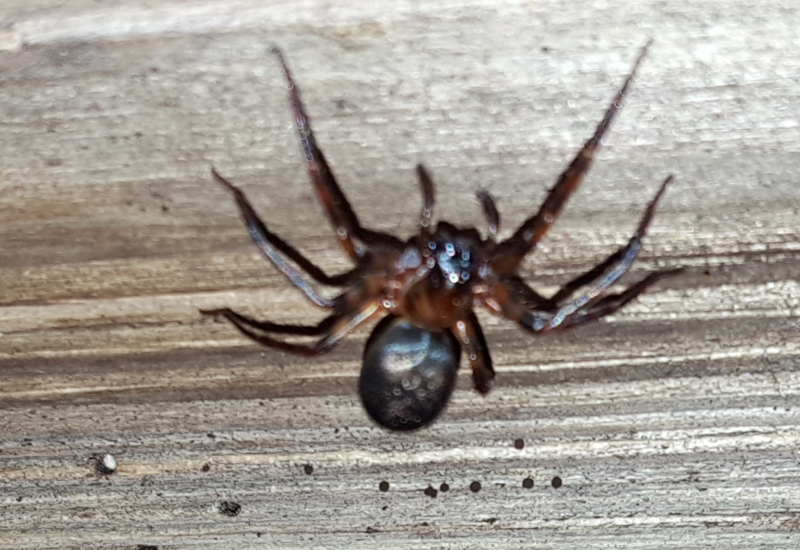
Crevice Weaver Spiders are a fascinating species you might encounter in various environments. They are known for their unique web designs, with webs usually found in holes or cracks of exterior walls. These spiders play an essential role in controlling insect populations, making them beneficial for ecosystem balance.
One noteworthy characteristic of Crevice Weaver Spiders is their adaptability to different locations. You can often find them in areas with vegetation in contact with building foundations. For people who want to encourage the presence of these helpful arachnids, steps such as clearing away vegetation near the structure and sealing cracks can create a welcoming habitat.
Some pros and cons of having Crevice Weaver Spiders around:
Pros:
- Natural pest control
- Eco-friendly alternative to chemical insecticides
Cons:
- Aesthetically unappealing to some
- Potential discomfort for those with arachnophobia
What is a Crevice Weaver Spider?
Filistatidae Family
Crevice Weaver Spiders belong to the Filistatidae family. They are typically found in:
- Human-populated areas
- Close to building foundations
- Holes or cracks in exterior walls
The Filistatidae family is known for their unique flat, tangled webs1.
Genera and Species
One of the most common species in this family is the Kukulcania hibernalis2, also known as the Southern House Spider. This spider can be found throughout Florida and much of the southern United States2.
Key features of Crevice Weaver Spiders include:
- Distinctive flat, tangled webs
- Preference for crevices and holes
- Typically found in human-populated areas
A comparison between Filistatidae spiders and another common spider family, Agelenidae:
| Filistatidae (Crevice Weaver) | Agelenidae (Funnel Weaver) | |
|---|---|---|
| Web | Flat, tangled | Funnel-shaped |
| Habitat | Crevice, holes, human-populated areas | Gardens, grassy areas |
| Size | Varies | Varies |
Physical Characteristics
Color and Size
The Crevice Weaver Spider is typically small in size, about a quarter of an inch in length. Their body color varies as they can be:
- Yellow
- White
- Greenish
Upper body and legs of the Crevice Weaver Spider tend to be darker than their abdomen.
Eyes
Having eight eyes is a common trait among spiders, and the Crevice Weaver Spider is no exception. Their eyes are arranged in two parallel rows, allowing them to have a wide field of vision.
Dorsal Carapace
The carapace or cephalothorax of the Crevice Weaver Spider is quite interesting. It features:
- Dark longitudinal lines
- Sculptured appearance with furrows and ridges
Sexual Dimorphism
There is noticeable sexual dimorphism in Crevice Weaver Spiders, including:
- Males being smaller than females
- Males having more distinct colorations and markings
| Feature | Males | Females |
|---|---|---|
| Size | Smaller | Larger |
| Colorations and Markings | More distinct | Less distinct |
Habitat and Distribution
Natural Habitats
Crevice Weaver Spiders are commonly found in various habitats across the world. They often inhabit cracks and crevices, which provide them with shelter and protection. These spiders can be found in countries like:
- Australia
- Mexico
- America
- Greece
- Guatemala
- Chile
- Argentina
- Sudan
- Namibia
Generally, crevice weavers thrive in areas with plenty of walls and overhangs for them to build their webs.
Man-Made Structures
In addition to natural habitats, crevice weaver spiders frequently occupy man-made structures such as:
- Homes
- Masonry of buildings
- Man-made overhangs
These spiders prefer dwelling in the cracks and crevices of walls and other structures, where they can construct intricate webs to catch their prey. Examples of common locations within homes include:
- Window sills
- Door frames
- Corners of rooms
Pros of having crevice weaver spiders in man-made structures:
- They help control insect populations
Cons of having crevice weaver spiders in man-made structures:
- Some people find them unpleasant or fear their presence
Behavior and Lifestyle
Feeding and Prey
Crevice weaver spiders primarily feed on insects, including various flies, moths, and mosquitoes. These nocturnal hunters wait patiently in their webs and attack when their prey lands or gets trapped.
Webs for Entangling Prey
Crevice weavers are known for their specialized webs, which they build in cracks and crevices. These webs have a unique design that is highly effective for entangling prey:
- Sticky spiral silk for trapping victims
- Sturdy structure that holds up in adverse weather conditions
- Dense layers that make it difficult for prey to escape
Reproduction
These spiders reproduce by laying egg sacs near their webs. For example, the southern house spider’s egg sacs are deposited in crevices or wall corners, ensuring a safe location for the developing spiderlings.
Longevity
Crevice weaver spiders are known to have relatively long lifespans. Some species, like the southern house spider, can live up to eight years in ideal conditions.
| Feature | Crevice Weaver Spider | Comparison Spider |
|---|---|---|
| Primary Food Source | Insects | Insects |
| Web Type | Specialized | Typical orb |
| Lifespan | Up to eight years | 1-2 years |
| Reproduction Method | Egg sacs | Egg sacs |
- Pros: Efficient hunters, long lifespan, unique webs for capturing prey
- Cons: Less common, may be mistaken for harmful spiders, found in less-visible spots
Interaction with Humans
Presence in Homes
Crevice Weaver Spiders, like Anton Ausserer described, prefer dark and secluded areas. They can be found around:
- Window and door screens
- Shutters
- Firewood piles
Keep these spaces clean to discourage their presence.
Crevice Weavers and Pests
These spiders help in controlling pest populations, as they feed on other insects like:
- Flies
- Mosquitoes
- Beetles
Appreciate their pest-controlling abilities instead of viewing them as a threat.
Bite and Venom
Comparing Crevice Weavers to other spiders like Brown Recluse:
| Spider | Venom Potency | Level of Danger |
|---|---|---|
| Crevice Weaver | Low | Minimal |
| Brown Recluse | High | Dangerous |
Crevice Weaver bites:
- Rarely occur
- Mild pain and itching (in some cases)
Unlike Recluse spiders, Crevice Weavers don’t have dangerous venom. However, it’s important to exercise caution and avoid direct contact.
Interesting Facts
Relation to Tarantulas
Kukulcania hibernalis, a crevice weaver spider, belongs to the Araneae order within the Haplogynae infraorder. Surprisingly, these spiders are not closely related to tarantulas. However, they do share some similarities with their larger and hairier counterparts, such as:
- Both belong to the Araneae order of arthropods
- Both have eight legs and two main body sections
Nevertheless, their differences outweigh their similarities, making their relationship rather distant.
Meso-American God
The name Kukulcania is derived from the Meso-American god Kukulkan, which highlights the spider’s cultural significance. Kukulkan was a revered deity in the ancient Mayan civilization and was often depicted as a feathered serpent. Although the crevice weaver spider is not depicted as a direct symbol of Kukulkan, its name pays homage to the mythology of the region.
Pedipalps Usage
Crevice weaver spiders, like other araneae, utilize their pedipalps for various purposes. These specialized appendages located near the mouth aid in a variety of functions, such as:
- Sensing the environment
- Manipulating food during feeding
- Courting and mating rituals
For example, male crevice weaver spiders use their pedipalps to transfer sperm to the female during mating. This process is essential for reproduction and ensures the survival of their species.
Comparison Table: Crevice Weaver Spider vs. Brown Recluse Spider
| Feature | Crevice Weaver Spider (Kukulcania hibernalis) | Brown Recluse Spider (Loxosceles reclusa) |
|---|---|---|
| Size | Medium-sized (1/2 to 3/4 inch in length) | Medium-sized (1/4 to 3/4 inch in length) |
| Habitat | Found in crevices and human-populated areas | Found in dark, secluded places |
| Bite | Rarely bites; not medically significant | Venomous; bites may cause swelling |
| Family | Filistatidae | Sicariidae |
Footnotes