The cecropia moth is a fascinating and visually striking creature, best known for being the largest moth native to North America. Its life cycle, spanning just one year, is packed with activity and transformation, as it takes on several forms to ensure the survival of the next generation.
In the short two-week adult phase, these nocturnal moths engage in a flurry of activity. Mating and laying eggs are their critical tasks, as they need to quickly continue the life cycle of the species. The moths are primarily active at night, using scent-emitting techniques to “call” to one another.
During the majority of their short lives, cecropia moths spend approximately 10 months encased in cocoons, transforming from larvae to vibrant and large adults. This transformative period showcases nature’s impressive resilience and life-cycle efficiency in action.
Cecropia Moth Life Cycle Stages
The cecropia moth, or Hyalophora cecropia, has a one-year life cycle, with a majority of its time spent in the cocoon stage. Let’s take a closer look at each stage of the cecropia moth life cycle.
Eggs
- Cecropia moths lay large, mottled reddish/brown eggs.
- Eggs are typically laid on trees where caterpillars will feed.1
Caterpillar
- Cecropia moth caterpillars are large and colorful.
- They feed on trees, such as maple, birch, and apple2.
- Caterpillars grow rapidly and molt several times before forming a cocoon.
Cocoon
- Cecropia moth caterpillars spin sturdy, brown silk cocoons3.
- Cocoons are usually attached to twigs of the host tree.
- The moth spends about 10 months in the cocoon, overwintering as a pupa4.
Adult Moth
- Cecropia moths are the largest native moths in North America5.
- Adults are nocturnal and live for about two weeks6.
- Their main goal during their short adult life is to find a mate and reproduce7.
Pros and Cons of the Cecropia Moth Life Cycle:
Pros:
- Large and vibrant appearance makes them a favorite among collectors and nature enthusiasts.
- Rapid growth during the caterpillar stage for improved survival.
Cons:
- Short two-week adult life leaves little time for mating and reproduction.
- Long cocoon stage makes them more susceptible to predation and environmental factors.
Habitat and Range
North American Distribution
The Cecropia Moth (Hyalophora cecropia) is found primarily across North America, with a range extending from Maine in the north, down to Florida in the south, and as far west as the Rocky Mountains1. These striking moths thrive in hardwood forests, where their preferred host plants flourish2.
Host Plants
Cecropia Moths lay their eggs on a variety of trees, which serve as food sources for the caterpillars after they hatch3. Some common host plants include:
- Maple
- Apple
- Ash
- Birch
- Box Elder
- Elm
- Plum
- Willow
- Lilac
Due to their diverse range of host plants, Cecropia Moths can adapt to various environments, ensuring their survival in different geographic areas.
Comparison Table: Common Host Plants for Cecropia Moth
| Host Plant | Distribution | Characteristics |
|---|---|---|
| Maple | Widespread | Deciduous, dense wood, distinctive leaf shape |
| Apple | Widespread | Deciduous, fruit-bearing, often used in orchards |
| Ash | Widespread | Deciduous, compound leaves, often found in woodlands |
| Birch | Mainly Northern Regions, Boreal Forests | Deciduous, recognizable white bark, narrow canopy |
| Box Elder | Eastern and Central US | Deciduous, shrub-like, compound leaves, fruits (samaras) resemble maple seeds |
Morphology and Behavior
Wingspan and Markings
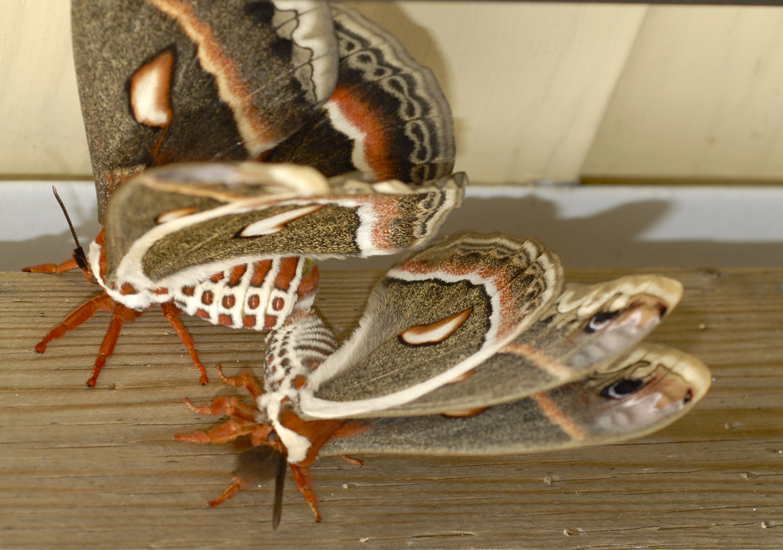
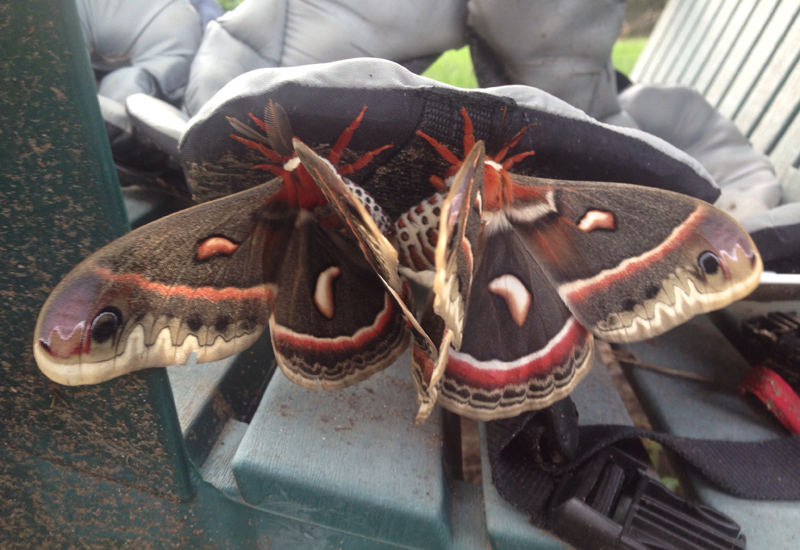
The Cecropia moth, also known as Hyalophora cecropia, is North America’s largest native moth species, with a wingspan ranging from 5 to 7 inches. Here are some key features of the moth’s appearance:
- Dark brown or gray wings with reddish patches at the base of forewings 1
- White collar and white bands on red, hairy body 2
- Feathery antennae
Nocturnal Activity
As nocturnal creatures, Cecropia moths are most active during the night. During this time, they search for mates and food sources. A few examples of their nocturnal behaviors include:
- Flying towards artificial light sources due to their attraction towards light
- Mating and laying eggs on host plants during the night
Mating and Pheromones
Cecropia moths utilize pheromones as a primary tool for mating. These chemical signals play a crucial role in attracting mates for successful reproduction. Key points about their mating and pheromones include:
- Female moths release pheromones to attract male moths to their location.
- Males have highly sensitive antennae that help them detect the pheromones from long distances.
Caterpillar Growth and Development
Food and Feeding Habits
Cecropia caterpillars are known for their insatiable appetite. They feed on a variety of host plants, including oaks, cherry, beech, apple, and button bush 1(https://www.nps.gov/articles/species-spotlight-cecropia-moth.htm). They consume leaves to support their rapid growth and development.
Molts and Instars
During the growth process, caterpillars undergo several molts and instars. Each instar is a developmental stage marked by shedding their old skin.
- First Instar: Newly hatched caterpillars are small and black with short bristles.
- Mature Instar: As they grow, caterpillars become green with a blue tinge, reaching around four inches long and nearly ¾-inch in diameter 2(https://ohioline.osu.edu/factsheet/HYG-2015-11).
| Instar Stage | Physical Appearance | Size (Length and Diameter) |
|---|---|---|
| First Instar | Black with short bristles | Tiny |
| Mature Instar | Green with blue tinge, without bristles | ~4 inches long, ¾-inch diameter |
After reaching their final instar, caterpillars spin silk cocoons to form pupae, eventually emerging as adult cecropia moths 3(https://content.ces.ncsu.edu/cecropia-moth).
Predators and Conservation
Natural Enemies
Cecropia moth (Hyalophora cecropia), belonging to the Saturniidae family, faces various natural enemies throughout its life cycle. Some of these predators include:
- Flies: Tachinid flies can attack and parasitize cecropia moth larvae.
- Insects: Different insect species, such as wasps, prey on cecropia moth larvae and pupae.
- Bolas spiders: These spiders are known to capture moths, including members of the Saturniidae family, using a sticky “bolas” they produce.
The table below compares two common predators of the cecropia moth: flies and insects (such as wasps).
| Predator | Stage of cecropia moth life cycle targeted | Method of attack |
|---|---|---|
| Flies | Larvae | Parasitism |
| Insects | Larvae and pupae | Prey on and consume |
Human Impact
One way in which human activities can indirectly impact cecropia moth populations is through the management of a different moth species, the gypsy moth. When measures are taken to control gypsy moth populations, such as through the use of insecticides, it can inadvertently affect cecropia moth individuals.
Moreover, habitat loss and urbanization can also endanger cecropia moth populations by reducing their available habitat and food sources. Promoting conservation efforts can help ensure the continued survival of this beautiful and unique species.
Cultural Significance
The Cecropia moth, known as a native moth in North America, is considered one of the most spectacular species in its region. With its impressive and colorful appearance, it has become a symbol of beauty and wonder in nature. The moth’s size and unique features have captured the attention of collectors, nature lovers, and organizations like the National Wildlife Federation.
The Cecropia moth is also referred to as the Robin moth. This alternative name is indicative of its popularity and recognition amongst enthusiasts and casual observers alike. Its eye-catching appearance is characterized by large, dark brown or gray wings with reddish patches at the base of each forewing, and “eyespots.”
- Features of the Cecropia moth:
- Large size (largest native North American moth)
- Reddish patches at the base of each forewing
- Eyespots on the wings
- Feathery antennae
- Dark brown or gray wings with white bands
Cecropia moths have even inspired some cultural depictions as well. With a resemblance to the ever-changing phases of the moon, some cultures have associated these moths with lunar symbolism. Additionally, the moth’s unique transformation during its life cycle is also regarded as a metaphor for personal growth and change.
In conclusion, the Cecropia moth holds a special place in the cultural awareness of North America. Its unique appearance and life cycle have captured the imagination of people from all walks of life, leading to its continued prominence in art, folklore, and conservation efforts.
Footnotes
- EENY 478/IN861: Cecropia Moth, Cecropia Silk Moth, Robin Moth ↩ ↩2 ↩3 ↩4
- cecropia moth – Hyalophora cecropia Linnaeus ↩ ↩2 ↩3 ↩4
- Cecropia Moth ↩ ↩2 ↩3
- Species Spotlight – Cecropia Moth ↩
- Cecropia Moth Robin Moth ↩
- Cecropia Moth Robin Moth – Life Cycle ↩
- Species Spotlight – Cecropia Moth – One-Year Life Cycle ↩