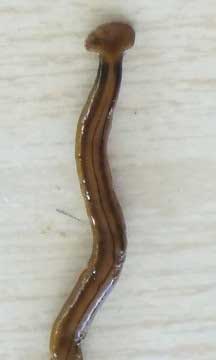
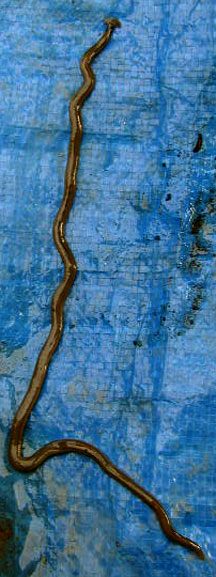
Arrowhead flatworms, also known as hammerhead or shovelhead worms, are fascinating creatures.
These invertebrates are land planarians, a type of flatworm, known for their distinctive hammerhead-shaped heads

Arrowhead Flatworm Overview
Species and Appearance
Arrowhead flatworms, also known as hammerhead flatworms or shovelhead worms, are invertebrates belonging to the phylum Platyhelminthes.
They have a distinct, flat body shape. Some key features of their appearance are:
- Soft-bodied
- Flat and elongated
- Distinct “hammerhead” shape
There are multiple species of arrowhead flatworms, and they vary in color and size.
For example, the Blue garden flatworm (Caenoplana coerulea) has a dark grey to black upper surface with a creamy median line and a blue underside, while other species display different color patterns.
Habitat and Distribution
Arrowhead flatworms are predominantly found in moist and humid environments, like soil and leaf litter.
Some factors affecting their distribution include:
- Region’s temperature and humidity
- Availability of food sources (mainly earthworms and slugs)
These flatworms are native to Asia, but they have been introduced to various regions, such as North America and Europe.
They can adapt to new environments and spread if the conditions are suitable.
Biology and Behavior
Diet and Feeding Habits
The Arrowhead Flatworm, also known as the Hammerhead Worm or Bipalium kewense, is a species of land planarian that feeds on various prey found in the soil. Some examples of their diet include:
- Earthworms
- Insect larvae
- Snails
These flatworms are invasive species and can cause issues for native plants and animals. They are also known to occasionally feed on plants.

Reproduction and Lifecycle
Arrowhead Flatworms have a unique reproductive system that allows them to reproduce both sexually and asexually2.
Their lifecycle includes:
- Mating occurs during high-humidity periods, such as spring.
- Fertilized eggs are laid in soil.
- Young flatworms emerge from eggs and grow into adults.
They are hermaphroditic, meaning each individual possesses both male and female reproductive organs.
This allows them to mate with any other member of their species.
They can also reproduce through fragmentation, wherein a piece of the worm’s tail can grow into a new individual.
| Reproductive Capability | Pros | Cons |
|---|---|---|
| Sexual Reproduction | Genetic diversity | Requires a mate |
| Asexual Reproduction | Rapid population growth | Less genetic diversity |
When handling these flatworms, it is important to wear gloves as their secretions may cause skin irritation.
They are commonly found in high-humidity environments and are more prevalent in the southern states of the US.
Control and Management
Natural Predators
Arrowhead Flatworms have some natural predators, which can help to control their population. For example:
- Birds
- Rodents
- Frogs
These predators often target flatworms when they come across them in gardens and other habitats.

Chemical and Physical Methods
Various methods can be employed to control flatworms, including chemicals and physical techniques. For instance:
Chemical methods
- Citrus oil: Deter flatworms by spraying a citrus oil solution around areas where they are commonly found.
- Vinegar: Flatworms are sensitive to vinegar, so you can use it to eliminate them. However, be cautious not to harm other organisms or plants with vinegar.
Physical methods
- Salt: Sprinkling salt on flatworms can cause them to dehydrate and die.
- Freezing: Collect the flatworms with gloves and place them in a sealed container. Store the container in the freezer overnight to kill the flatworms.
Pros and Cons of Chemical vs. Physical Methods
| Methods | Pros | Cons |
|---|---|---|
| Chemical | Effective in killing flatworms | May harm beneficial organisms or plants |
| Physical | Environmentally friendly and more selective | Time-consuming and labor-intensive |
Arrowhead Flatworms are found in various locations, such as:
- Southeast Asia
- Southern states of the US, including Georgia, Louisiana, and Texas
While they can pose a threat to gardens and greenhouses, using a combination of natural predators and chemical or physical methods can help to control and manage their populations.
Common Misconceptions and Similar Species
Comparing Arrowhead Flatworms to Earthworms
Arrowhead flatworms, also known as planarians, differ significantly from earthworms. Here are some key differences:
- Body shape: Arrowhead flatworms have a flat, arrow-shaped body whereas earthworms possess a cylindrical, elongated structure.
- Habitat: Arrowhead flatworms live in moist environments, while earthworms reside in soil, providing essential nutrients for plants

Are Arrowhead Flatworms Dangerous?
Arrowhead flatworms are generally not considered dangerous to humans.
These flatworms are primarily scavengers or predators that feed on other small invertebrates such as insects, snails, and worms.
While some species of flatworms have been reported to release a sticky substance when handled, causing skin irritation in some cases, their effects on humans are usually mild and temporary.
However, it’s always a good practice to avoid handling any wildlife, including flatworms, without proper knowledge and precautions.
Some species of flatworms have toxins that can be harmful to other animals they prey upon, so it’s wise to avoid direct contact and wash your hands thoroughly if you do come into contact with them.
If you notice any adverse reactions after handling a flatworm, it’s recommended to seek medical attention.
What Do Arrowhead Flatworms Eat?
Arrowhead flatworms primarily feed on other small invertebrates.
Their diet typically consists of various insects, spiders, snails, worms, and other soft-bodied organisms.
They are predators that use their slimy, adhesive mucus to capture and subdue their prey.
Arrowhead flatworms have a unique hunting strategy.

They extend their flat bodies and glide along the ground, using chemoreceptors located on their heads to detect chemical signals from potential prey.
Once they locate prey, they capture it by immobilizing it with their mucus and then consuming it using their mouth located on the underside of their body.
The ability of arrowhead flatworms to consume a variety of invertebrates makes them important contributors to the ecosystem as decomposers and predators of pest species.
However, their predatory behavior can also impact populations of other small organisms in their habitat.
Conclusion
Intriguing and elusive, the Arrowhead Flatworm’s unique features and behaviors have illuminated our understanding of the natural world.
From their arrow-shaped heads to their role in ecosystems, these creatures continue to captivate researchers and enthusiasts.
This land planarian species is primarily found in damp and shaded habitats, such as leaf litter, decaying logs, and under rocks. Its arrowhead-shaped head and elongated body contribute to its unique appearance.
As a native of Southeast Asia, the Arrowhead Flatworm has become invasive in various regions around the world.
Its adaptability and intriguing biology continue to captivate researchers, offering insights into both its ecological role and the potential impacts of its presence in new environments.
Footnotes
- https://extension.psu.edu/hammerhead-flatworms-and-other-land-planaria-of-eastern-north-america ↩
- https://u.osu.edu/worldunseen/2022/04/26/flatworms-and-human-health/ ↩
- https://www.hawaii.edu/news/2022/08/29/13-species-rat-lungworm/ ↩