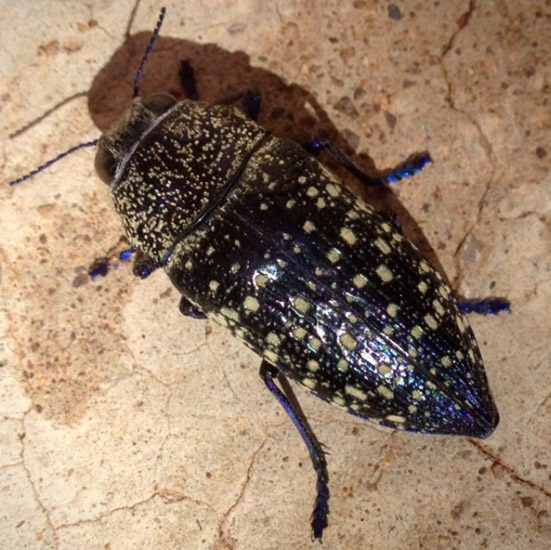
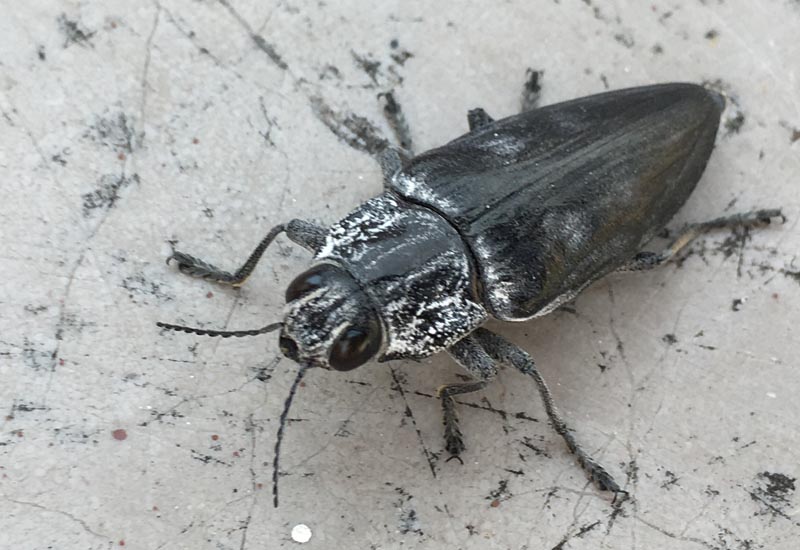
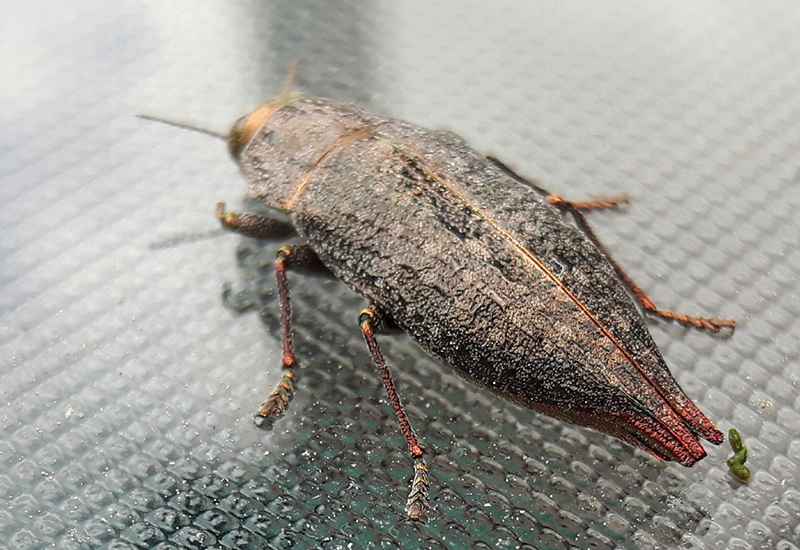
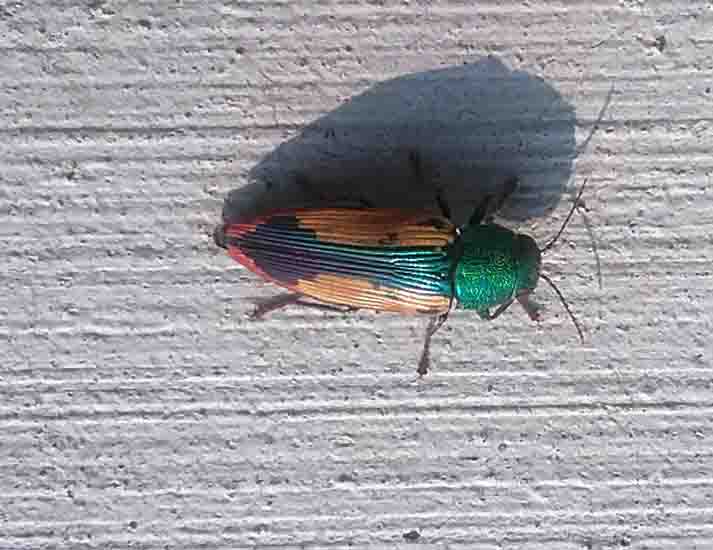
Jewel Beetle: Acmaeodera gibbula
Are They Poisonous?
There is no concrete evidence to suggest that jewel beetles are toxic to humans or animals.
However, as they can be pests, it’s vital to be cautious. When these beetles infest trees, they can cause damage and may require intervention with pesticides.
In such cases, potential dangers could arise from:
- Pesticides used to control the beetles: Some chemicals can harm humans, animals, or other insects if ingested or contacted. Contacting a professional pest control company could be the best option click here to find one.
- Tree health: Extensive damage from an infestation might weaken the tree, posing potential risks like fallen branches.
While the absence of toxicity in jewel beetles is a relief, keep in mind the possible dangers related to their control measures.
Always consult a professional or follow proper guidelines while dealing with pesticides.
Species and Classification of Jewel Beetle
Jewel beetles, belonging to the family Buprestidae, are a diverse group of insects in the order Coleoptera.
They are part of the larger class Insecta, phylum Arthropoda, and kingdom Animalia. Here’s a brief overview of their classification:
- Kingdom: Animalia
- Phylum: Arthropoda
- Class: Insecta
- Order: Coleoptera
- Family: Buprestidae
This family includes several subfamilies, each with its own unique characteristics:
- Agrilinae
- Buprestinae
- Chrysochroinae
- Galbellinae
- Julodinae
- Polycestinae
These subfamilies contain a variety of species that differ in size, color, and habitat.
Comparison Table: Subfamilies
| Subfamily | Notable Feature |
|---|---|
| Agrilinae | Typically small and elongated |
| Buprestinae | Bright metallic colors |
| Chrysochroinae | Diverse body shapes and colors |
| Galbellinae | Compact and rounded |
| Julodinae | Large with curved horns |
| Polycestinae | Strongly sculptured and spiny |
Jewel beetles are known for their:
- Iridescent and metallic colors
- Bullet-shaped bodies
- Hard exoskeletons
These features make them attractive to collectors and researchers alike.
Treasured for their beauty, these beetles aren’t considered poisonous to humans or pets, making them a fascinating subject in the world of entomology.
Appearance and Iridescence
Jewel beetles, known for their stunning appearance, exhibit a wide range of colors, including green, black, gold, yellow, blue, and orange.
Their iridescent wings create a glossy effect, enhancing their visual appeal.
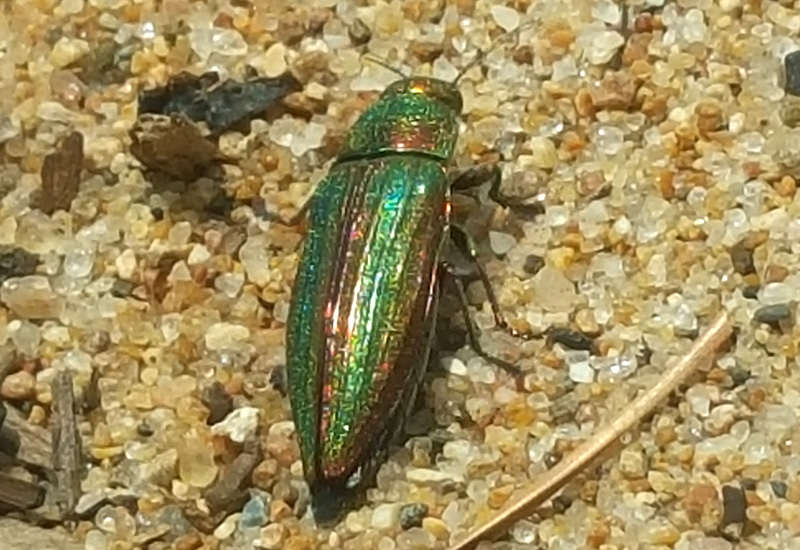
These beetles owe their iridescence to their elytra, which are hardened forewings that protect their delicate hind wings.
The elytra’s microscopic structures reflect light in various ways, producing the vibrant colors.
Key Features:
- Iridescent wings
- Glossy appearance
- Variety of colors
Jewel beetles have a head, thorax, and elytra that contribute to their unique patterns. The size of these beetles can vary; however, they’re typically small, measuring between 3-80 mm.
When talking about the appearance of jewel beetles, it’s necessary to consider the pros and cons of their iridescence:
Pros:
- Aesthetic appeal
- Camouflage in certain habitats
Cons:
- Attracts predators in some environments
Therefore, jewel beetles are fascinating creatures, boasting a variety of vibrant colors and iridescent wings.
Their glossy appearance and distinct patterns make them an attractive subject of study for entomologists and nature enthusiasts alike.

Diet and Predators
Jewel beetles, belonging to the family Buprestidae, have a diverse diet primarily consisting of leaves, stems, and flowers. They are not considered poisonous for humans or animals.
Here is a brief overview of their diet and predators:
- Diet: Jewel beetle larvae mostly feed on the wood of trees, whereas adults consume leaves, stems, and flowers of plants. They are also known to consume nectar from flowers, contributing to pollination.
- Predators: Potential predators of jewel beetles include birds, spiders, and other insects such as mantises and ants. Humans, in some parts of the world, also consume jewel beetles as a food source.
Range and Environment
Jewel beetles are found in various environments, from forests to grasslands. They are distributed worldwide, except in Antarctica and some oceanic islands.
Their life cycle mainly revolves around trees, where they lay eggs and consume tree parts.
Jewel Beetles vs. Lady Beetles
| Feature | Jewel Beetles | Lady Beetles (Ladybugs) |
|---|---|---|
| Diet | Larvae: wood, Adults: leaves, stems, flowers, nectar | Larvae and adults: aphids, mites, and other small insects |
| Color | Metallic and bright colors | Red or orange with black spots |
| Size | 3-100 mm (varies by species) | 1-10 mm |
| Poisonous | No | No, but some species release a toxic substance |
While jewel beetles are not poisonous, their bright and metallic colors might serve as a deterrent to potential predators in the animal kingdom.
This adaptation helps them survive in their environment and continue their role as important pollinators.
Habitat and Distribution
Jewel beetles are found in various habitats across the globe. Some common regions include Australia, North America, and New Guinea.
Here are some key features of their habitats:
- Rainforests
- Foliage
- Woodlands
Jewel beetles can also be wood-boring, especially during their larval stage. This behavior affects the types of habitats they inhabit, often in regions with available wooden plants.

While jewel beetles constitute a diverse group, some infamous species make headlines for their destructive nature.
The emerald ash borer, for example, is well-known in North America for decimating ash tree populations.
Scientists have discovered a variety of jewel beetles in specific habitats such as Australia and New Guinea, where they thrive in rainforest environments.
These beetles can be found on the foliage of various plants, providing unique opportunities for observation and research.
Jewel beetle habitats
| Region | Habitat | Example Species |
|---|---|---|
| Australia | Rainforest | Stigmodera gratiosa |
| North America | Forests | Emerald ash borer |
| New Guinea | Rainforest | Lamprima aurata |
Camouflage and Defense Mechanisms
Jewel beetles are known for their iridescent, metallic colors, which serve as a form of camouflage.
These beetles are found in various environments, such as forests and gardens. They use their vibrant colors to blend in with their surroundings and avoid predators.
One example of camouflage in jewel beetles is their ability to resemble shiny, wet leaves in a forest.
Their shiny appearance mimics the sunlight reflecting off the leaves, making them less noticeable to potential predators.
Jewel beetles have other defense mechanisms, such as releasing noxious chemicals from their legs when threatened.
These chemicals deter predators and give the beetles an opportunity to escape.
Comparing jewel beetles to other insects like scarab beetles reveals some similarities and differences in their defense mechanisms:
| Insect | Camouflage | Defense Mechanisms |
|---|---|---|
| Jewel Beetle | Shiny, iridescent color | Noxious chemicals |
| Scarab | Varies by species | Horns, tough exoskeleton |
Key features of jewel beetles include:
Jewel beetles share some characteristics with other beetles like scarabs, such as being part of the Animalia kingdom, belonging to the class Insecta, and demonstrating conspicuous behaviors when threatened.
These behaviors include quick movements and loud buzzing sounds, alerting predators that they should keep a distance.

Related Beetles and Species
Blister beetles
Blister beetles are known for their defensive secretion called cantharidin, a toxic substance that can cause blisters and irritation on the skin.
Some examples of blister beetles include the Spanish fly and the oil beetle.
Ground beetles
Ground beetles are a large group of carnivorous beetles that typically prey on small insects and other arthropods. They are not typically known to be poisonous.
Some examples include the bombardier beetle and the violet ground beetle.
Scarab beetles
Scarab beetles belong to the family Scarabaeidae and include well-known species like dung beetles and June beetles. These beetles are not considered poisonous to humans.
Weevils
Weevils are part of the superfamily Curculionoidea with over 60,000 species. They are plant-eating beetles and are not poisonous to humans. Some examples include the boll weevil and the rice weevil.
Polyphaga
Polyphaga is the largest suborder of beetles, including over 300,000 described species. It contains groups such as blister beetles, ground beetles, and scarab beetles.
Buprestoidea
Buprestoidea is a superfamily of beetles which includes the jewel beetles. These beetles are not known to be poisonous, but their bright and metallic appearance makes them popular among collectors.
Comparison table of beetle species
| Beetle Group | Poisonous | Example Species |
|---|---|---|
| Blister Beetles | Yes | Spanish Fly |
| Ground Beetles | No | Bombardier Beetle |
| Scarab Beetles | No | Dung Beetle |
| Weevils | No | Boll Weevil |
Jewel Beetles in Research
Jewel beetles, known for their stunning appearance, are a subject of interest to researchers.
Adult jewel beetles have bright, metallic colors that make them stand out, while their larvae, on the other hand, are less conspicuous, often found inside wood.
In recent years, scientists at the University of Bristol, including Karin Kjernsmo, have studied the unique characteristics of peacock feathers and jewel beetles.
Their research uncovered inconsistencies in features, such as depth and iridescence, that help camouflage the beetles at night.
Key features of jewel beetles include:
- Bright, metallic colors on adult beetles
- Larvae found inside wood
- Iridescence and depth inconsistencies
Visibility of jewel beetles in different settings
| Setting | Beetle’s Visibility |
|---|---|
| Daylight | Highly visible |
| Nighttime | Camouflaged |
In the United States, some people experiment with feeding jewel beetle larvae, also known as mealworms, to birds and reptiles.
This practice, although uncommon, contributes to the growing trend of using insects as protein sources in animal feed.
Examples of insects used as animal feed:
- Mealworms (jewel beetle larvae)
- Crickets
- Black soldier fly larvae
Researchers are intrigued by the appearance and properties of jewel beetles, particularly their unique camouflage mechanisms at night.
These beetles, along with other insects, also serve as a potential and sustainable alternative protein source in animal feed.
Conclusion
Despite their visually striking attributes, jewel beetles are not poisonous to humans.
While their infestations can necessitate caution due to potential tree damage and pesticide usage, the absence of proven toxicity underscores the importance of ongoing research.
The enthralling appearance and distinct behaviors of these beetles continue to offer intriguing avenues for scientific exploration and understanding.