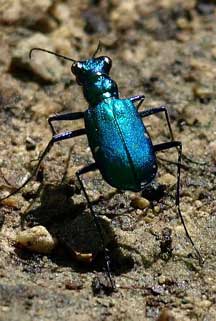
The fascinating world of insects is filled with countless species, each with its own unique traits and abilities. One such insect that captures the interest of many is the tiger beetle. These agile predators are known for their striking appearance and incredible speed, making them a remarkable species to learn about.
Tiger beetles, with approximately 2,760 species, are found in various environments worldwide. As both adults and larvae, they are predatory, continually searching for tiny insects and spiders to devour. Their long legs and quick movements allow them to hunt effectively and even evade predators.
To ensure their survival, tiger beetles have adapted to different habitats by developing unique skills and characteristics. For example, some species are diurnal, hunting during the daytime, while others, like the Carolina Tiger beetle, are nocturnal, preferring to hunt at night. Throughout this article, you will uncover more fascinating details about the various species and characteristics of tiger beetles, growing your understanding of these remarkable insects.
Species: Tiger Beetles Overview
Tiger beetles belong to the Coleoptera order and Carabidae family, specifically the subfamily Cicindelinae. These predatory insects are known for their incredible speed and powerful jaws.
There are around 100 species of tiger beetles in the United States, which can be found in four main genera: Amblycheila, Omus, Megacephala, and Cicindela. To give you an idea of their diversity:
- Amblycheila species are large, flightless, and nocturnal
- Omus species inhabit the western United States and are also nocturnal
- Megacephala species prefer sandy habitats and have a metallic appearance
- Cicindela species are the most common and can be found in various habitats
Tiger beetles are known for their unique adaptations that make them effective predators:
- Long, thin legs enable them to move quickly
- Their large eyes help in detecting prey, even though they can run so fast that their eyes can’t always process images at that speed
Here are some key features of tiger beetles:
- Predatory as both adults and larvae
- Can be active during the day or night, depending on the species
- Fast runners, with some species being the quickest insects in the world
Tiger beetles play an essential role in maintaining the balance in their ecosystem, as they help control insect populations. So, next time you come across one of these fascinating creatures, remember they contribute to the overall health of our environment!
Physical Features
Distinctive Markings and Colors
Tiger beetles are known for their distinctive markings and colors. Their bodies typically exhibit iridescent pigments and striking patterns, which function as camouflage. For example, green tiger beetles have a metallic green color with white spots on their elytra.
Structure and Adaptations
Tiger beetles are well adapted predators. Their head houses large, bulging eyes and powerful mandibles, perfect for catching prey. The thorax of a tiger beetle connects to its long, thin legs that allow them to move quickly. The abdomen is streamlined, aiding in speed and agility.
Legs and Antennae
- Long legs: provide high speed and agility
- Thin legs: reduce air resistance during movement
- Antennae: sensory organs used to detect prey and navigate terrain
Exoskeleton and Wings
The exoskeleton of a tiger beetle serves as a protective shell for their body. This armor-like covering is vital for defense against predators. Beneath the hard exoskeleton are wings, specifically the elytra, which enable flying. These components work together to assist the beetle in its predatory and survival needs.
In conclusion, the physical features of tiger beetles play crucial roles in their predatory behavior and survival. Distinctive markings and colors provide effective camouflage, while their structure and adaptations enable them to excel as predators. The exoskeleton and wings offer protection and locomotion necessary for their continued success in the wild.
Diet and Predatory Habits
Prey and Hunting Techniques
Tiger beetles are predators as both adults and larvae, with a diet mainly composed of small insects and spiders. They are bold hunters, using their excellent running speed to chase down their prey. Their hunting technique involves quickly running, then stopping to spot their target, and running again to catch it.
Food and Foraging
These voracious predators spend most of their time in search of food, be it by running on the ground or flying around. They can often be found in sandy areas, such as river banks or beaches, hunting insects and spiders during daytime or even nighttime.
Adaptations for Hunting
The tiger beetle has some unique adaptations to aid in its hunting. For example, its sickle-like mandibles and powerful jaws enable it to efficiently bite and devour its prey. Moreover, due to its incredible speed, it sometimes becomes momentarily blind while chasing prey. However, this does not deter them from their pursuit, as they swiftly relocate their moving prey after momentarily stopping.
Role in Pest Management
While not primarily recognized as pest control agents, tiger beetles do play a role in managing certain pests due to their predatory nature. By consuming small insects, particularly those that could be harmful to plants and crops, tiger beetles contribute to maintaining ecological balance.
Lifecycle and Reproduction
Eggs and Larvae
Tiger beetles lay their eggs in the soil, often near the entrance of their burrows. After hatching, the larvae live in these burrows and develop a grub-like appearance. These larvae are predators, feeding on other insects and small invertebrates 1.
Your tiger beetle larvae may spend up to four years in this stage, depending on the species 2. During this time, they can fall victim to natural predators, like hister beetles, birds, ants, bee flies, and wasps 3.
From Larva to Adult
Once the larva reaches its third stage, it forms a pupal cell within the burrow4. This process takes place a few inches from the soil surface, and the entrance is plugged for protection while the larva goes through pupation 5.
After approximately 7 to 10 days, the larva transforms into an adult tiger beetle 6. Adults are characterized by their remarkable speed and powerful jaws, which they use to catch prey 7.
Reproduction Strategies
Males typically spend their time searching for females to mate with, while females focus on avoiding or getting rid of unwanted male attention 8. When mating successfully occurs, the female tiger beetle will lay her eggs to begin the next generation of beetles.
Some species of tiger beetles exhibit unique reproductive behaviors, such as forming groups when hunting, like the Carolina Tiger Beetle 9.
Scientific Classification
Tiger beetles are part of the Cicindela genera and the Carabidae family 10. Their scientific name is dependent on the exact species being discussed, as there are more than 2,700 known species of tiger beetles worldwide 11.
Habitat and Distribution
Different Habitats
Tiger beetles can be found in various habitats across the planet. They favor sandy areas and open environments, where they can easily locate their prey. For example, you might find them in deserts, sandy surfaces, and sand dunes. They also inhabit clay banks and can sometimes be found seeking shade during hot conditions to prevent overheating 1.
Geographic Distribution
The distribution of tiger beetles encompasses numerous regions, including North America and tropical areas. As they are highly adaptable creatures, they have the ability to thrive in a wide range of environments. Here is a comparison table illustrating their habitat preferences:
| Habitat | Environment |
|---|---|
| Desert | Hot and dry |
| Sandy areas | Loose substrate |
| Sand dunes | Wind-swept |
| Clay banks | Compact surface |
Overall, tiger beetles are fascinating insects that have adapted to various habitats and can be found in diverse geographic regions. Understanding their distribution and habitat preferences can help researchers and enthusiasts study and protect these remarkable creatures.
Threats and Conservation
Habitat Destruction
One major threat to tiger beetles is habitat destruction. These beetles rely on specific environments like sandy shores, riverine habitats, and in some cases, even nocturnal habitats for the Carolina Tiger beetle. When their habitat is destroyed or altered, it can greatly impact their population and survival.
For example:
- Urban development can lead to loss of natural habitats
- Agricultural practices may alter their environment
- Pollution can negatively affect their ecosystem
Conservation Measures
There are various conservation measures that can help protect tiger beetles and their habitats. Some of these include:
- Preserving and restoring natural habitats
- Implementing sustainable land use practices
- Educating the public on the importance of these beetles in the ecosystem
To make a positive impact on the conservation of tiger beetles, you can:
- Support local conservation initiatives
- Avoid disturbing the natural habitats of these beetles
- Learn more about their ecological role and spread awareness
By taking these steps, you can contribute to the conservation of tiger beetles and their ecosystems.
Tiger Beetles as Pets
Care and Handling
Tiger beetles can be fascinating pets due to their unique features and hunting abilities. However, they require specific care to thrive in captivity.
Housing: Provide a suitable living environment by setting up a terrarium filled with a mixture of sand and soil. This allows them to burrow, as they would in their natural habitat. The terrarium should be spacious, preferably 10-20 gallons in size.
Maintain their habitat
- Keep the substrate slightly damp, but not overly wet
- Provide hiding spots such as plants or rocks
Feeding: Their diet primarily consists of insects and spiders. You can feed them small insects like crickets, fruit flies, and mealworms. Offer food every 2-3 days, ensuring they receive sufficient nutrition while avoiding overcrowding their habitat.
Handling: Tiger beetles are sensitive insects, so limited handling is recommended. Restrict interaction to when absolutely necessary, such as cleaning their enclosure or relocating them.
Temperature & Humidity: Maintain a temperature range of 70-80°F (21-27°C) to mimic their natural environment. A heat lamp or heating pad can be used to maintain the desired temperature. For humidity, maintain an average relative humidity of around 30-50% depending on the species of tiger beetle.
Remember
- Monitor the terrarium’s temperature and humidity regularly, ensuring consistency.
- Regularly clean the enclosure by removing any left-over food, feces, and debris to maintain a hygienic environment.
By following these guidelines, you’ll be able to create an optimal environment for your pet tiger beetle and witness their fascinating behaviors up close.
Footnotes
- https://entomology.unl.edu/tigerbeetle/tiger_biology.htm ↩ ↩2
- https://entomology.unl.edu/tigerbeetle/tiger_biology.htm ↩
- https://entomology.unl.edu/tigerbeetle/tiger_biology.htm ↩
- https://entomology.unl.edu/tigerbeetle/tiger_biology.htm ↩
- https://entomology.unl.edu/tigerbeetle/tiger_biology.htm ↩
- https://askabiologist.asu.edu/life-cycle ↩
- https://entomology.ces.ncsu.edu/biological-control-information-center/beneficial-predators/tiger-beetle/ ↩
- https://askabiologist.asu.edu/explore/tiger-beetles ↩
- https://entomology.ces.ncsu.edu/biological-control-information-center/beneficial-predators/tiger-beetle/ ↩
- https://en.wikipedia.org/wiki/Tiger_beetle ↩
- https://en.wikipedia.org/wiki/Tiger_beetle ↩