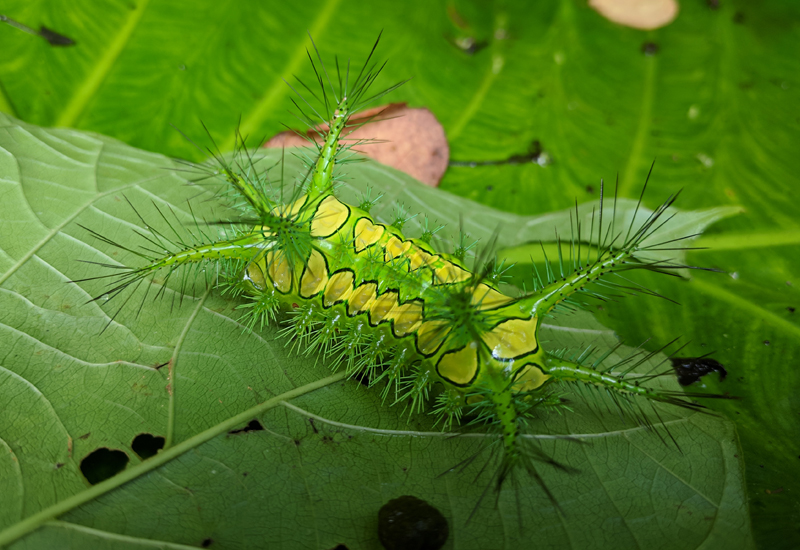
Slug caterpillars can easily catch your attention due to their exquisite appearance. Contrary to their name, these creatures are not actually slugs but rather the larvae stage of certain moth species. These caterpillars are colorful, flattened, and come in various shapes and sizes, making them a fascinating subject of study.
As you explore the world of slug caterpillars, you’ll come across their intriguing features like the crowned slug caterpillar, known for its pastel green color, beautiful plumes of stinging hairs, and captivating patterns. However, remember that these insects should be admired from a distance, since touching them can lead to painful stings.
Understanding the life cycle and habitat of slug caterpillars is essential as it helps with their proper identification. They go through metamorphosis, transforming from a feeding larval stage to adulthood, when they become furry, heavy-bodied moths. With more than 20 species within this family, these caterpillars can be found in various climates worldwide, including tropical regions.
Understanding Slug Caterpillars
Slug caterpillars belong to the family Limacodidae and are quite different from other caterpillars. They get their name from their resemblance to slugs, with a flattened, oval body and reduced legs.
These unique insects have unusual features. For example, their legs lack tiny hooks found in most caterpillars, giving them a slug-like appearance. They also have stinging hairs on their bodies, which can cause irritation when touched.
Some notable species include the saddleback caterpillar and the crowned slug caterpillar. The saddleback caterpillar has urticating hairs on four prominent knobs at the front and rear, while the crowned slug caterpillar has stinging hairs around its perimeter and less conspicuous hairs on top.
Here are some key features of slug caterpillars:
- Flattened, oval body
- Reduced legs
- Stinging hairs
- Wide variety in colors and patterns
Slug caterpillars are not only fascinating insects to observe, but they also play a role in the ecosystem. Just like other insects, they are part of the food chain and serve as a valuable food source for predators such as birds and other insects.
When encountering slug caterpillars, it’s important to handle them with care as their stinging hairs can cause skin irritation. However, with proper precautions, you can observe their unique beauty and behaviors, appreciating their place in the diverse world of insects.
Physical Appearance
Color and Texture
Slug caterpillars come in various colors, including shades of brown, green, and white. These colors can help them camouflage with their surroundings. They also have various textures on their bodies, such as spines and hairs.
For instance, you might spot:
- Brown slug caterpillars with stinging spines.
- Green ones with soft bristles.
- White ones with distinct horns.
Special Features
Slug caterpillars have several unique features that set them apart from other types of caterpillars. Some of these features are:
- Stinging Spines: Many slug caterpillars have rows of sharp, venomous spines on their bodies that can cause painful reactions if touched. Beware of these if you come across one.
- Horns: Some species feature horn-like structures to ward off predators.
- Suckers: Instead of regular legs, slug caterpillars have suckers, which help them move in a slow, slug-like fashion.
Size of Slug Caterpillars
Slug caterpillars vary in size, but most of them are relatively small, ranging from a few millimeters to a couple of centimeters in length. The size of the caterpillar can depend on factors such as age, species, and environmental conditions.
Remember to always observe these fascinating creatures from a distance to avoid getting stung.
The Lifecycle of Slug Caterpillars
The Larval Stage
The larval stage of slug caterpillars starts with them hatching from eggs. At this point, they are small and feature pastel green coloration. These caterpillars have:
- Flattened, oval-shaped bodies
- Plumes of stinging hairs around the perimeter
- Shorter, less conspicuous hairs on top
- Three pairs of legs directly behind the head
As they feed and grow, the larvae develop distinctive markings and color patterns specific to their species.
The Pupal Stage
After the larval stage, slug caterpillars prepare to pupate. During this stage, they:
- Stop feeding
- Find a suitable place for transformation
- Spin cocoons for protection
Inside the cocoon, the slug caterpillar undergoes a significant metamorphosis. Its body changes as organs and structures reorganize to form an adult moth.
The Adult Stage
The final stage in the life cycle of slug caterpillars is the adult stage. In this stage, the insect becomes a fully-formed moth. Some characteristics of the adult moth include:
- Wings with distinct markings and coloration
- Grayish-white setae on the wings and upper legs
- Faint black zigzags and narrow black rings on the wings
Once they emerge from their cocoons, these moths have two main objectives: reproducing and laying eggs. The cycle then starts all over again as the next generation of slug caterpillars begins to hatch and grow.
Varieties of Slug Caterpillars
Slug caterpillars belong to the slug caterpillar family and are known for their unique appearance resembling snails without shells. Many of these caterpillars have venomous spines, which can cause painful stings similar to a bee sting. Here, you will learn about four varieties of slug caterpillars: Saddleback Caterpillar, Monkey Slug, Crowned Slug Caterpillar, and Spiny Oak Slug.
Saddleback Caterpillar
The Saddleback Caterpillar (Acharia stimulea) is a well-known member of the venomous caterpillars category due to its distinct appearance and stinging hairs. You can identify this caterpillar by its:
- Green “saddle” marking on the back
- Prominent knobs with stinging hairs
- Urge to avoid touching them as they can cause skin irritation
Monkey Slug
The Monkey Slug (Phobetron pithecium), also known as the Hag Moth, is another interesting variety. You may recognize the Monkey Slug by:
- Its hairy, brown appearance
- Six leg-like protrusions
- Resemblance to a tiny monkey
Crowned Slug Caterpillar
The Crowned Slug Caterpillar (Isa textula) is considered one of the most exquisite varieties due to its unique features. These caterpillars have:
- Flattened, oval shape
- Pastel green color
- Plumes of stinging hairs around the perimeter
Spiny Oak Slug
Finally, the Spiny Oak Slug is another distinct variety, commonly found on oak and other hardwood trees. The Spiny Oak Slug can be identified by:
- Bright green color
- Rows of yellow and white stinging spines
- Typical feeding habits on oak tree leaves
While each variety of slug caterpillar is unique in its own way, they all share certain traits, such as stinging hairs and unusual appearances. It’s important to keep in mind that touching these caterpillars may result in skin irritation and pain, so always admire them from a safe distance.
Environmental Interactions
Plant Relationships
Slug caterpillars can greatly impact the plants they feed on. Trees such as oak, elm, cherry, hickory, and maple species can become host plants for these caterpillars. They can also affect flowers and other garden plants. As a gardener or farmer, it’s crucial to keep an eye out for these caterpillars to ensure the health of your plants.
Some common host plants for slug caterpillars include:
- Oak trees
- Elm trees
- Cherry trees
- Hickory trees
- Maple trees
Geographic Distribution
Slug caterpillars can be found in various parts of the world but are mainly found in North America. Their range spans from Missouri to Virginia and down to Texas. It’s important to be aware of their presence in your region to take appropriate action if needed.
For example, some locations where slug caterpillars can be found include:
- Missouri
- Virginia
- Texas
Climate Effects
Climate change may influence the distribution and behavior of slug caterpillars. Warmer temperatures can increase the range of these insects, potentially introducing them to new areas where they could pose a risk to plants and gardens.
By being aware of slug caterpillars and their environmental interactions, you can better protect your plants, trees, and gardens from potential damage they may cause.
Slug Caterpillars and Humans
Sting and Symptoms
When you encounter a slug caterpillar, be cautious, for they have venomous spines that can deliver a painful sting. The sting might result in symptoms like itching, swelling, and rash. In some cases, the pain can be severe, leading to vomiting, shock, and even an allergic reaction. It’s essential to pay attention to these symptoms and seek medical attention when necessary.
Slug caterpillars are slow-moving, so it’s unlikely for them to aggressively approach you. However, it’s still wise to steer clear of these poisonous caterpillars if you come across them in nature.
Control and Prevention
To prevent slug caterpillars from becoming an issue in your garden or home, you can take a few simple steps:
- Regularly inspect your plants and trees for signs of slug caterpillar presence.
- Remove any caterpillars you find by using gloves or other protective gear to prevent stings.
- Introduce natural predators, such as birds or insects, who prey on slug caterpillars.
- Use safe and environmentally friendly pesticides when necessary.
Keep in mind that some slug caterpillars are harmless, but it’s always better to practice caution and control when you suspect a poisonous variety is nearby.
[sc name=”bugquiz” ][/sc]Treatment
If you do experience a sting from a slug caterpillar, the following treatments may alleviate the symptoms:
- Gently remove any spines from your skin using a piece of adhesive tape.
- Wash the affected area with soap and water to prevent infection.
- Apply a cold compress to reduce swelling and discomfort.
- Over-the-counter pain relievers, anti-itch creams, and antihistamines may help to control symptoms.
- Seek medical help if you are experiencing severe pain or symptoms worsen.
Remember, slug caterpillars are part of nature’s ecosystem, so it’s essential to understand and respect their presence. Stay vigilant, take precautions, and know how to handle a potential sting from these creatures. Be careful when you encounter them, and always prioritize your safety.
Conclusion
In summary, Slug Caterpillars are fascinating creatures with unique appearances and behaviors. They can be easily identified by their flattened, oval shape, and pastel green color with plumes of stinging hairs around the perimeter. Remember, some species like the crowned slug caterpillar are known for their exquisite beauty.
Be cautious when handling these interesting caterpillars as their stinging hairs can cause discomfort or irritation. In addition, be aware that the adult moth stage differs in appearance, often showcasing bright colors and patterns.
If you encounter a Slug Caterpillar in the wild, take a moment to appreciate its beauty and observe its behavior. But, always remember to give it adequate space and respect as it’s a vital part of our ecosystem. Enjoy your encounters with these remarkable creatures and the wonders of nature that they represent.