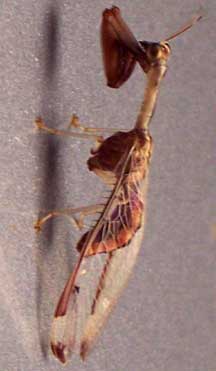
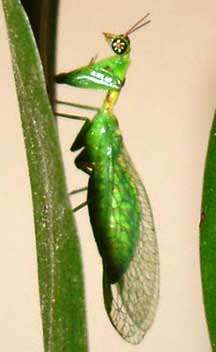
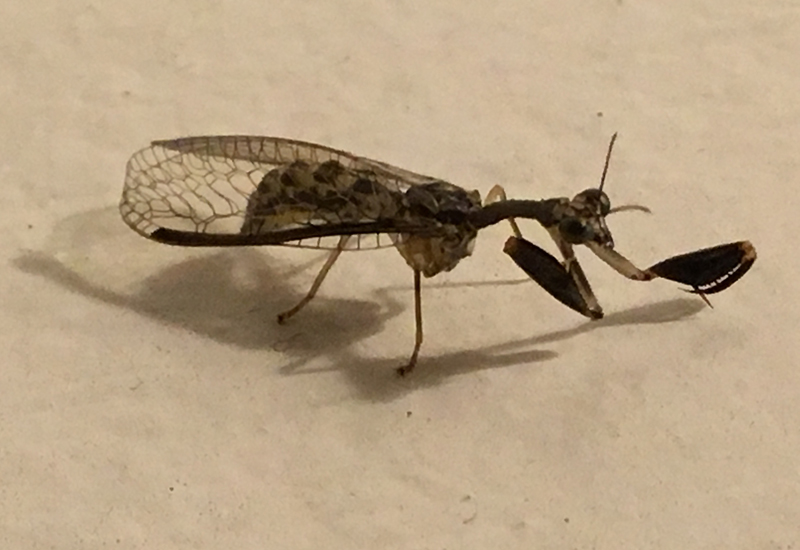
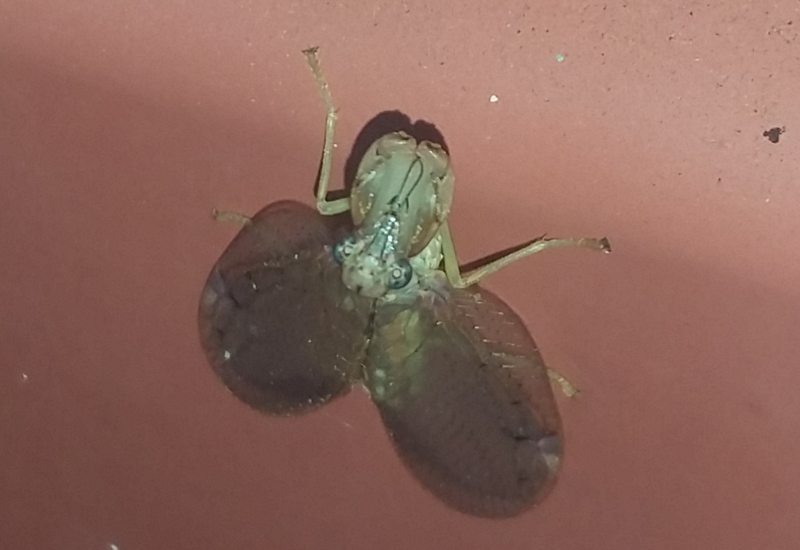
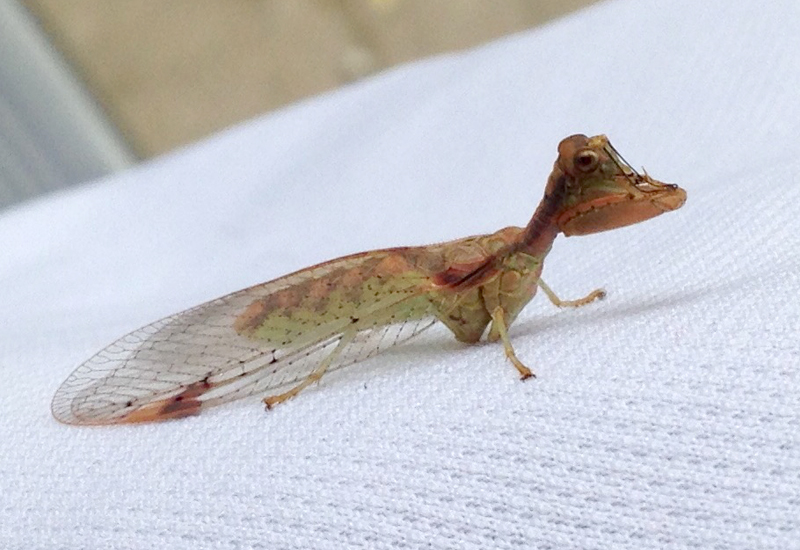
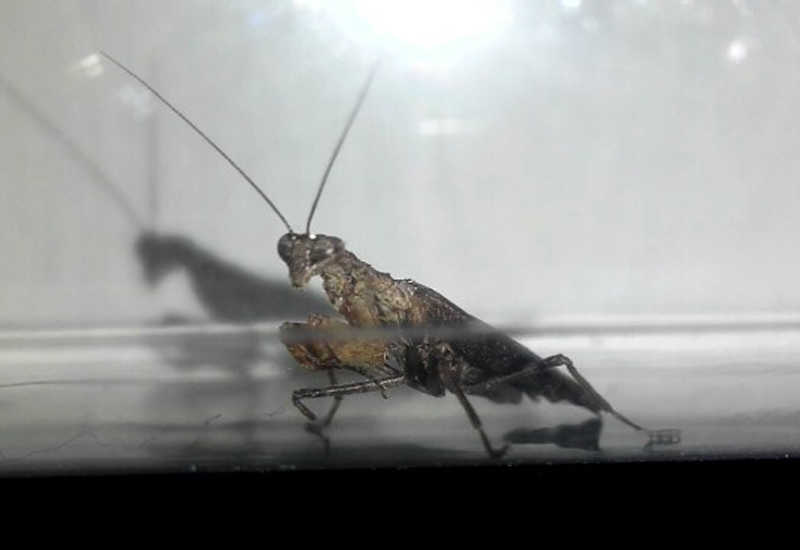
The mantisfly, a fascinating and unusual insect, has captured the attention of many due to its unique appearance. Resembling a combination of a lacewing insect and a praying mantis, mantidflies stand out with their intricately veined wings and raptorial forelegs, used for grasping prey. These small, delicate creatures are an intriguing mix, offering a captivating insight into the diversity of the insect world.
Although mantidflies may appear similar to both praying mantises and paper wasps, they are neither wasp nor mantis. They belong to the order Neuroptera, and, unlike their mimicked counterparts, mantidflies are not considered dangerous to humans. Their coloring and physical characteristics serve as a form of mimicry to intimidate predators and efficiently capture small insects for sustenance.
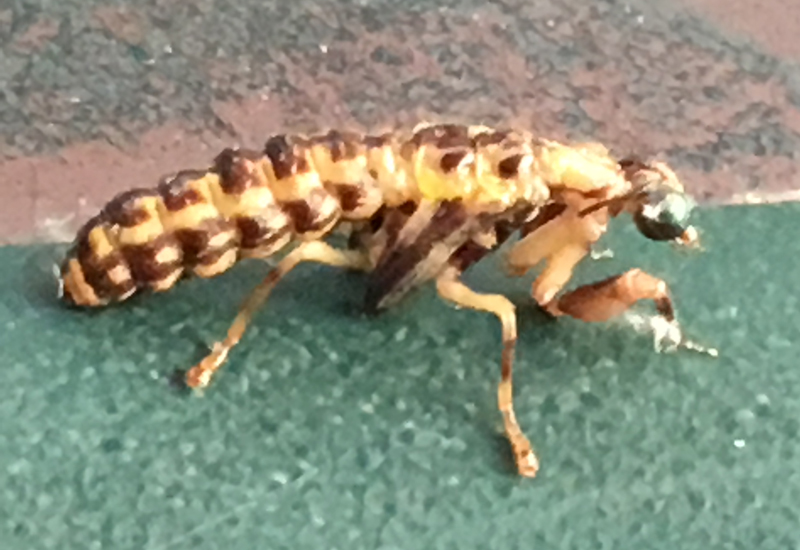
Mantidflies come in various species, each with its unique features and habitat preferences. For example, the Wasp Mantidfly (Climaciella brunnea) displays yellow and brown stripes and mimics the appearance of a paper wasp. This impressive adaptability and survival instinct make mantidflies a species worth exploring and appreciating within the vast realm of entomology.
Mantisfly Overview
Classification and Distribution
Mantisflies belong to the family Mantispidae, under the order Neuroptera. Their classification includes:
- Kingdom: Animalia
- Phylum: Arthropoda
- Subphylum: Hexapoda
- Class: Insecta
- Order: Neuroptera
- Suborder: Hemerobiiformia
- Family: Mantispidae
These insects can be found across North America, with some species inhabiting other regions worldwide.
Physical Appearance and Size
Mantisflies exhibit a combination of features from different insects:
- Body shape resembling a mantis
- Two pairs of wings like lacewings
- Long, slender body
Adult mantisflies can grow up to 0.5-2 inches in length, depending on the species. Their coloration varies, but many species have striking patterns and colors.
Predatory Behavior
Mantisflies are predaceous arthropods that feed on small insects. Key features of their predatory behavior include:
- Raptorial front legs similar to praying mantises, used for grasping prey
- Elongated thorax that allows for quick striking
Some species of mantisflies are known to prey on spiders and their egg sacs.
Species of Mantisflies
There are over 400 different species of mantisflies. A few examples include:
- Climaciella brunnea – known for its striking wasp-like appearance
- Dicromantispa interrupta – has a distinct black-and-white pattern
- Euroleon nostras – commonly found in Europe
Characteristics of Mantisfly species:
- Size: Varies across species; 0.5-2 inches in length
- Color: Wide range of patterns and colors
- Habitat: Woodlands, fields, and gardens
- Prey: Small insects or spiders
Comparison between Mantisfly and Praying Mantis:
| Feature | Mantisfly | Praying Mantis |
|---|---|---|
| Order | Neuroptera | Mantodea |
| Habitat | Woodlands, fields, gardens | Tropical and temperate regions |
| Size | 0.5-2 inches | 0.5-6 inches |
| Prey | Small insects or spiders | Insects and small animals |
| Wings | Two pairs | Two pairs (in males) or none (in females) |
In conclusion, mantisflies are fascinating insects with diverse species and a unique combination of features from different arthropods. Their predatory behavior, physical appearance, and distribution help us understand their role in ecosystems and their importance in the world of insects.
Life Cycle of Mantisflies
Eggs
Mantisflies lay small, oval-shaped eggs that are typically placed on vegetation or other surfaces. Some species even suspend their eggs from silk-like filaments. The egg stage can last anywhere from a few days to several weeks, depending on environmental factors and the specific species.
Larvae and Hypermetamorphosis
Once hatched, mantisfly larvae undergo a unique developmental process called hypermetamorphosis. The first larval stage is an active, mobile form that often resembles a tiny caterpillar or spider. At this stage, the larva actively seeks out a host, usually a spider or a spider’s egg sac, which it will later consume from the inside to complete its development.
During their time inside the host, mantisfly larvae gradually transform into a more sedentary form, focusing on feeding and growing. After consuming the host, the larva leaves the now-empty egg sac or spider’s body and enters the next stage of its life.
Pupa
Upon finishing its development inside the host, the mantisfly larva enters the pupal stage, where it forms a protective casing around itself. This stage can last for a few weeks, with the insect further developing inside the casing. Once fully developed, the adult mantisfly emerges from the pupa.
Mating
Adult mantid lacewings, or mantidflies, engage in mating behavior to start the life cycle once again. Their prothorax and raptorial forelegs make them look like a combination of praying mantises and paper wasps. However, they belong to the family Mantispidae, which is subdivided into four subfamilies, including Calomantispinae. In the article, the primary focus is on one of these.
To summarize, the life cycle of mantidflies consists of the following stages:
- Eggs: laid on vegetation or suspended from silk-like filaments
- Larvae and Hypermetamorphosis: active stage that seeks out a host, then feeds and develops inside the host
- Pupa: protective casing where further development occurs
- Mating: adult mantidflies mate and lay eggs to start the cycle again
The table below provides a comparison of key features in the mantisfly life cycle:
| Mantisfly Life Cycle | Key Features |
|---|---|
| Eggs | Small, oval-shaped, laid on surfaces or suspended from filaments |
| Larvae | Undergo hypermetamorphosis; mobile stage that seeks out hosts |
| Pupa | Protective casing for further development |
| Mating | Adult mantidflies engage in mating behavior |
Feeding and Hunting Strategies
Mimicry and Camouflage
Wasp mantidflies (Climaciella brunnea) use their appearance to avoid predators, as they look like a cross between a praying mantis and a paper wasp. This helps them blend in with their surroundings and stay safe from harm.
- Mimicry: Resembling wasps, mantidflies deter potential predators.
- Camouflage: Helps mantidflies blend in with their environment.
Prey and Predators
Mantidflies are predators to a variety of insects, including spiders, ants, beetles, and other small insects. Their raptorial front legs allow them to efficiently hunt their prey while minimizing the risk of being caught themselves.
| Prey | Predators |
|---|---|
| Spiders | Wasps |
| Ants | Bees |
| Beetles | Lacewings |
| Small insects | Other predators |
Examples:
- A mantidfly might efficiently hunt a spider by using its raptorial front legs.
- Ants and beetles are some of the common prey that mantidflies feed on.
Their unique feeding and hunting habits make them fascinating creatures worthy of study and appreciation.
Behavior and Habitat
Mantisflies are fascinating insects that exhibit unique behaviors and adapt well to their environment. In this section, we will discuss their nocturnal activity, environmental adaptations, and the role they play as predatory insects.
Nocturnal Activity
- Mantisflies are primarily nocturnal creatures
- They are active hunters during the night, targeting other small insects
Mantisflies, such as the Climaciella brunnea, are nocturnal insects that exhibit increased activity during nighttime hours. They are known to hunt various insects like aphids, mites, and other small creatures during the night, taking advantage of the darkness which allows them to ambush their prey effectively.
Environmental Adaptations
- Found in tropical regions and other habitats
- Exhibits camouflage coloration for effective hunting
Mantisflies are found in a variety of habitats, including tropical regions and temperate zones. Their environmental adaptations such as their coloration and appearance allow them to blend in with their surroundings, making them effective predators. For example, the Green Mantidfly (Leptomantispa pulchella) exhibits a bright green color that helps it blend into the foliage, while the Climaciella brunnea resembles a wasp, deterring potential predators.
| Mantisfly Species | Camouflage Technique |
|---|---|
| Green Mantidfly | Blends into the foliage with a bright green color |
| Climaciella brunnea | Mimics wasp appearance and coloring as a form of protection |
Mantisflies are not just predators but also have been known to feed on nectar. With their raptorial forelegs, they are excellent hunters and can prey on a variety of insects, including aphids, ants, and mites. In fact, some species, such as the Dicromantispa, are specialized predators of spider eggs.
Their unique environmental adaptations extend to their reproductive process as well. Female mantisflies possess an ovipositor to lay eggs in or near prey items such as spider egg sacs, ensuring that their offspring have a food source upon hatching.
Interesting Facts and Interactions
Roles in Science and Nature
- Mantisflies are unique insects that resemble a combination of a praying mantis and a lacewing insect1.
- They are delicate creatures with intricately veined wings and raptorial forelegs, used for catching prey2.
- Mantisflies are parasitoids, meaning they lay their eggs on or near their prey, and their larvae feed on the host until it’s consumed3.
- They play a significant role in controlling populations of other insects, such as spiders and moth larvae4.
- Mantisflies are known for their impressive flight abilities, which enable them to evade predators and capture prey5.
Mantisflies in Popular Culture
- Mantisflies, despite their unique appearance and biological significance, are not as well-known or widely recognized as other insects like praying mantises or butterflies.
- Some people are attracted to them because of their appearance, leading to a niche following on social media platforms where mantisfly gifs and photos are shared6.
- Mantisflies have been used in researching the evolution of insects’ mouthparts, as they exhibit significant differences compared to other, closely related species7.
- Some moth species have evolved to resemble mantisflies in order to fool predators like wasps and bees8.
Comparison Table:
| Feature | Mantisfly | Praying Mantis |
|---|---|---|
| Size | Small, around 1 inch long9 | Larger, up to 6 inches long10 |
| Wings | Intricately veined, transparent11 | Often large, solid-colored12 |
| Forelegs | Raptorial, used for catching prey13 | Raptorial, used for catching prey14 |
| Role in Ecosystem | Parasitoid, helps control insect populations15 | Predator, helps control insect populations16 |
| Popularity in Culture | Relatively obscure, niche following17 | Iconic, widely recognized18 |
Footnotes
- Missouri Department of Conservation ↩
- Missouri Department of Conservation ↩
- Entomology Department, University of Minnesota ↩
- Texas A&M University ↩
- University of Wisconsin-Milwaukee Field Station ↩
- University of Wisconsin-Milwaukee Field Station ↩
- NC State Extension ↩
- University of Wisconsin-Milwaukee Field Station ↩
- Missouri Department of Conservation ↩
- National Geographic ↩
- Missouri Department of Conservation ↩
- National Geographic ↩
- Missouri Department of Conservation ↩
- National Geographic ↩
- Entomology Department, University of Minnesota ↩
- National Geographic ↩
- University of Wisconsin-Milwaukee Field Station ↩
- National Geographic ↩