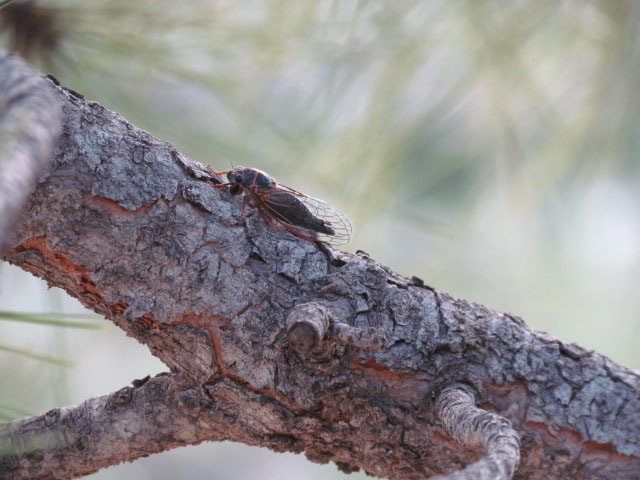
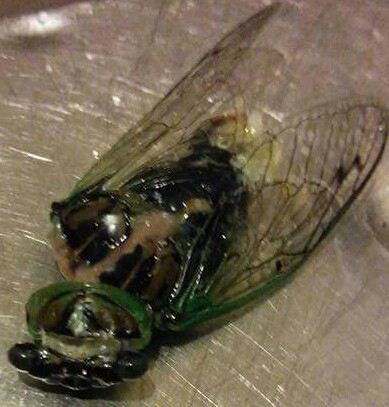
Locusts and cicadas are both insects that often garner attention due to their unique lifecycles and, at times, their propensity for causing damage. However, it’s essential to recognize that these creatures are not the same and belong to different insect groups.
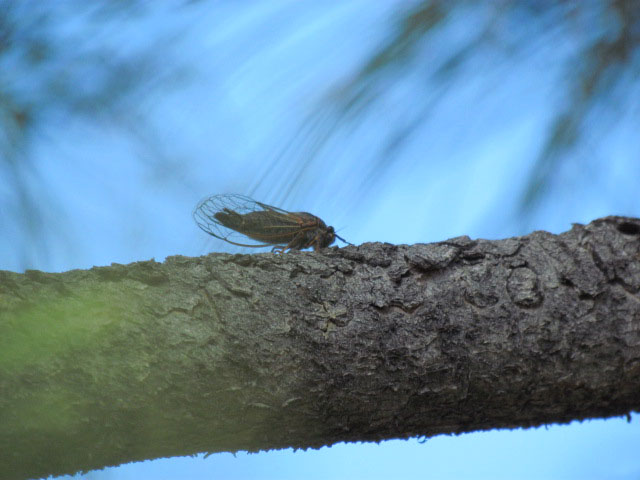
Locusts are a type of grasshopper, characterized by their long, powerful hind legs, antennas, and large wings. They are known for their destructive behavior when they form massive swarms during their infrequent population explosions. On the other hand, cicadas are part of the true bug family, featuring black bodies, large red-brown eyes, and membranous wings with orange veins. They are known for their loud courting sounds made by adult males and unique appearance.
While both locusts and cicadas can be seen as pests in some situations, their impact on the environment and human life can vary significantly. Locust swarms have the potential to devastate agriculture, while cicadas’ physical damage is usually limited to minor twig injuries, known as flagging. So, understanding their differences is essential for managing these insects appropriately.
Locusts vs Cicadas: Basic Overview
Classification and Relation to Other Insects
Locusts and cicadas both belong to the insect class, but they are quite different in many aspects. Locusts are a type of grasshopper, belonging to the order Orthoptera, while cicadas belong to the order Hemiptera and are more closely related to leafhoppers and spittlebugs12.
Physical Appearance
Locusts:
- Long, powerful back legs for jumping
- Can have short or long wings, depending on phase
Cicadas:
- Larger and bulkier than locusts
- Prominent eyes, placed wide apart on the head
- Transparent, veined wings, with a characteristic shape
Life Cycle and Lifespan
Locusts:
Locusts go through three stages in their life cycle – egg, nymph, and adult. Their lifespan usually lasts about several weeks to a few months, depending on environmental conditions.
Cicadas:
Cicada life cycles are more diverse than locusts’:
Comparison Table
| Feature | Locusts | Cicadas |
|---|---|---|
| Order | Orthoptera | Hemiptera |
| Family | Acrididae (for most species) | Cicadidae |
| Related to | Grasshoppers | Leafhoppers, spittlebugs |
| Lifespan | Several weeks to few months | 2-5 years (Dogday), 13 or 17 years (Periodical) |
| Stages in life cycle | Egg, nymph, adult | Egg, nymph, adult |
| Distinct physical features | Powerful back legs | Wide-set eyes, transparent veined wings |
Behavior and Habits
Swarming and Solitary Behavior
- Cicadas: These insects are typically solitary, living underground as nymphs before emerging to molt1.
- Locusts: They can exhibit both solitary and gregarious behavior, transforming into swarming locusts under certain conditions2.
| Cicadas | Locusts | |
|---|---|---|
| Solitary | Yes | Yes |
| Gregarious | No | Yes, in swarms3 |
Mating and Reproduction
Cicadas
- Males produce sounds to attract females for mating4.
- After mating, females lay eggs in plant tissue, with nymphs hatching and falling to the ground1.
Locusts
- Their mating and reproduction processes are similar to other grasshoppers2.
- Serotonin levels increase in locusts during the gregarious phase5.
Feeding Patterns
Cicadas
Locusts
Impact on the Environment
Destruction to Crops and Plants
Locusts are notorious for the destruction they cause to crops and vegetation. In East Africa, these insects have devoured thousands of hectares of farmland and forests, threatening food security for millions across the region1. Cicadas, on the other hand, are not harmful to humans, pets, household gardens, or crops2.
- Locusts: Cause massive damage to crops and vegetation
- Cicadas: Harmless to crops and gardens
Population Fluctuations and Plagues
Locust swarms have been linked to famine and human migration throughout history3. In recent years, outbreaks have reached their worst levels in decades, with hundreds of billions of locusts emerging in East Africa4. Cicadas are known for their periodical, predictable life cycles, appearing in North America every 13 or 17 years2. Unlike locusts, they do not form destructive swarms.
| Insects | Population Fluctuations |
|---|---|
| Locusts | Outbreaks can reach massive levels, causing widespread destruction |
| Cicadas | Periodical life cycles, non-destructive |
Ecological Role and Environmental Adaptations
Both locusts and cicadas play important roles in their respective ecosystems. Locusts are herbivores, consuming large amounts of vegetation, while cicadas feed on tree sap2. Due to their differences in food sources and behavior, their environmental adaptations also vary significantly.
Locusts typically thrive in regions experiencing unusual weather patterns, such as heavy rainfall, which promotes rapid vegetation growth, providing the insects with an abundant food source5. Cicadas, conversely, are more prevalent in North American forests during springtime2.
- Locusts: Thrive in regions with abnormal weather patterns
- Cicadas: Appear in North American forests in spring
Distinctive Features and Comparison
Size, Color, and Shape
- Locusts are part of the Orthoptera family, which includes grasshoppers. They typically range from 0.5 to 3 inches in length and have a slim, elongated body shape.
- Cicadas, from the family Cicadidae, are larger insects measuring 1 to 1.5 inches long with stout bodies.
| Feature | Locust | Cicada |
|---|---|---|
| Size | 0.5 to 3 inches | 1 to 1.5 inches |
| Body Shape | Slim & elongated | Stout |
Wings and Flight Patterns
- Locust wings are designed for long-distance migration and are clear or translucent with green or brown hues.
- Cicada wings are broad, membranous with orange veins, and usually folded over their back like a tent when at rest.
- Cicadas have a shorter flight range and weaker flight patterns compared to locusts.
Sounds, Songs, and Buzzing
- Locusts produce minimal sounds, primarily generated by wing movement during flight, which is not audible to humans.
- Cicadas create loud, buzzing sounds using their tymbals, reaching up to 120 decibels. Males use these sounds for courting and attracting females.
| Feature | Locust | Cicada |
|---|---|---|
| Sound Source | Wing movement | Tymbals |
| Decibel Level | Not audible | Up to 120 decibels |
A few examples of key differences:
- Cicadas have large red-brown eyes, while locusts have smaller, less distinct eyes.
- Locusts have long antennae, whereas cicadas have shorter antennae.
Comparing their characteristics:
- Behavior: Cicadas are mainly known for their loud buzzy sounds and emergence after many years spent underground, while locusts are known for their destructive swarming behavior that can devastate crops.
- Lifespan: Annual cicadas can spend 2-5 years as underground nymphs, and periodical cicadas have nymphal stages of 13 or 17 years. Locusts have shorter lifespans, often between several weeks and a few months, depending on the species.
- Root-feeding: Cicada nymphs feed on root xylem fluids, while locust nymphs feed on grasses and other vegetation.
Notable Cicada and Locust Species
Periodical and Annual Cicadas
Periodical cicadas are known for their synchronized 17- or 13-year life cycles and dense choruses. They have striking black bodies, red eyes, and red wing veins. Annual cicadas, like the dogday cicada, are larger, have a green or brown body with black markings, and shorter life cycles.
- Periodical cicada features:
- Synchronized life cycles
- Striking colors
- Red eyes and wing veins
- Annual cicada features:
- Shorter life cycles
- Green or brown body
- Black markings
Examples include the genus Magicicada for periodical cicadas and Neotibicen canicularis (dogday cicada) for annual cicadas. Males of both types produce loud singing for mating purposes, using a specialized membrane on their bodies.
Short-Horned Grasshoppers and Desert Locusts
Short-horned grasshoppers and desert locusts belong to the family Acrididae within the order Orthoptera. While both insects have similarities like short antennae and hind legs for jumping, desert locusts have the ability to undergo dramatic behavioral changes when environmental conditions favor their population growth, leading to swarms that cause massive crop damage.
Comparison table:
| Characteristics | Short-Horned Grasshoppers | Desert Locusts |
|---|---|---|
| Antennae length | Short | Short |
| Legs | Hind legs for jumping | Hind legs for jumping |
| Swarming behavior | Rarely | Frequently during favorable conditions |
| Agricultural impact | Minimal | Significant in swarms |
Examples of short-horned grasshopper species are Melanoplus sanguinipes and Aulocara elliotti. A notorious example of a desert locust is Schistocerca gregaria.
Frequently Asked Questions and Misconceptions
Are They Dangerous or Aggressive?
Cicadas and locusts are not dangerous or aggressive to humans. Both insects primarily feed on plants and are generally harmless to people. However, they can cause some damage to vegetation:
- Cicadas: Damage caused by females laying eggs on twigs may result in twig dieback (flagging)
- Locusts: Can devour vegetation during swarms, affecting agriculture
Cicada Stings and Allergies
Cicadas are often mistaken for being capable of stinging, but this is not true. They are not true bugs and don’t have the ability to sting. Although rare, some individuals may experience allergic reactions to cicadas. These reactions typically involve skin irritation from handling the insects.
Do Cicadas and Locusts Go Extinct?
Neither cicadas nor locusts are at risk of extinction. Both insects exhibit unique life cycles that allow them to continue thriving:
- Cicadas: Have periodic emergences every 13 or 17 years
- Locusts: Are grasshoppers that undergo metamorphosis and change their behavior, swarming when conditions are favorable
| Feature | Cicadas | Locusts |
|---|---|---|
| Diet | Plant sap | Plant leaves |
| Sting | No | No |
| Aggressive | No | No |
| Extinction Risk | Low | Low |
| Life Cycle | 13 or 17 years | Metamorphosis |
In summary, cicadas and locusts are not dangerous or aggressive insects and neither is at risk of extinction. Cicadas don’t sting, but some people may experience allergies when handling them.
Footnotes
- Cicadas | Illinois Extension | UIUC ↩ ↩2 ↩3 ↩4 ↩5
- Periodical and “Dog-Day” Cicadas | Ohioline ↩ ↩2 ↩3 ↩4 ↩5 ↩6 ↩7 ↩8
- Dogday cicadas ↩ ↩2 ↩3
- Periodical Cicadas | Smithsonian National Museum of Natural History ↩ ↩2 ↩3 ↩4
- Locust phase polyphenism: an update ↩ ↩2
- FAO – Locusts and other migratory pests ↩

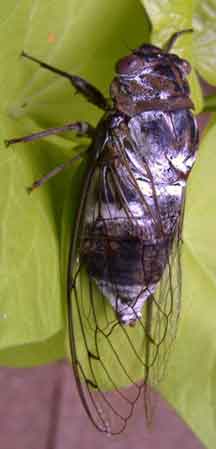


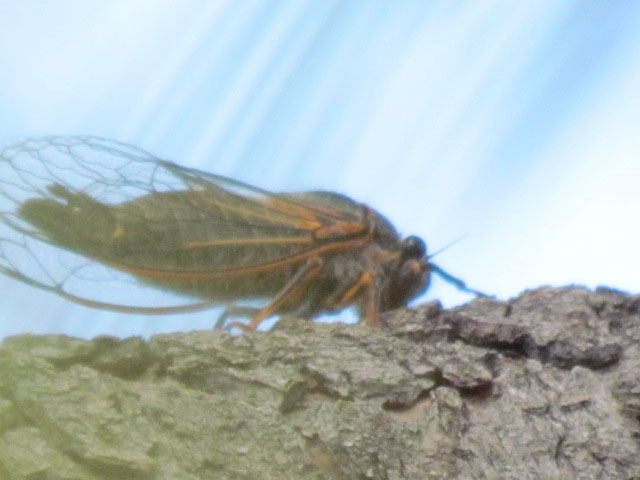
Cicada