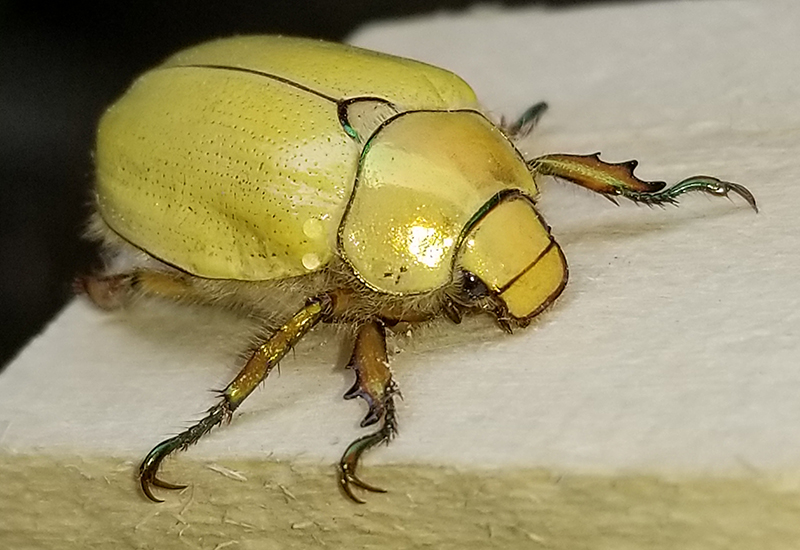
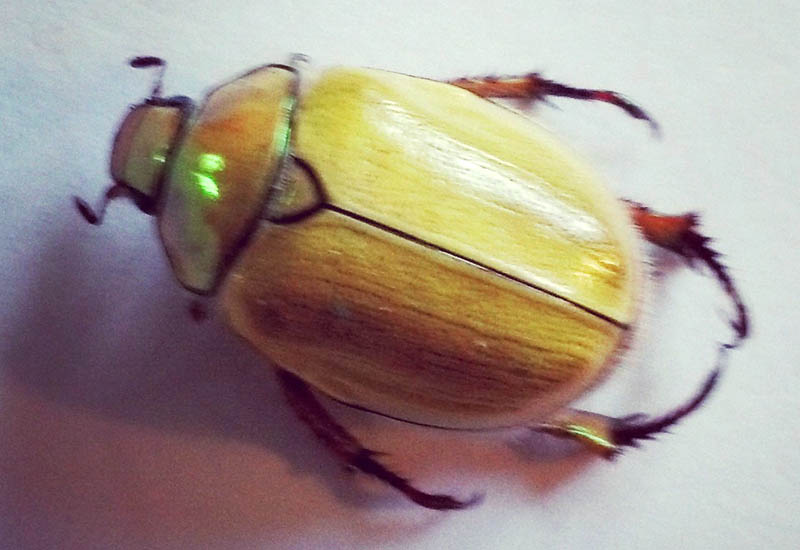
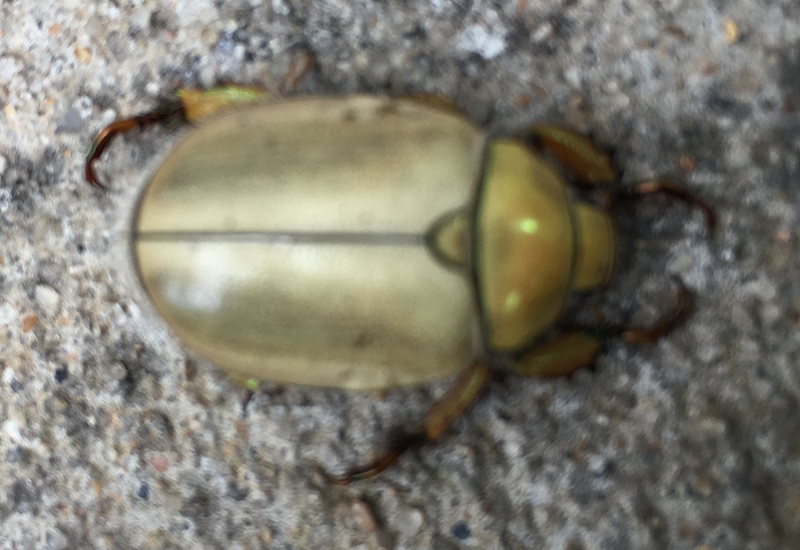
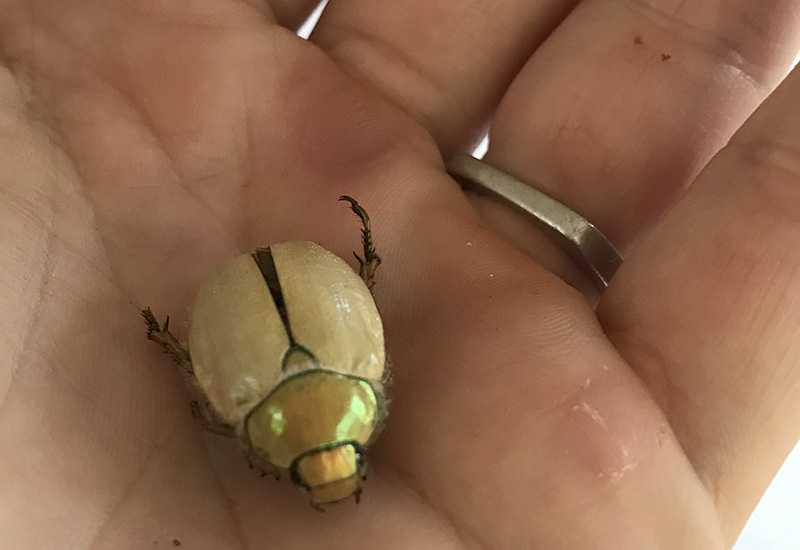
The Goldsmith Beetle, scientifically known as Cotalpa lanigera, is a stunning insect highly regarded for its beauty. Belonging to the family Rutilidae, also known as golden-gleaming ones, these beetles are truly a sight to behold with their gleaming exterior and unique characteristics.
Native to North America, Goldsmith Beetles can often be found in areas with an abundance of vegetation. These short-lived insects typically lay their eggs in the ground during June, making it the last time they’re usually spotted for the year.
Goldsmith Beetle Identification
Physical Characteristics
The Goldsmith Beetle, also known as Cotalpa lanigera, is a member of the Scarabaeidae family and has a unique appearance. Key physical traits of this beetle include:
- Size: They are relatively large, with a length of around 1 inch1
- Shape: This beetle has an oval-shaped body with a rounded thorax and head
- Legs: It possesses six legs which are useful for crawling on surfaces2
Metallic Sheen and Color
The Goldsmith Beetle is also known for its striking, metallic appearance3 and the colors that help distinguish it from other beetles:
- Yellow: The body of the Goldsmith Beetle is primarily a bright yellow hue
- Green: Some specimens exhibit a slight greenish tint depending on the lighting4
- Brown: On rare occasions, Goldsmith Beetles appear brownish due to natural pigment variations
One of its distinctive features that makes it easy to identify this beetle is its resemblance to the shining leaf chafer5. Both these beetles have a shiny, round, metallic appearance. However, there are differences in their colors.
| Feature | Goldsmith Beetle | Shining Leaf Chafer |
|---|---|---|
| Primary Color | Yellow (with a possible greenish or brownish tint) | Green (with a possible bronze or reddish sheen) |
| Shape | Oval-shaped body with a rounded thorax and head | Similar body shape, but slightly smaller and more elongated |
| Metallic Sheen | Both have a metallic sheen that makes their colors appear shiny and iridescent |
In summary, the Goldsmith Beetle can be identified by its distinct physical characteristics and its unique metallic sheen and color. Keep these features in mind when trying to spot this fascinating beetle in the wild.
Habitat and Distribution
North America Range
The Goldsmith Beetle (Cotalpa lanigera) can be found in the eastern and central parts of the United States, as well as southeastern Canada1. Some examples of regions where they can be found include:
- Eastern United States
- Central United States
- Southeastern Canada
Woodlands and Deciduous Forests
Goldsmith Beetles prefer to inhabit woodlands and deciduous forests, particularly around trees such as willow, poplar, cottonwood, and oak2. Their preference for specific tree types is summarized in the table below:
| Preferred Trees | Examples |
|---|---|
| Willow | Black Willow, Weeping Willow |
| Poplar | Eastern Cottonwood, Quaking Aspen |
| Cottonwood | Fremont Cottonwood, Swamp Cottonwood |
| Oak | White Oak, Red Oak |
These beetles play a role in maintaining the health of these ecosystems, making them an important part of the woodland and deciduous forest habitats.
Life Cycle and Reproduction
Female Scattering Eggs
Goldsmith Beetles, belonging to the family Scarabaeidae, reproduce when the female beetle scatters her eggs in and around an appropriate environment. A female lays anywhere from 45 to 285 eggs per year, ensuring the continuation of their species.
Larvae Burrowing
Once hatched, the larvae of the Goldsmith Beetle begin their life cycle by burrowing into the ground. They typically
prefer land under present tillage and feed on the roots of plants, as they grow and develop.
Features of Goldsmith Beetle larvae:
- White or tan in color
- Feed on plant roots
- Burrow in the ground during development
Pupation and Earthen Cells
As the larvae reach maturity, they go through a pupation process, forming earthen cells to protect themselves during metamorphosis. The beetle remains in this stage for around 7 to 10 days before emerging as an adult Goldsmith Beetle, ready to mate and restart the cycle.
Pros and cons of Goldsmith Beetle’s reproduction method:
Pros:
- Short life cycle, ensuring rapid growth in population
- High number of eggs laid by females increases the chances of offspring survival
Cons:
- Burrowing larvae can cause damage to plant roots
- Larvae’s feeding habits might make them a pest in agricultural settings
Comparison of Goldsmith Beetle’s life cycle with typical insects:
| Stage | Goldsmith Beetles | Typical Insects |
|---|---|---|
| Egg | Laid by female | Laid by female |
| Larval | Burrow in soil | Various habitats |
| Pupation | Earthen cells | Cocoon or chrysalis |
| Adult | Mating and egg-laying | Mating and egg-laying |
In summary, Goldsmith Beetles have a unique life cycle and reproduction process that involves female scattering of eggs, larvae burrowing, and pupation in earthen cells. These life stages are essential for the continued existence of this beautiful beetle.
Diet and Food Sources
Leaves and Woody Material
The primary food source for Goldsmith Beetles is leaves, and they have a preference for certain types of foliage. One such example is hickory leaves, which provide essential nutrients for their growth and well-being.
Rotting Logs
Another essential food source for these beetles is rotting logs. Goldsmith Beetles are commonly found in these habitats, as they provide an ideal environment for their feeding and reproduction.
Key Features
- Primarily feed on leaves
- Prefer hickory leaves
- Utilize rotting logs
Comparison Table
| Habitat | Type of Food Source | Preferred by Goldsmith Beetles |
|---|---|---|
| Woody Material | Leaves | Yes |
| Rotting Logs | Decomposing wood | Yes |
Goldsmith Beetles rely on a variety of plant-based food sources, ensuring they receive the necessary nutrients from their environment. Short sentences and paragraphs, as well as formatting options like bullet points and tables, have been utilized to make this text easy to read and understand.
Goldsmith Beetle in Popular Culture
Gold Bug
The Goldsmith Beetle, known as Cotalpa lanigera, holds a significant place in popular culture, particularly in literature. One of its most notable appearances is in Edgar Allan Poe’s short story, “The Gold-Bug.” This story revolves around a gold-colored beetle that leads the protagonist to discover a hidden treasure.
Some possible literary influences related to the Goldsmith Beetle are:
- Edgar Allan Poe’s “The Gold-Bug”: The gold-colored beetle is at the center of the plot, symbolizing mystery and adventure.
- Samuel Lockwood’s description: The Reverend Samuel Lockwood described the Goldsmith Beetle as one of the most beautiful beetles in North America, emphasizing its golden appearance and belonging to the “golden-gleaming” family Rutilidae.
The Goldsmith Beetle’s remarkable appearance has been a source of inspiration in literature, due to its striking golden hue and intriguing behavior.
Key Features of the Goldsmith Beetle:
- Brilliant metallic golden color
- Short-lived, mainly seen in June
- May lay eggs in the ground during June
Characteristics of the Goldsmith Beetle:
- Belongs to the Rutilidae family
- Known for its beauty and golden-gleaming appearance
While the Goldsmith Beetle isn’t widely present in popular culture, its appearance in Poe’s iconic work solidifies its connection to literary history and highlights its unique allure in storytelling.
Additional Information
Caution against Pests
The Goldsmith Beetle (Cotalpa lanigera) belongs to the subfamily Rutelinae within the Coleoptera order. While these beetles are not generally known to be harmful pests, it’s crucial to monitor their population. Keeping their numbers in check is essential to prevent potential damage to crops and plants.
Images and Resources
If you’re looking for images and resources to learn more about Goldsmith Beetles, BugGuide provides an extensive collection, including photographs, range distribution, and information on the genus. Additionally:
- Goldsmith Beetles have a distinct copper color on their head and pronotum, making them easily identifiable.
- Their range is primarily in the eastern and central parts of North America.
To better understand the differences between Goldsmith Beetles and similar beetles, consider this comparison table:
| Feature | Goldsmith Beetle | Grapevine Beetle | May/June Beetle |
|---|---|---|---|
| Size | Medium | Large | Large |
| Color | Copper/golden | Yellow with black spots | Brown |
| Range | Eastern and central North America | Eastern North America | Worldwide |
| Hooks | Present | Absent | Absent |
Among their fascinating characteristics, Goldsmith Beetles have:
- Hooks on their legs, which aid in climbing
- Short life span
- Attraction to areas with present tillage
By exploring various resources, you’ll be able to learn more about this amazing beetle and its unique features. Don’t hesitate to dive deeper into the genus to discover fascinating facts about the Goldsmith Beetle and the greater Coleoptera family.
Footnotes