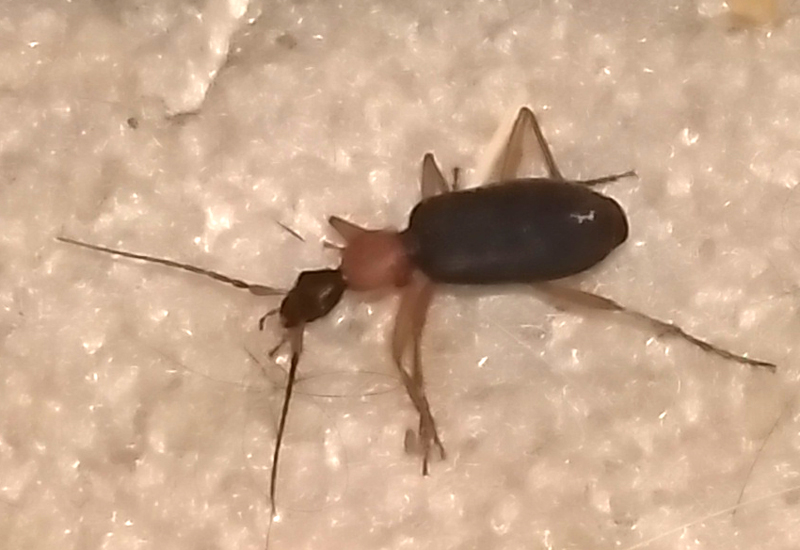
The False Bombardier Beetle is a fascinating creature that belongs to the family Carabidae. These beetles are known for their bright colors and interesting defense mechanisms, which make them a popular subject of study among entomologists.
In their natural habitat, False Bombardier Beetles can be observed in various environments, such as woodlands, grasslands, and even relatively arid areas. The insects have some unique characteristics that help them cope with predators and various environmental challenges, making them highly adaptable and intriguing to study. Some key features of the False Bombardier Beetle include:
- Bright coloration
- Ejecting a hot chemical spray as a defense mechanism
- Active lifestyle, usually hunting at night
The defense mechanism exhibited by these beetles is quite remarkable. When threatened, they produce a noxious chemical mixture which is expelled as a spray from their abdomen. This spray is hot and carries an unpleasant odor, effectively discouraging predators from attacking them.
Curious what unconventional products the bug enthusiasts here at What’s That Bug LOVE?
While we do enjoy and use the products recommended above, they are affiliate links where ‘What’s That Bug’ may receive a small commission at no additional cost to you. This helps to financial support this website from hosting to expert entomologists and writers who identify your bug requests and create the content you love.
Understanding False Bombardier Beetles
Species and Characteristics
The False Bombardier Beetle belongs to the genus Galerita and is a member of the Carabidae family of ground beetles1. They are dark-colored, speedy, long-lived, and nocturnal carnivores2. Some notable characteristics of False Bombardier Beetles include:
- Paired abdominal glands that produce a defensive spray3
- Spray consisting mainly of concentrated formic acid, with some acetic acid and wetting agents2
Similarities and Differences with Bombardier Beetles
Both the False Bombardier Beetle and the Bombardier Beetle belong to the ground beetle family Carabidae, and share some similarities:
However, there are notable differences between the two species:
| Feature | False Bombardier Beetle | Bombardier Beetle |
|---|---|---|
| Chemical Spray | Formic acid, acetic acid2 | Hydroquinone, hydrogen peroxide4 |
| Temperature of the Spray | Room temperature | Boiling, irritating liquid4 |
| Spray Production Process | Steady release of chemicals3 | Internal chemical explosion in their abdomen4 |
Though they differ in their defense mechanisms, both beetles are adept at warding off predators due to their noxious sprays. Remember to admire these fascinating insects from a distance, as the chemical defenses of both the False Bombardier Beetle and the Bombardier Beetle are quite effective at deterring threats2.
Physical Features and Traits
Body Structure
The False Bombardier Beetle, or Galerita janus, has a few key body features:
- Abdomen: The abdomen contains the glands that produce their defensive chemicals.
- Antennae: They have relatively long antennae, which aid in sensing their environment.
- Legs: The beetle possesses six legs, typical of insects, providing mobility and agility.
Coloration and Markings
False Bombardier Beetles exhibit distinctive colors and markings:
- Black: The majority of their bodies are black, helping them blend into their surroundings.
- Pronotum: Their pronotum (the plate covering the thorax) is often reddish-brown.
- Elytra: The elytra (hardened wing covers) may display slight metallic reflections.
| False Bombardier Beetle | True Bombardier Beetle | |
|---|---|---|
| Color | Mostly black | Black and orange |
| Defensive Chemical | Formic acid | Hydroquinone & Hydrogen Peroxide |
| Lifespan | Several weeks | Several years |
As seen in the table, False Bombardier Beetles differ from their true counterparts in coloration, defensive chemical composition, and lifespan.
Life Cycle and Reproduction
Eggs and Larvae
False Bombardier Beetles (Galerita bicolor) begin their life cycle as eggs laid by adult females. They typically lay eggs in moist areas, providing a suitable environment for the developing larvae. Once the eggs hatch, the larvae emerge and start feeding.
Some key features of the larvae stage include:
- Smaller in size than adults
- Soft-bodied
- Predators of smaller insects
Pupa and Adult
In the next stage of development, False Bombardier Beetle larvae transform into pupae. They encase themselves in a protective cocoon where they undergo metamorphosis. Following this development, the adult beetles emerge with fully grown characteristics, such as a hard exoskeleton and fully functioning wings.
Adult False Bombardier Beetles are known for their defense mechanism, which involves releasing a mixture of formic acid and acetic acid when threatened 1. Their lifespan varies depending on their environment and species, but some can survive for several years under suitable conditions 2. They reproduce sexually, with males and females mating to pass on their genes 3.
Comparison of key characteristics between larvae and adult False Bombardier Beetles:
| Characteristics | Larvae | Adult |
|---|---|---|
| Size | Smaller | Larger |
| Body | Soft | Hard exoskeleton |
| Feeding | Predators of smaller insects | Predators of various insects |
| Defense Mechanism | None | Release of formic and acetic acids |
Habitat and Diet
Finding Their Preferred Environment
The False Bombardier Beetle (Galerita sp.) is known to thrive in various environments. They can typically be found in:
- Backyards
- Woodlands
These beetles are most active during the night, as they search for food and shelter.
Food Preferences
The main components of a False Bombardier Beetle’s diet consist of:
- Insects
- Larvae
- Other small arthropods
These beetles may also fall prey to larger predators such as birds.
| Backyards | Woodlands | |
|---|---|---|
| Active | Mostly during night | Mostly during night |
| Diet | Insects, larvae | Insects, larvae |
| Predators | Birds and larger insects | Birds and larger insects |
With this information in mind, the False Bombardier Beetle seems to be quite adaptable when it comes to its habitat and diet preferences, able to survive and thrive in various environments.
Defense Mechanisms
Chemical Reactions
False Bombardier Beetles (genus Galerita) defend themselves by releasing a combination of formic acid and acetic acid. These chemicals are stored in the beetle’s abdomen and are produced through the reaction of hydroquinones and hydrogen peroxide. For comparison, true Bombardier Beetles (genus Brachinus) produce a different chemical mixture, which contains more potent and heated substances.
| Species | Primary Chemicals |
|---|---|
| False Bombardier | Formic and Acetic acid |
| True Bombardier | Benzoquinone |
Protecting Themselves Against Predators
- Formic acid: It’s the main defensive chemical in the beetle’s arsenal. It smells bad and deters both vertebrate and invertebrate predators. This acid takes about 5 days for the beetle to replace after one burst source.
- Acetic acid: It adds to the repellent effects of formic acid.
For example, when these beetles were exposed to Japanese quail (Coturnix japonica), naïve, hand-reared quail attacked live beetles, indicating the absence of an innate aversion to them source. However, the aversive, irritating chemicals secreted by the beetles likely serve to deter future predation attempts.
In conclusion, the defense mechanisms of False Bombardier Beetles involve a combination of chemical reactions producing strong-smelling and irritating acids, mainly formic and acetic acids. These substances protect the beetles by repelling predators and discouraging future attacks.
Interaction with Humans
Are They Dangerous?
The False Bombardier Beetle (Galerita janus) is not considered dangerous to humans. Their primary defense mechanism consists of spraying concentrated formic acid (around 80%) along with some acetic acid. This ensures a safe distance from potential predators but does not pose a significant risk to people.
Prevention and Control
Although not dangerous, it’s understandable that you might not want these beetles in your living spaces, especially in areas like your basement. To prevent them from entering your home, follow these tips:
- Seal any cracks in exterior walls
- Keep windows and doors well-fitted
- Clean up debris in your yard
In case you find them indoors, you can take the following steps to get rid of them:
- Use insecticides specifically designed for beetles
- Regularly clean your basement to reduce any potential hiding spots
- Keep in mind that their activity usually increases during the spring and fall seasons
It’s essential to use accurate information to identify these beetles correctly, as they are often mistaken for cockroaches. A picture of the False Bombardier Beetle can be found on bugguide.net. They typically have a length of about 1.0 to 1.8 inches.
| Feature | Cockroach | False Bombardier Beetle |
|---|---|---|
| Length | 0.5 – 2 inches | 1.0 – 1.8 inches |
| Legs | Six legs | Six legs |
| Body structure | Flat, oval-shaped | Elongated |
| Primary defense | Fast running | Formic acid spray |
To sum it up:
- False Bombardier Beetles are not dangerous to humans
- They use a formic acid spray as a defense mechanism
- Regularly cleaning your home and properly sealing it can help prevent and control their presence
Remember to treat these creatures with care and avoid prolonged exposure to their defensive spray as it can cause irritation.
[sc name=”bugquiz” ][/sc]Footnotes