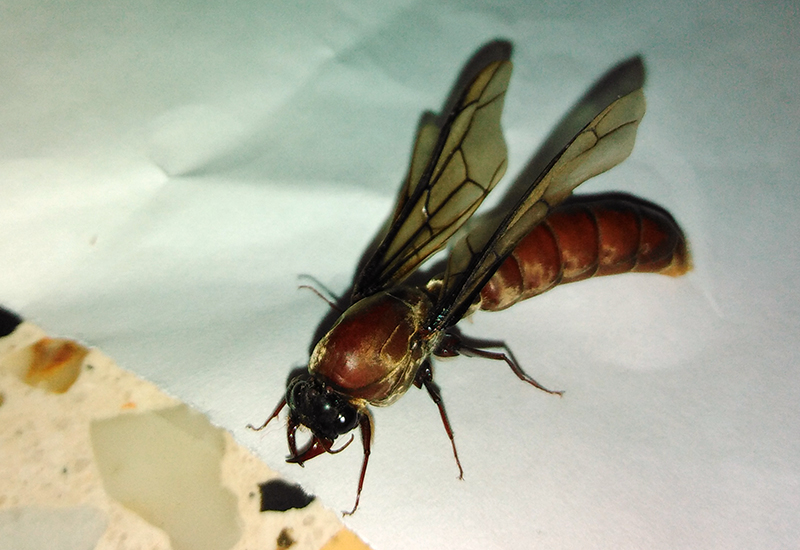
Velvety Tree Ants. Source: Flickr, Username: K Schneider
Do Ants Bite? : Types of Ants That Bite
Fire Ants
Fire ants are known for their aggressive behavior and painful stings. They have a reddish-brown color and can be found in the southern United States.
- Sting symptoms: burning, itching, swelling
- Potentially dangerous for allergic individuals
Carpenter Ants
Carpenter ants are large, black, or reddish ants that nest in wood. They don’t sting but can bite, causing mild discomfort.
- Bite symptoms: minor pain, redness
- May cause structural damage to wooden buildings
Field Ants
Field ants are common in yards and gardens. They have a diverse range of colors and sizes. They can bite and spray formic acid, causing a burning sensation.
- Bite symptoms: stinging, burning feeling
- Found in lawns and fields
Pavement Ants
Pavement ants are small, brown or black ants commonly found near sidewalks or driveways. They bite but usually aren’t considered harmful to humans.
- Bite symptoms: mild pain, minor irritation
- Common in urban environments
Acrobat Ants
Acrobat ants are small, shiny black ants named for their habit of raising their abdomen when threatened. They can bite but are more likely to run away.
- Bite symptoms: minor pain, slight irritation
- Less aggressive than other species


| Ant Species | Symptoms | Location | Aggressiveness |
|---|---|---|---|
| Fire Ants | Burning, itching | Southern United States | High |
| Carpenter Ants | Mild pain, redness | United States, Canada | Low |
| Field Ants | Stinging, burning | Lawns, fields | Moderate |
| Pavement Ants | Mild pain, minor irritation | Urban environments | Low |
| Acrobat Ants | Minor pain, slight irritation | Various locations | Low |
Identifying Ant Bites
Appearance
Ant bites often cause redness and swelling but may vary in appearance, depending on the type of ant. Some common features include:
- Small, red spot
- White pustule or blister
- Raised welt
For example, bites from fire ants are usually characterized by a red spot surrounded by a white pustule.
Symptoms
The symptoms of an ant bite can range from mild to severe. They may include:
- Pain, which could be mild or painful
- Itching or stinging sensation
- Swelling
Ant bites are generally harmless, especially those from common household ants.
However, a small percentage of people may experience more severe reactions to ant venom, especially if they are allergic to the venom. In these cases, seek medical attention immediately.
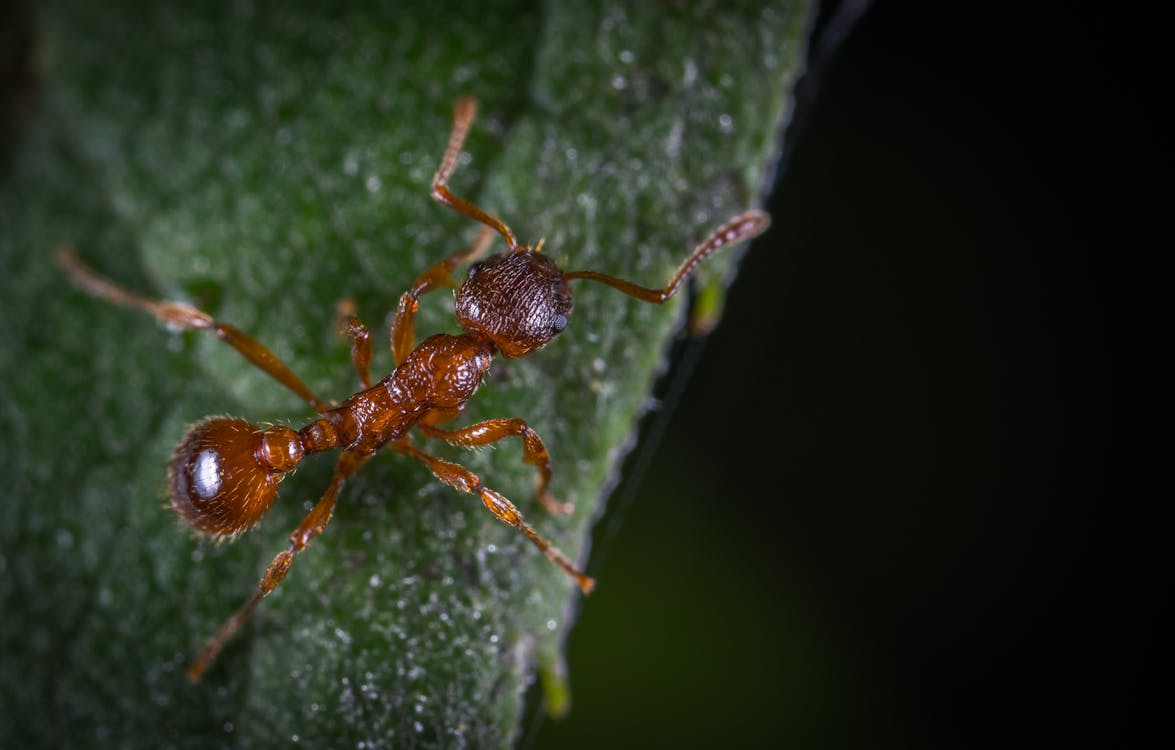
Comparison Table:
| Feature | Harmless Ant Bite | Painful Ant Bite |
|---|---|---|
| Redness | Yes | Yes |
| Pain | Mild | High |
| Swelling | Mild | High |
| Itchiness | Yes | Yes |
| Venom Risk | Low | High |
First Aid and Treatment
Immediate Response
If you are bitten by an ant, the first step is to:
- Wash the affected area with soap and water to remove any remaining venom and prevent infection from the ant’s mandibles.
- Apply a cold compress or ice to reduce swelling, redness, and discomfort.
Over-the-Counter Medications
For minor ant bites and stings, over-the-counter treatments can help alleviate symptoms:
- Antihistamines can reduce itching and redness, as well as help control any allergic reactions.
- Hydrocortisone creams can help relieve itching, inflammation, and redness.
When to Seek Medical Help
In some cases, ant bites or stings can cause more severe reactions. Seek medical help if you experience any of the following:
- Difficulty breathing or shortness of breath
- Rapid heart rate
- Swelling of the lips, throat, or face
- Severe itching, hives, or rashes
- Nausea, vomiting, diarrhea, or fever
These symptoms can indicate a serious reaction, such as anaphylaxis or anaphylactic shock, which requires immediate medical attention.

For example, a fire ant sting can be more painful and venomous than other ant bites.
If you are bitten by a fire ant and experience severe pain, rapid heart rate, or difficulty breathing, seek medical help right away.
Comparison Table:
| Ant Bite/Sting Symptoms | Over-the-Counter Treatments | When to Seek Medical Help |
|---|---|---|
| Itching | Antihistamines | Severe itching, hives |
| Redness, swelling | Ice, cold compress | Swelling of face, throat |
| Inflammation | Hydrocortisone cream | Difficulty breathing |
| Mild allergic reaction | Antihistamines | Anaphylaxis symptoms |