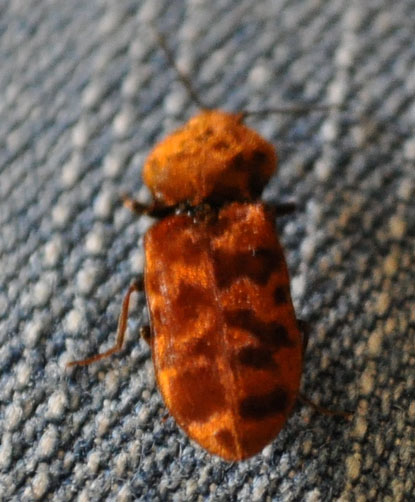
Click beetles are a fascinating group of insects known for their unique ability to make a clicking sound and perform acrobatic flips. Belonging to the family Elateridae, these beetles are characterized by their long, narrow body with rounded or tapered ends, and mostly drab brown, black, or gray coloring.
The click beetle’s most notable feature is the audible click it produces when it snaps its body. This mechanism is used as a way to deter predators or to right itself when it ends up on its back. The larvae of click beetles, called wireworms, have a tough, segmented body and are known to live in decaying logs, preying on longhorn beetle grubs.
One of the larger click beetles, the Eastern Eyed Click Beetle, can be found throughout South Carolina and is easily recognized by two bold black spots near its head that resemble eyes. These false eyes are thought to scare away predators, while the beetle’s true eyes are much smaller and located behind the antennae.
Understanding Click Beetles
What Are Click Beetles?
Click beetles, also known as snapping beetles, spring beetles, skipjacks, or alaus, are fascinating insects belonging to the family Elateridae. They get their name from the clicking mechanism they possess, which they primarily use as a defense to escape or startle potential predators1.
Family Elateridae
The family Elateridae comprises various species of beetles. These insects are commonly found in habitats such as:
- Soil
- Decaying wood
- Moss
- On plants2
They are mostly found in areas with vegetation and soil but are rare in deserts or flooded areas2.
Distinctive Features
Some key distinctive features of click beetles are:
- Long, narrow body with rounded or tapered ends3
- Drab brown, black, or gray colors, with some having interesting patterns3
- Extended pronotum (shield-like portion between the head and wing covers) pointed to the rear3
- Serrated, threadlike, or tiny comb-tipped antennae3
One notable species within this family is the eyed click beetle, which is characterized by its two large, round markings resembling eyes.
Click Beetle and Eyed Click Beetle Comparison
| Feature | Click Beetle | Eyed Click Beetle |
|---|---|---|
| Body Shape | Long, narrow, rounded or tapered ends3 | Same3 |
| Colors | Drab brown, black, or gray3 | Gray or black with large eye-like markings3 |
| Antennae | Serrated, threadlike, or tiny comb-tipped3 | Same3 |
| Pronotum | Pointed to the rear3 | Same3 |
| Habitat | Soil, decaying wood, moss, plants2 | Same2 |
Pros and Cons of Click Beetles
| Pros | Cons |
|---|---|
| Unique clicking mechanism for defense1 | Can be mistaken for harmful beetles |
| Interesting patterns and eye-like markings |
Click Beetle Behavior and Habitat
Nocturnal or Diurnal
Click beetles are mostly nocturnal creatures, meaning they are active during the night and generally resting or hiding during the day. This behavior helps them to avoid predators and find their sources of food more effectively.
Preferred Habitat
These beetles prefer living in areas with plenty of vegetation and soil, like forests, gardens, and wooded areas. They are common throughout North America, except for extremely arid deserts and flooded regions. Adult click beetles can be found on the ground, on plants, in decaying wood, or hiding under bark, while larvae usually live in the soil1.
Diet and Feeding Habits
Click beetles have diverse diet preferences depending on their stage of life:
- Larvae: Called “wireworms,” they feed mainly on the roots of plants and are known to cause damage to crops2.
- Adults: They feed on nectar, pollen, and flowers and are attracted to the scent of different plant species3.
Below is a comparison table of adult and larval diets:
| Stage | Diet |
|---|---|
| Adults | Nectar, pollen, flowers |
| Larvae | Roots of plants (as wireworms) |
In summary, click beetles are nocturnal insects that prefer habitats rich in vegetation and soil. They have diverse diet preferences, with adults feeding on nectar, pollen, and flowers, while larvae feed on plant roots.
Lifecycle and Reproduction
Stages of Development
Click beetles undergo complete metamorphosis, which consists of four stages:
- Egg
- Larva
- Pupa
- Adult
The lifecycle begins with the female beetle laying her eggs, which typically hatch within 7 to 10 days1.
Larvae and Wireworms
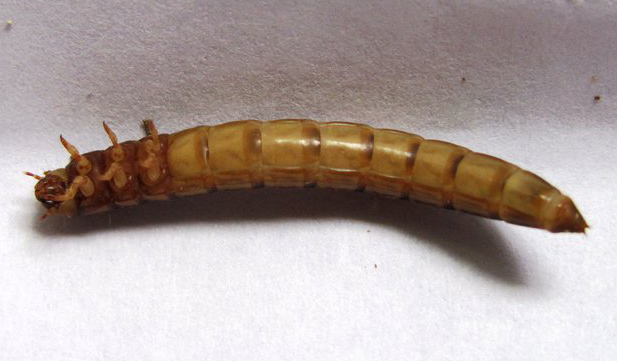
Click beetle larvae, commonly referred to as wireworms, are long, shiny, and have tough segmented bodies. Unlike mealworms (the larvae of a different beetle family), click beetle larvae have mouthparts that point straight forward. Wireworms dwell in soil, feeding on roots, stems, and seeds of plants.
Adult Click Beetles
Once the larvae reach their final stage, they pupate, eventually emerging as adult click beetles. Adult click beetles have a unique ability to “click,” which helps them escape from predators and flip over if they are on their backs. They achieve this by snapping two sections of their body together, producing a loud click sound.
Generations and Metamorphosis
Click beetles exhibit generations throughout their lifecycle, as adults mate and lay eggs to produce the next generation of beetles. This continuous cycle of metamorphosis ensures the survival and adaptation of the species to their environment.
Different Species of Click Beetles
Glowing Click Beetles and Bioluminescence
Glowing click beetles, also known as ampelophilinae, are a fascinating subgroup of click beetles. They have the unique ability to produce bioluminescent light, which helps them in various ways, such as attracting mates or warding off predators.
- Bioluminescence: A natural glow produced by chemical reactions within the beetle’s body.
Various North American Species
There are numerous click beetle species found in North America. These beetles differ in size, color, and habitat preferences. Some examples of North American click beetle species include:
- Alaus oculatus (Eastern-eyed click beetle)
- Agriotes lineatus (Lined click beetle)
- Lacon querceus (Spotted oak click beetle)
Texas Beetle and Eastern Eyed Click Beetle
Texas beetles, or wireworms, are a common click beetle species found in the southern United States. They are typically 1/4 inches long and can vary in color.
The Eastern Eyed Click Beetle, Alaus oculatus, is a larger species, reaching lengths of up to 45 mm. This beetle is notable for its striking appearance, sporting large, distinctive “eyespots” on its pronotum, which are meant to deter predators.
| Texas Beetle | Eastern Eyed Click Beetle |
|---|---|
| Size: 1/4 inches | Size: up to 45 mm |
| Varies in color | Bold “eyespots” on pronotum |
| Common in southern US | Found across North America |
Impacts on Environment and Agriculture
Click Beetles as Pests
- Click beetles are known for being agricultural pests due to their larval stage, commonly referred to as wireworms.
- They can affect a variety of crops, damaging their roots and lowering overall yield.
Infestation and Management
- Entomologists play a crucial role in identifying and managing click beetle infestations in agricultural and urban environments.
- Chemical pesticides may be used to control their populations, but it is important to consider their effects on the environment and non-target species.
Preventing Click Beetle Damage
- Crop rotation: Regularly changing the type of crop grown in a specific area can reduce the likelihood of wireworms establishing a persistent population.
- Natural predators: Encourage the presence of beneficial insects, like ground beetles and parasitic wasps, which can help control wireworm populations.
- Trapping: Use bait stations to attract and trap wireworms in the field, aiding in assessment and management.
Pros and Cons of Chemical Pesticides
| Pros | Cons |
|---|---|
| Effective control | Potential harm to non-target species |
| Rapid results | Environmental concerns |
| Wide variety of use | Potential development of pesticide resistance |
Natural Predators of Click Beetles
Insect Predators
- Spiders: Various species prey on click beetles, known for ambushing and trapping them in webs.
- Crane flies: Some crane fly larvae consume click beetle larvae found in soil.
Vertebrate Predators
- Toads: These amphibians are known to eat click beetles by using their sticky tongues to catch them.
- Lizards: Small species of lizards consume click beetles as part of their diet.
- Moles and shrews: Both feed on click beetle larvae found below the ground.
- Bats: As adept insect eaters, bats consume a variety of insects including click beetles.
Comparison Table
| Predator | Diet | Prey on Adults | Prey on Larvae |
|---|---|---|---|
| Spiders | Insects | Yes | No |
| Crane flies | Insects, roots | No | Yes |
| Toads | Insects | Yes | No |
| Lizards | Insects | Yes | No |
| Moles | Insects, worms | No | Yes |
| Shrews | Insects, worms | No | Yes |
| Bats | Insects | Yes | No |
Click beetles have a few defense mechanisms to deter predators, such as their ability to click and startle potential threats. This clicking action can also help them escape when they land on their backs.
Despite these defenses, they remain a valuable food source for various predators in their ecosystem.
Identifying and Dealing with Click Beetles
How to Identify Click Beetles
Click beetles are long, narrow, and rounded or tapered at each end. They are commonly brown, black, or gray. Key identification features include:
- Sides are fairly parallel
- Pronotum (shield-like portion between head and wing covers) extended on each side
- Antennae are usually serrate (saw-toothed), thread-like, or with small combs at the tip3
Getting Rid of Click Beetles
Click beetles are often plant-eating and can become a nuisance pest. To help get rid of click beetles, consider the following methods:
- Remove decaying wood, bark, and debris from around your property1
- Cultivate the soil to expose wireworm larvae, which are click beetle larvae2
- Use traps, such as sticky traps, to catch adult beetles
False Click Beetles
False click beetles belong to the family Eucnemidae. They share some similarities with click beetles (Elateridae), but also have key differences. A comparison table is provided below:
| Feature | Click Beetle | False Click Beetle |
|---|---|---|
| Clicking ability | Yes4 | No |
| Antennae | Serrate, thread-like, or with small combs3 | Typically thread-like |
| Habitat | Ground, plants, decaying wood, bark1 | Decaying wood, under bark |
Remember to split up text into several paragraphs and use bullet points when it helps convey information. Avoid making exaggerated or false claims, and strive for a friendly tone of voice.
Footnotes