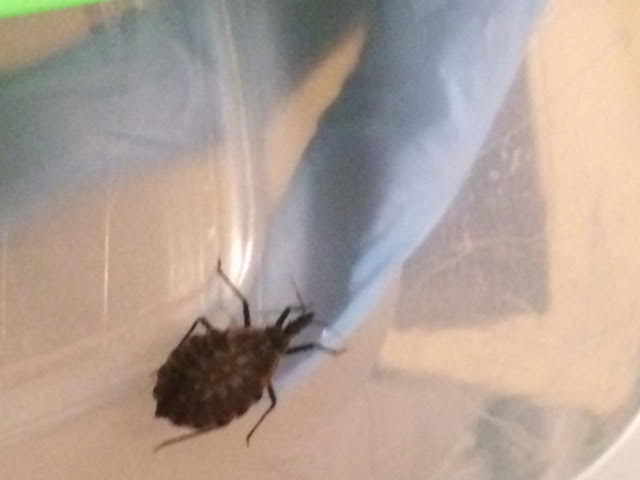
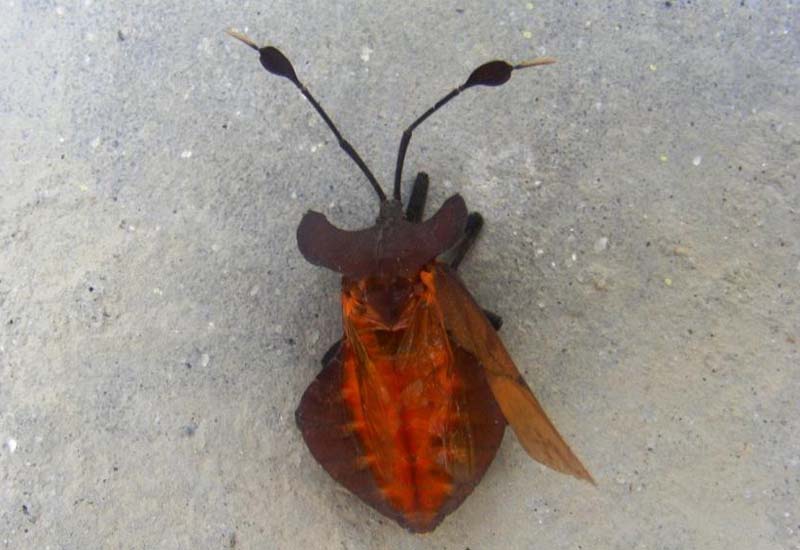
Leaf-footed bugs are a type of insect that can cause damage to various plants, including fruits, vegetables, nuts, and ornamentals.
They are medium to large-sized insects with piercing-sucking mouthparts that enable them to feed on plant seeds and other parts, especially seeds.

These insects get their name from the small leaf-like enlargements on their hind legs, which are a notable feature of their appearance.
Are Leaf Footed Bugs Harmful?
Leaf Footed Bugs can be harmful to plants due to their feeding habits. They can damage the buds, flowers, fruits, and seeds.
These bugs feed on numerous types of plants such as tomatoes, peaches, blueberries, beans, okra, and pecans.
When leaf-footed bugs feed on tomato fruits, for instance, they may cause yellow, hardened spots on the surface.
Identifying Leaf Footed Bugs
Size and Coloration
Leaf footed bugs are medium to large-sized insects, typically ranging from 1/2 to 3/4 inch in length. However, certain Mississippi species can be as long as 1¼ inches.
They belong to the Coreidae family and are usually dark-colored, although some may be tan, orange, or yellowish with contrasting colors.
For instance, the Eastern leaf-footed bug (Leptoglossus phyllopus) often has a noticeable white line across the back of its wings1.
Hind Legs and Abdomens
A key characteristic of leaf footed bugs is their hind legs which feature a flattened, leaf-shaped area2. These leaf-like expansions are believed to aid males in fighting for females3.

Additionally, their abdomens may have distinctive markings.
Antennae and Markings
Leaf footed bugs are equipped with antennae and may exhibit certain markings that can help differentiate them from other insects4.
Life Cycle and Habitats of Leaf Footed Bugs
From Eggs to Adulthood
Leaf footed bugs begin their life as eggs which are usually laid on plant stems or leaves. These eggs are around 1.4 mm long, barrel-shaped, and bronze to dark in color1.
As they hatch, the bugs become nymphs which are a similar shape as the adults, but without the leaf-footed extensions on their legs. Nymphs range in color from deep orange to light brown and have no wings.
As nymphs grow and molt, they develop into fully winged adults which are usually brown and about 20 mm long2.
Overwintering and Population Increase
Leaf footed bugs overwinter in protected areas such as woodpiles, cracks in walls, or other sheltered spaces in your yard or landscape.
As temperatures rise in spring, adult bugs leave their overwintering sites and start to reproduce.
During this time, their population can increase rapidly, posing a risk to plants as the bugs feed on them using piercing-sucking mouthparts to extract plant juices3.
Such feeding can lead to plant damage, especially in fruiting vegetables, nuts, and ornamentals4.

Examples of common leaf footed bug habitats in your yard:
- Woodpiles
- Shrubbery
- Areas with abundant leaf litter
Characteristics of leaf footed bugs:
- Hind legs often have leaf-like extensions
- Medium to large size (about 20 mm in adults)
- Piercing-sucking mouthparts for feeding on plants
Are Leaf Footed Bugs Bad for Plants?
Leaf footed bugs are known to be harmful to various garden plants and fruits. They have piercing-sucking mouthparts, which allow them to extract sap from plant parts, particularly seeds1.
Some possible consequences of their feeding include:
Affected Crops and Ornamental Plants
Leaf footed bugs can be a nuisance in both agricultural and ornamental settings. Examples of affected crops and ornamental plants include:
Here’s a comparison table of some affected plants and the damages caused by leaf footed bugs:
| Plant | Damage Caused by Leaf Footed Bugs |
|---|---|
| Pomegranates | Feed on seeds, leading to reduced fruit quality and yield. |
| Citrus | Damage to fruits’ surface, affecting appearance and weight. |
| Tomatoes | Yellow, hardened spots2 |
| Ornamentals | Unsightly marks on leaves and stems. |
Therefore, leaf footed bugs can cause significant damage to garden plants, fruit trees, and ornamentals.

It is essential to monitor their presence and take appropriate measures to control their population to protect your plants and crops.
How Do Leaf Footed Bugs Feed on Plants?
Leaf footed bugs are known to feed on plants using their specialized piercing-sucking mouthparts. These mouthparts allow them to:
- Pierce the plant’s tissues
- Extract essential juices
For instance, leaf footed bugs pierce the fruit, causing yellow and hardened spots on the surface.
Extracting Juices
Leaf footed bugs extract juices from various plant parts like seeds, fruiting vegetables, nuts, and ornamentals. Their feeding can lead to:
- Damage to plant tissues
- Yield loss due to deformed fruits
Some of the plants they often target include:
- Peaches
- Blueberries
- Beans
- Okra
- Pecans
Spreading Diseases
While feeding, leaf footed bugs can transmit diseases from one plant to another. The diseases can be viral, bacterial, or fungal and can lead to slowed growth and even plant death.
Common diseases spread by leaf footed bugs
- Viral diseases: Tomato spotted wilt virus
- Bacterial diseases: Fire blight
- Fungal diseases: Botrytis gray mold
Comparison of leaf footed bugs to other pests
| Leaf Footed Bugs | Other Insect Pests |
|---|---|
| Piercing-sucking mouthparts | Wide range of mouthparts (e.g., chewing, sponging) |
| Feed on a variety of plants, spreading diseases | Some pests are specific to certain plant types |
| Damage limited to the area they pierce | Can cause widespread damage to entire plants |
Therefore, leaf footed bugs are a significant concern for gardeners and farmers due to their feeding habits and ability to spread diseases.

Proper identification and control measures are essential to minimize their impact on plants.
Controlling Leaf Footed Bugs in Your Garden
Natural Predators and Beneficial Insects
Leaf-footed bugs can be controlled through natural predators.
Examples of such predators include:
- Birds: Various bird species help keep the leaf-footed bug population in check by feeding on them.
- Assassin bugs: These beneficial insects are known to prey on leaf-footed bugs, offering a natural solution to the problem.
- Spiders: Arachnid predators such as spiders can also help manage the leaf-footed bug population in your garden.
Cultural and Mechanical Controls
Cultural and mechanical controls play a significant role in managing leaf-footed bugs.
Some of these methods are:
- Weed removal: Leaf-footed bugs often live and lay eggs in weeds, so keeping your garden free from these unwanted plants helps reduce their population.
- Debris removal: Cleaning up plant debris prevents leaf-footed bugs from finding suitable hiding spots, reducing the chances of infestation.
- Hand-picking: Physically removing the bugs from your crops can significantly decrease their numbers.

Chemical and Organic Insecticides
In cases of severe infestation, insecticides can be used to manage leaf-footed bugs, with options ranging from chemical to organic solutions.
Some popular choices include:
- Insecticidal soap: A mild, eco-friendly option that’s safe for use around beneficial insects like bees and other pollinators.
- Neem oil: An organic, plant-based solution that minimizes harm to beneficial insects.
- Permethrin: A synthetic, broad-spectrum insecticide that’s effective against various pests, but it can also negatively impact beneficial insects.
Table showing different chemical and organic insecticides
| Insecticide | Pros | Cons |
|---|---|---|
| Insecticidal soap | Eco-friendly, safe for beneficial insects | May require frequent application |
| Neem oil | Organic, plant-based, minimal harm to beneficial insects | Limited effectiveness on severe infestations |
| Permethrin | Broad-spectrum, effective against various pests | Harmful to beneficial insects and pollinators |
[sc name=”bugquiz” ][/sc]
Conclusion
Leaf Footed Bugs can indeed pose a threat to a wide range of plants due to their feeding habits, which can lead to damage in buds, flowers, fruits, and seeds.
Their presence can result in reduced fruit quality, altered appearances, and even the spread of diseases among plants.
However, by employing natural predators, practicing cultural and mechanical controls, and using appropriate insecticides, gardeners can effectively manage Leaf Footed Bug populations.
Vigilance and a balanced approach to pest management are key in maintaining a thriving garden ecosystem.
Footnotes
- Eastern Leaf-footed Bug | NC State Extension Publications ↩ ↩2 ↩3 ↩4 ↩5 ↩6 ↩7
- [Leaffooted Insect Pests – Gardening Solutions – University of Florida](https://gardeningsolutions.ifas.ufl.edu/care/ pests-and-diseases/pests/leaffooted-insect-pests.html) ↩ ↩2 ↩3 ↩4 ↩5 ↩6
- Eastern Leaf-footed Bug | NC State Extension Publications ↩ ↩2 ↩3
- Leaffooted Bug Management Guidelines–UC IPM – ucanr.edu ↩ ↩2