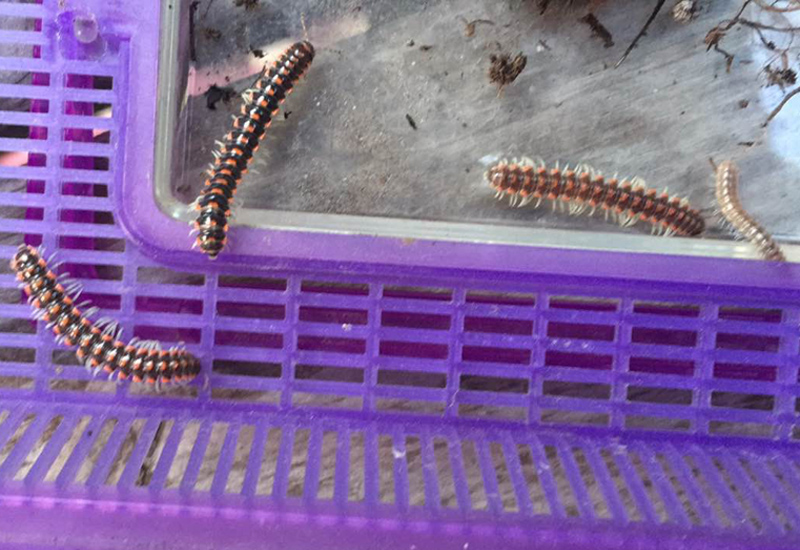
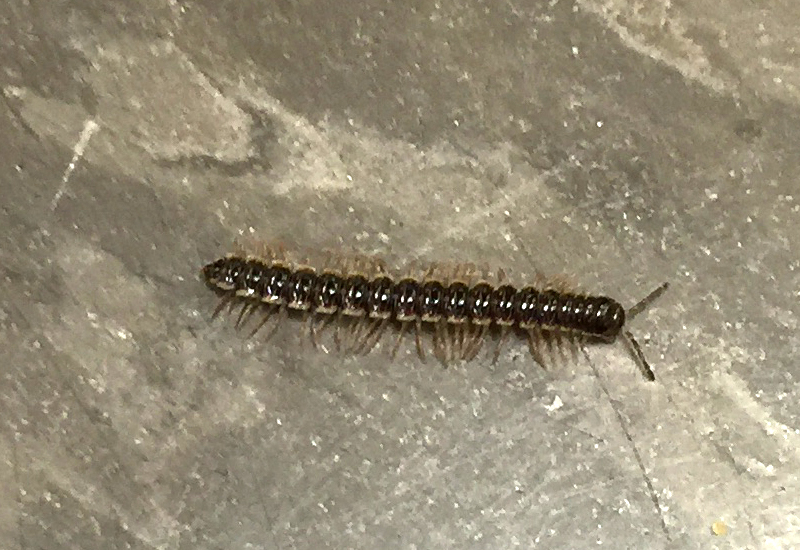
This article will be your guide to everything you need to know about flat-backed millipedes.
Flat-backed millipedes are of the order Polydesmida. They are named such because most of the species within the order have keels on each of their body segments.
These flat structures are known as paranota and give them a flattened look.
In the following article, we will discuss this peculiar millipede, what it eats, its life cycle, mating rituals, and more.

What Are Flat-Backed Millipedes?
Millipedes are small insects of the class Diplopoda. They have two pairs of legs at the bottom of each of their body’s segments.
Polydesmida, or the flat-backed millipedes, are the most significant order among millipedes.
The flat-backed millipedes appear to be flat because of their flared body segments. This is in contrast to other species of millipedes that look cylindrical.
Flat-backed millipedes look a lot like centipedes. They are usually brown, and their size is between 0.6 inches and 1.0 inches.
Unlike centipedes, which are carnivores, these millipedes feed on decaying plant matter and are not very harmful to animals or humans.
Flat-Backed Millipede Types
There are several families within the broader spectrum of flat-backed millipedes.
Xystodesmidae millipedes are a family of flat-backed millipedes that have bright colors like yellow, orange, or red in combination with black or brown.
Other species in the flat-backed millipede family include:
- The yellow and black flat-backed millipede.
- The eyed flat-backed millipede.
- The common flat millipede.
- The brown flat-backed millipede.
What Does A Flat-Backed Millipede Eat?
Flat-backed millipedes are vegetarian and prefer eating roots and fruits like strawberries. In fact, they are detritivores, i.e., organisms that feed on dead and decaying organic and plant matter.
Hence, the flat-backed millipede’s diet consists of decaying plant material such as dead leaves, decaying fruit, and roots, among other things.
Several species among the flat millipedes also feed on decaying wood of trees like deciduous and conifers.

Where Do Flat-Backed Millipedes Live?
Flat-backed millipedes are usually found crawling in damp habitats such as among leaf litter, under rocks, and barks.
You may also spot them in compost pits or among decaying plant matter since that is what they feed on.
Flat-backed millipedes are also found in the cracks of tree stumps, barks, and logs. You can spot them in loose soil.
Geographically speaking, flat-backed millipedes are found in the United States from southeast Alaska to Monterey county, California, and even the Sierra Nevada mountains.
They are also very commonly found in northwestern Europe and the UK.
Life Cycle of A Flat Backed Millipede
Flat-backed millipedes have two breeding cycles – one from late spring to summer and the second from late summer to mid-fall.
The adult males mate only once. They will court the females by secreting a pheromone or chemical that will attract them to breed.
The males also make certain squeaking sounds with their legs to attract the females.
Mating happens when the males release a sperm sack that finds its way to the female’s reproductive organs.
Now when it comes to flat-backed millipedes, the females store the sperm and reproduce at least a couple of batches of eggs.
This happens once during the spring season and once during the summer.
Each egg is laid in a capsule in the soil. The young millipede will usually molt once inside the egg before hatching a couple of months later.
If the temperature outside drops and the atmosphere is cold, the young millipede will overwinter until the climate is suitable enough to hatch.
Once hatched, the larvae of the flat-backed millipede gradually develop and mature into their adult form over the years.
It could be quite a while before it reaches complete maturity and is ready to mate. Young millipedes usually look like tiny versions of adults.
As they grow, they develop more body segments and legs.
According to what has been observed, flat-backed millipedes will survive for about 7-10 years.
Mating Rituals of Flat-Backed Millipede
Reproduction in millipedes was, for years, shrouded in mystery. But scientists have finally figured it out.
In most species, the legs of the males, called gonopods, transfer packets of sperm into the females and carry out reproduction.
While male millipedes of this species mate only once, the adult females of the flat-backed millipedes store sperm from a single mating.
They then use this stored sperm to reproduce many batches of eggs.
However, other species, like the pill millipede, reproduce by releasing a sperm packet from behind the male’s head.
This is then passed on to the female till it reaches the female’s reproductive organs. The male bristly millipede, on the other hand, weaves a web and deposits the sperm there.
The female then moves into the web to transfer the sperm to her reproductive organs.

How Long Do Flat-Backed Millipedes Live?
According to research, millipedes usually live for 7-10 years. How long the flat-backed millipede lives for cannot be said with certainty.
However, since millipedes live for 7- 10 years, it can be considered that flat-backed millipedes, too, would survive for ten years.
Do They Bite?
Millipedes do not bite. When threatened, millipedes will usually coil their bodies to stay safe. However, they do release a toxin to keep potential predators at bay.
If you come in contact with this toxin, it can irritate your skin if you are allergic.
Are They Poisonous/Venomous?
Millipedes are not poisonous or venomous, but they secrete a toxin when threatened that could harm their predators.
But because of the small size of the millipede, the quantity of the toxin they secrete is very little, causing no potential harm to human health.
However, if you are allergic to millipedes, it can cause irritation, itching, or redness.
Are They Harmful or Beneficial to Humans?
Millipedes are beneficial in the sense that they act as recyclers when they feed on decaying plant matter. However, they are not harmful to humans at all.
They usually do not bite or sting. They are not poisonous or venomous and, therefore, can cause no harm to humans or pets.
What Are Flat-Backed Millipedes Attracted To?
Flat-backed millipedes usually feed on dead and decaying plant matter. Hence they are attracted to damp, moist, and dark environments.
You will usually spot them among leaf litter, inside loose soil, in and around swimming pools, compost piles, flower beds, etc.
How To Get Rid of Flat-Backed Millipedes?
Using pesticides is an effective short-term solution to get rid of flat-backed millipedes. However, the better solution would be to prevent attracting these insects.
One significant way to do that is by keeping the surroundings clean. Regularly clear the debris and mulch. Don’t let leaves litter in moist heaps for long.
Prevent water accumulation anywhere in and around the house. Seal pest entries to your home so they don’t find a way inside through holes or cracks.
Also, avoid over-watering your garden and plants and mow the grass closer to the ground.
You could also turn to chemical control to prevent a pest problem.

Interesting Facts About Flat-Backed Millipedes
- Flat-backed millipedes communicate with fellow insects and millipedes through the secretion of pheromones and scents.
- Among all other species of millipedes, flat-backed ones have longer legs. They also use legs to attract females during mating season.
- Although millipede means a thousand feet, flat-backed millipedes are shorter than other species and have only 40 legs.
- Flat-backed millipedes are detritivores. This means that they feed on decaying and dead organic and plant matter.
- Flat-backed millipedes tend to release hydrogen cyanide when threatened. While this is a toxin because the millipede is so tiny, the amount it secretes is practically harmless unless you are allergic to the insect.
Frequently Asked Questions
Are flat back millipedes poisonous?
No, flat-back millipedes are not poisonous, although they may emit a corrosive or choking liquid when threatened.
These secretions, which come from organs near the tail, can burn or irritate the skin of anyone who touches them.
To avoid any issue, it is best to simply leave them alone rather than handle them directly.
What are flat-bodied millipedes?
Flat-bodied millipedes are a type of arthropod found in forests and other wet environments.
They range in length from about 0.4 to 2 inches and feature flat, oval-segmented bodies that are often red, brown, or black.
These millipedes eat decaying organic matter found in soil and leaf litter and play an important role in the ecosystem by helping to break down forest detritus into nutrient-rich soil.
They also have modified legs with very fine bristles that help them travel smoothly over soft surfaces such as fallen leaves and mosses.
What do flat-backed millipedes eat?
Flat-backed millipedes primarily feed on decaying plant material and small insects.
They use their mouthparts to tear apart and consume the food, turning it into easily digestible pieces with their powerful jaws.
They also consume some fungi and bacteria that exist in leaf litter, which helps them better absorb nutrients from the food they eat.
Most flat-backed millipedes will search for and consume plants that are recently dead or injured, like newly fallen leaves or tree bark.
Where do flat-backed millipedes live?
Flat-backed millipedes are primarily found in moist, dark places such as leaf litter, under logs and stones, in soil, or in decaying organic matter.
They are commonly found in deciduous forest habitats like the forests of the eastern United States and Canada but may also be distributed across all continents except Antarctica.
Additionally, they may inhabit wooded suburban backyards. They generally reside on or near the ground, under objects that provide shelter from the elements.
Wrap Up
Flat-backed millipedes are a species of millipedes belonging to the order Polydesmida.
They are also sometimes called keeled millipedes because of the flat structures on their backs that make them appear flat instead of cylindrical.
These millipedes do not bite or sting. Even though they release a toxin when threatened, they’re not poisonous or venomous and cause no harm to humans or animals.
Thank you.